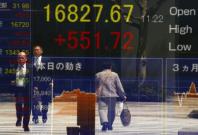
Rising bond yields and a U.S. credit outlook downgrade by Moody's are fueling investor concerns about the financial stability of major economies. Experts warn that excessive borrowing could have long-term global market consequences.
Oil prices rose slightly due to U.S. export restrictions on Venezuela and Canadian wildfire-related supply disruptions. Markets are now watching OPEC+ meetings for possible July output changes.
Gold prices rebounded on Wednesday as investors bought the dip following a previous decline, while awaiting key U.S. economic data and signals from the Federal Reserve. Analysts expect gold to rise further if inflation data supports rate cut expectations.
Oil prices declined on Tuesday as markets anticipated a potential output increase from OPEC+ in July, while ongoing U.S.-Iran nuclear negotiations added uncertainty to future supply dynamics. The combination of expected higher production and unresolved geopolitical tensions kept investors cautious.
Asian markets were mixed on Tuesday as investors weighed a delayed U.S. tariff move and falling bond yields. Confidence remains fragile, with attention shifting to key earnings and inflation data this week.
Gold prices declined for a second straight day after the U.S. postponed planned tariffs on the European Union, boosting investor confidence. Improved risk sentiment and a stronger dollar reduced demand for the safe-haven asset.
Oil prices remained steady as the U.S. extended EU trade talks, easing immediate tariff concerns. However, anticipated OPEC+ output increases and ongoing U.S.-Iran negotiations continue to influence market dynamics.
Gold prices fell nearly 1% after the U.S. postponed tariff hikes on EU imports, reducing demand for the safe-haven asset. Analysts expect prices to stay strong amid ongoing geopolitical risks and market uncertainty.
Asian markets gained momentum after U.S. President Trump delayed steep tariffs on EU goods, easing global trade concerns.
Investors moved funds to Asia and Europe amid growing uncertainty around U.S. policies and a weakening dollar.
U.S. stocks ended lower for the week as renewed tariff threats from former President Trump against the EU rattled investor confidence. Technology and growth stocks led the decline, while defensive sectors saw modest gains.
Asian markets rebounded on Friday as easing U.S. Treasury yields boosted investor confidence across the region. Gains were led by Indian indices, while markets in Japan, Hong Kong, and China also ended the week on a positive note.
Oil prices declined over 1% on Friday, marking the first weekly loss in three weeks, as OPEC+ considers increasing output and U.S.-EU trade tensions rise following President Trump's proposed 50% tariff on EU imports.
Gold prices surged nearly 2% on Friday, marking their strongest weekly gain in six weeks as investors turned to the safe-haven asset amid renewed U.S. tariff threats and a weakening dollar. Ongoing fiscal concerns and global market jitters further supported the bullish momentum.
Asian stock markets fell sharply as rising U.S. debt concerns and surging Treasury yields triggered global investor caution. Technology and consumer sectors led the declines, with major indices across India, Hong Kong, and South Korea ending lower.
Gold prices dipped slightly after reaching a near two-week high, pressured by a stronger U.S. dollar but supported by concerns over the country's growing debt and fiscal outlook. Investor uncertainty around U.S. tax legislation and Moody's recent credit downgrade continues to keep gold attractive as a safe-haven asset.
OPEC+ plans to raise oil output in July, fueling worries about oversupply and pushing prices down. Combined with rising U.S. crude stocks and slowing demand, the oil market faces growing uncertainty.
Oil prices rose nearly 1% amid rising tensions over a possible Israeli strike on Iranian nuclear sites, sparking fears of supply disruptions. The situation threatens key oil routes and could impact global energy stability.
Gold prices surged as political tensions in the U.S. and a weakening dollar drove investors toward safer assets. Uncertainty around President Trump's tax bill and concerns over national debt further fueled the rally.
Oil prices are falling as global production increases while demand remains weak, creating a surplus in the market. Experts warn this trend could impact energy investments and economic stability worldwide.