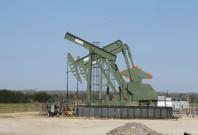
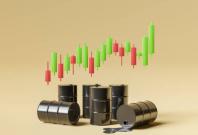
Oil prices remained steady as hopes for a trade breakthrough between the U.S. and China lifted demand outlook. At the same time, supply risks and weak Chinese data kept market sentiment cautious.
Gold prices rose modestly on Monday as a weaker dollar and upcoming U.S.-China trade talks lifted investor confidence. Platinum hit a four-year peak, supported by tight supply and growing industrial demand, while markets await key U.S. inflation data.
Asian stocks rose after upbeat U.S. jobs data eased economic concerns and trade talks between the U.S. and China sparked investor optimism. Markets remained cautious amid ongoing political unrest in the U.S. and upcoming inflation data.
Oil closed the week above last Friday's lows, buoyed by renewed US–China trade talks despite rising gasoline inventories and Middle East tensions. OPEC+ production plans and Saudi price cuts for Asia continue to limit upside.
Gold prices rose slightly this week as weak U.S. labor data fueled hopes of a Federal Reserve interest rate cut. Meanwhile, silver hit a 13-year high driven by strong industrial demand and tight supply.
Asian markets wavered Friday after a sharp selloff in Tesla shares, triggered by a feud between Donald Trump and Elon Musk, rattled global sentiment. While most Asian indexes declined, Japan's Nikkei bucked the trend with modest gains driven by strong local earnings.
Oil prices remained stable following a previous dip, as U.S. gasoline and diesel inventories rose more than expected. Saudi Arabia's price cuts for Asian buyers and Canadian wildfire-related supply issues continue to influence market sentiment.
Asian markets edged higher as traders kept watch on central bank policies and tariff developments. Cautious optimism prevailed despite weak U.S. data and uncertain global trade signals.
Gold prices slipped from a four-week high due to a stronger U.S. dollar and renewed trade tension concerns. Investors remain cautious as they await key U.S. economic data and developments in global tariffs.
Oil prices gained nearly 3% after OPEC+ confirmed steady production increases amid rising geopolitical tensions and supply disruptions. Market stability is influenced by ongoing conflicts in Ukraine, stalled Iran nuclear talks, and North American weather impacts.
Gold prices experienced a decline in late May 2025, influenced by a strengthening U.S. dollar and renewed trade tensions. However, analysts maintain a bullish long-term outlook, projecting potential price increases driven by geopolitical uncertainties and gold's status as a safe-haven asset
Oil prices surged after OPEC+ confirmed a 411,000 bpd production hike for July, maintaining its recent pace. The rise was driven by supply concerns, Kazakhstan's defiance, and heightened geopolitical tensions.
Wall Street slipped Monday after Donald Trump announced a sharp increase in steel and aluminum tariffs, renewing trade war fears. Steel stocks surged, but automakers and growth stocks declined amid market uncertainty.
Gold prices declined on Friday due to a stronger U.S. dollar and renewed tariff uncertainties, with spot gold falling 0.7% to $3,293.59 an ounce. A softer U.S. inflation report has maintained expectations for a potential Federal Reserve rate cut.
OPEC+ will increase oil production by 411,000 bpd in July 2025, continuing its strategy to gradually restore supply. However, experts warn that rising output may outweigh demand growth, potentially pushing oil prices lower.
Asian markets ended the week mixed as investors reacted to renewed U.S. tariff uncertainty, Japan's rising debt concerns, and a strong yen. Focus now shifts to key U.S. inflation data and its impact on global trade and interest rate expectations.
Gold prices declined as a stronger U.S. dollar and tariff uncertainty weighed on investor sentiment. Softer inflation data, however, kept hopes alive for a possible Federal Reserve rate cut.
Oil prices rose after a U.S. court blocked key tariffs, easing trade concerns and boosting market confidence. Supply risks from Russia, Venezuela, and Canada, along with an anticipated OPEC+ output decision, continue to support the bullish trend.
Asian markets rose after a U.S. court blocked President Trump's April 2025 tariffs, easing global trade concerns. The ruling boosted investor confidence, especially in tech stocks, amid cautious optimism in the region.
Gold prices climbed on Thursday, buoyed by weaker U.S. jobless claims and a court ruling that blocked most of Trump's tariffs, enhancing its appeal as a safe-haven asset. Investors are now focusing on upcoming inflation data for further cues on the Federal Reserve's policy direction.