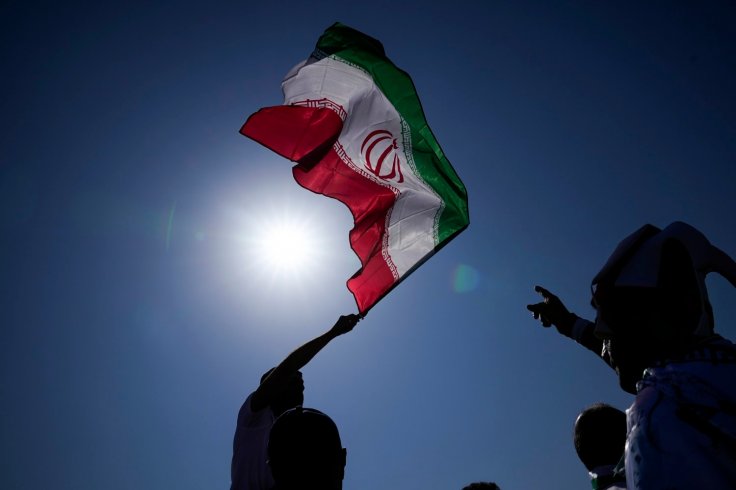
- Iran released an AI-generated propaganda video showing an attack on a US landmark
- The video aims to influence global opinion and boost domestic morale
- Content spread rapidly via social media and state-linked media outlets
- Reflects growing role of AI in modern information warfare
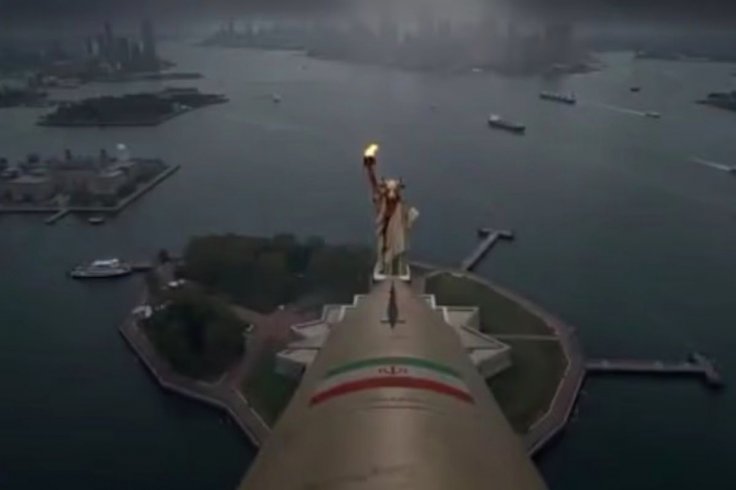
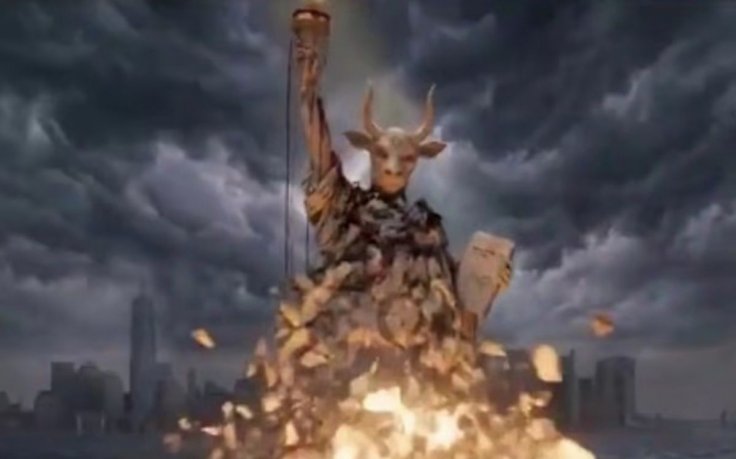
It is day 25 of active military conflict that has already transformed the strategic landscape in the Middle East, with Iran having already released a slickly produced, AI-generated film to its official Telegram channel on March 24, 2026. The minute-long video, entitled One Vengeance for All, showed a ballistic missile on Iranian soil crossing the Atlantic and hitting the Statue of Liberty in New York, knocking it down the harbor in a fireball of simulated annihilation. The video went viral on social media, which was reinforced by Russian state media RT and Chinese state media, and appeared on Western news desks within hours.
They did not destroy anything tangible. There was not a single missile on American soil. However, the purpose of the video was unmistakably clear: to instill a sense of defiance in a time of acute military pressure, to mobilize people around the world who doubt the policies of the US in foreign affairs, and to prove that Iran, despite its air defenses being piled up, or its fleet, or its nuclear capabilities, still has the ability to wage war in the information sphere.
The Statue of Liberty in the movie was purposely distorted: its classical face was changed into the horned head of Baal, an ancient Canaanite idol, and the tablet of the Declaration of Independence was replaced by the Babylonian Talmud, a multiple provocation that intends to convey different messages to various audiences at the same time.
The introductory portion of the clip is essentially a concise chronicle of that which has aroused grievances: there is a shot of the Native Americans being displaced, the bombings of Hiroshima and Nagasaki, the Vietnam War, US-proximate actions in Yemen, Afghanistan, Iraq, and Gaza, and the January 2026 assault on the Shajarah Tayyeh elementary school in Iran, a school attack that Tehran attributes to the US troops and which has become its rallying image in its national propaganda.
The last frames demonstrate artificial intelligence-created images of Supreme Leader Ali Khamenei, murdered during the opening attacks of 28 February by the United States and Israel, and General Qasem Soleimani, who was assassinated in 2020, and look up to the sky where the missile strikes home. The message is as planned as it is functionally determined.
A War of Missiles as Well as a War of Images
The propaganda issue did not come in a vacuum. It came just in time when the dramatic developments based on kinetic confrontation are creating drama on an everyday basis. On March 25, the US-Israeli war on Iran entered its 26th day, and according to Al Jazeera, on-the-ground reporters were reporting what they reportedly claimed to be unprecedented scale of attacks.
CENTCOM published videos depicting attacks on military installations in Iran as Iran persisted in launching missile and drone attacks on Israel and Gulf countries (excluding Saudi Arabia), on its Eastern Province energy targets, and on Kuwait with repeat interceptions. Reuters reports that the Pentagon has ordered an estimated 2,000 paratroopers of the 82nd Airborne Division into the area, and some 4,500 Marines are already on their way.
But the battlefield scene is put skillfully on the side of Washington. The US Department of Defense reported numerous attacks by Iranian missiles and drones to have dropped 90 percent concerning the severity of the war on the first days of the war as the systematic destruction of Iranian launch systems is taking root.
The navy of Iran has been practically crippled - the data of Reuters proved the Indian Ocean sinking of the frigate IRIS Dena by the USS Charlotte at the beginning of March. According to Netanyahu, the world has lost the uranium enrichment ability of Iran in public statements. It is also against that setting that the AI propaganda film has a particular communicative purpose: it indicates intent to a domestic audience of its military being eroded and tries to influence world opinion at a time when the peace talks are on the fringe of collapse.
This, according to information warfare experts, is a classic wartime strategy, which is boosted by the ability of AI to create high-quality visual content at very low costs. Researcher of propaganda Darren Linvill (Clemson University) has noted that the materials of such a nature act on various registers at once.
According to his commentary about the Iranian information operation, the propaganda consists of memes and cartoons that are not designed to pass as real but are excellent at disseminating political information. The news is speedily spreading via RT, which is an asset of Russia and has been proven to operate globally within the space of narratives, stressing the extent to which confrontational information ecosystems have aligned their interests on advancing perceptions of the conflict.

Negotiating Goes Dead as Each Party Indicates Stiffening Talks
The release of the propaganda video coincided with the diplomatic talks to stop the war having been at a critical and impassable spiraling junction that was yet to be resolved. On Tuesday, President Trump asserted that Washington and Tehran were negotiationally active. The Foreign Minister of Iran, Abbas Araghchi, disagreed with that statement directly, saying in the state media that messages had been sent via mediating countries, including Egypt, Pakistan, and others, but that this was not negotiation.
According to the report of Reuters, Iran was then offered a 15-point ceasefire proposal by the US, which it claimed was maximalist and unreasonable, with a five-point plan of its own that demanded Iranian sovereignty over the Strait of Hormuz and war reparations, none of which the United States officials have ever discussed publicly.
The White House hit two birds with one stone. According to Press Secretary Karoline Leavitt, the president wanted peace but was ready to make sure that Iran would be hit even harder than it had ever been previously. At the same time, Trump announced a five-day postponement of scheduled attacks on Iranian power plants and other energy facilities, which analysts viewed as some diplomatic breathing room and not a military freeze.
Meanwhile, 20,000 crowdfreighters and 2,000 vessels in and around the Strait of Hormuz are stuck, based on the reporting of Al Jazeera, which is a humanitarian and logistical crisis that is directly contributing to the energy price crunch globally.
The war has been rapid and brutal in terms of its economic cost. The UN places the economic losses in the Arab region to date at about 63 billion dollars due to the war. The price of oil has shot up to multi-year highs, and as a swap, the Trump administration has temporarily waived Hormuz-loaded Iranian oil products on ships - a 30-day relief that runs until April 19, 2026, to add an estimated 140 million barrels to a market that has already absorbed the near-complete shutdown of Hormuz.
US Treasury Secretary Scott Bessent recognized the move as a serious change of policy direction but said it was a needed stabilization action. In recent sources, Brent crude has been trading over 99, the level that was maintained in the oil shocks of the first half of 2020, according to Reuters information.
What the video tells us about the strategic positions of Iran
The evaluation of the present situation in Iran by military analysts indicates that this is a regime that is operating under extreme pressure but exhibits the restrained desire to continue the war on its own terms. Iranian Foreign Minister Araghchi has made it clear that they did not want a ceasefire, claiming that a premature pause would just put the conditions back to square one in future conflicts.
The five-point Iranian counterproposal, which involves the US stopping assassinations of Iranian leaders, ensuring that there would be no future conflict, reparations, termination of hostilities, and relinquishing of Hormuz leadership to Tehran, is, according to the Washington scale, a non-starter. But it is quite domestic and regional in its aim, as well as a negotiating table.
The strategy communications stance of Iran, of which the film Statue of Liberty is a part, can be seen as a logical, though asymmetric, logic of war. Negar Mortazavi, a 20-year veteran Iranian-American journalist and analyst who has reported on the domestic affairs of Tehran, told Al Jazeera that Tehran is interested in terminating the war on its terms and providing sufficient deterrent such that the war is not resumed once it is terminated. Formed in that way, it aired to local and global viewers down a single media stream and satellite simultaneously. Simultaneously, Iran makes Iran an actor who not only decides to fight but also decides when to cease - a story imperative even as its armed forces die.
Its divisive capabilities were characterized by the reaction to the video by both Western and online media and online audiences. The reactions on social media were more of derision as people pointed out that the real missiles of Iran were unable to strike the aircraft carrier USS Abraham Lincoln during the latest confrontations and that all missiles have been shot down.
There was also actual anxiety over the issue of escalatory signaling. Its effect on Iran, as pointed out by the defense analysts, is that it does not have any ballistic missiles at present that can hit the continental United States, thus making the main premise of the film technologically impossible. That might be the point, though: the point where propaganda works at the level of perception and feeling instead of technical specifications, and a video that is trending worldwide is accomplishing its communicative purpose no matter whether its scenario is physically realistic.
On 25 March, 2026, the US-Iran conflict has moved into an active but diplomatically disputed phase, the two governments increasingly taking on issues concerning internal politics with the military operations being run on several fronts, the two governments, additionally, attending to the demands of both the military and internal politics, which itself, in turn, at this point in its history, has taken on a partially ceasefire tone, with both sides trading ceasefire offers through agents.
The AI propaganda video of the IRGC is one data point, in a fast-evolving conflict, which is significant mainly because of the demonstration of the upper material-generation technology, the state-targeted information activities in the modern war, and the speed with which digitally generated imagery can spread throughout global media systems without any manifest material processes.
Also Read: Trump Says 'Iran Wants Deal' But Tehran Denies Talks; Ceasefire Hopes Fade


