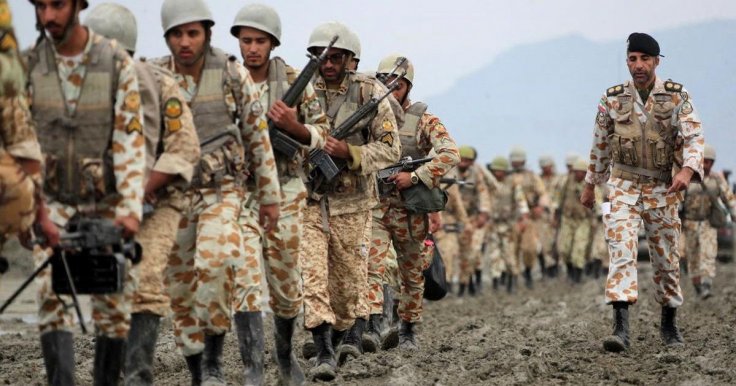
- IRGC calls for a Muslim military alliance excluding the United States and Israel
- Iran appoints IRGC commander Zolghadr as national security chief
- The proposal targets Muslim public opinion rather than aligned governments
- Iran shifts to an offensive doctrine, expanding regional political messaging
Iran's Islamic Revolutionary Guard Corps has called for the formation of a Muslim military alliance that excludes the United States and Israel, with senior commanders and the country's new supreme leader, Mojtaba Khamenei, positioning Iran as ready to lead such a coalition. The dramatic escalation of Tehran's diplomatic outreach on Day 26 of the war directly challenges every Gulf state still attempting to remain on the sidelines of the conflict.
The call emerged from multiple Iranian state media channels in the past 48 hours and was amplified across social media by accounts tracking Iranian state messaging. It arrives as a cluster of other IRGC announcements on Tuesday that paints the picture of a revolutionary military force consolidating power domestically, hardening its war posture internationally, and explicitly rejecting the ceasefire diplomacy that Trump publicly touted as progressing.
A New IRGC Hardliner at the Top of National Security
Iran appointed Mohammad Bagher Zolghadr, a veteran IRGC commander, as its new national security chief on Tuesday, replacing Ali Larijani, who was killed in an Israeli strike last week. CNN confirmed the appointment, noting that Zolghadr is a loyalist of Supreme Leader Mojtaba Khamenei and that analysts say his elevation signals the new supreme leader is tightening his grip on the security apparatus.
The appointment gives the IRGC direct control over national security policy for the first time in the conflict, removing the last significant non-IRGC voice from Iran's top security decision-making.
The IRGC, which is described as a "state-within-a-state," now effectively controls Iran's military operations, internal security, nuclear program oversight, foreign proxy networks, and national security policy simultaneously. US intelligence had warned before the war that killing Khamenei would not trigger regime collapse but would likely strengthen IRGC control. The assessment has come accurate.
From Defense to Offense
The shift from defensive to offensive doctrine announced publicly, not leaked, is both a military signal and a psychological one. It tells US and Israeli planners that Iran's operations will no longer be primarily reactive to strikes on its territory.
It tells Gulf states that Iranian operations in their territory are now deliberate strategic choices, not collateral escalation. And it tells Muslim-majority nations across the region that Iran frames itself not as a country under siege but as a revolutionary force on the move.
Muslim Alliance Call: What Iran Is Proposing
Supreme Leader Mojtaba Khamenei's call for a Muslim military alliance is the most ambitious diplomatic initiative Iran has launched since the war began. In his first major ideological statement, Khamenei framed the conflict not as a bilateral war between Iran and the US-Israeli alliance but as an attack on the entire Muslim world, a framing designed to appeal to the public in Turkey, Pakistan, Malaysia, Indonesia, and the Arab states across the Gulf, whose governments are actively cooperating with Washington.
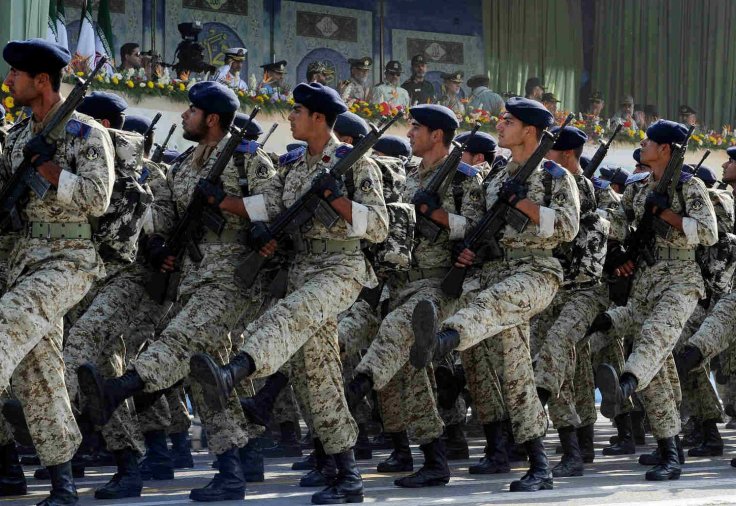
The IRGC's endorsement of that framing and its public declaration that Iran is "ready to lead" such an alliance is a direct challenge to the Organization of Islamic Cooperation, to the Arab League's existing frameworks, and most pointedly to Saudi Arabia, which 22 Arab and Islamic foreign ministers met in Riyadh last week to coordinate a joint condemnation of Iran. By proposing a rival Muslim military alliance under Iranian leadership, Tehran is attempting to split those states' publics from their governments.
The proposal has virtually no prospect of institutional success in the short term. Saudi Arabia, the UAE, Bahrain, and most Gulf states are either actively hosting US military forces or have signed cooperation agreements with Washington. Turkey, a NATO member, has condemned Iranian strikes on civilian infrastructure. Pakistan has called for de-escalation. Indonesia and Malaysia have called for a ceasefire but stopped well short of alignment with Iran.
But the Audience Is Not Governments
The IRGC's Muslim alliance call and Mojtaba Khamenei's ideological framing are not aimed at foreign ministries. They are aimed at street-level Muslim opinion in countries where governments are aligned with the US, but populations are not. In Pakistan, mass rallies supporting Iran have been reported in Karachi and Lahore.
In Malaysia and Indonesia, #StandWithIran trending patterns have been documented on social media. In Turkey, President Erdoğan faces domestic pressure to distance himself more sharply from Washington.
Also Read: Brent Down to $97.18 On Ceasefire Hopes, Easing Pressure On Markets Briefly
The IRGC's simultaneous military and ideological offensives, an offensive battlefield doctrine, a new hardline national security chief, a rejection of ceasefire talks, and a call for Muslim unity under Iranian leadership together paint the picture of a revolutionary institution that, far from collapsing under four weeks of unprecedented US-Israeli bombardment, is consolidating its domestic power and attempting to expand its regional political reach. Whether any Muslim government responds to the alliance call is almost secondary to its function as a wedge between those governments and their own people.


