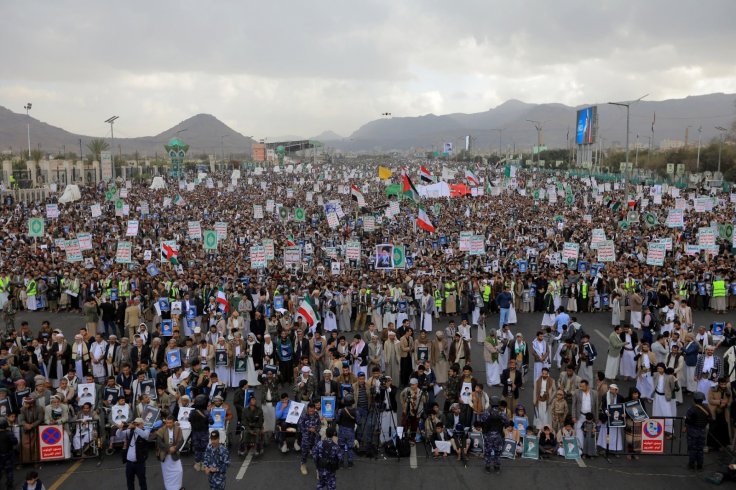
- Houthis have not joined Iran war despite past regional attacks.
- Analysts cite leadership losses, low stockpiles, Iran strategic restraint.
- Potential Houthi entry could disrupt Bab el-Mandeb shipping route.
- US deploys naval assets amid risk of expanded regional conflict.
Three weeks into the US-Israel war on Iran, one of the most consequential unanswered questions in the conflict is why Yemen's Houthis the Iranian-backed Ansar Allah movement that spent two years blockading the Red Sea and firing hundreds of missiles and drones at Israel and US warships have not yet joined the fight.
Analysts, think tanks and intelligence agencies are watching the movement's every signal, because a Houthi entry into the war would open a second maritime chokepoint, drain US and Israeli air defence munitions, and further hammer a global economy already brought to its knees by the Hormuz blockade.
"Yemen stands clearly with the Islamic Republic of Iran and the Muslim Iranian people. Hands are on the trigger regarding military escalation, and our engagement in the war could occur at any moment depending on developments." - Abdulmalik al-Houthi, Leader, Ansar Allah (Houthis), televised address, March 5, 2026
The Houthis have the capability, the ideology and according to their own statements the intention to join Iran. Every other significant member of the so-called Axis of Resistance has already done so. Hezbollah resumed rocket and drone attacks on Israel within two days of the February 28 strikes. Iraqi militias linked to the Islamic Resistance in Iraq have struck US bases in Erbil. The Houthis alone have limited themselves to mass protests in Sanaa and declarations of solidarity.
Why They Haven't Moved Yet
Analysts point to three overlapping reasons for the restraint. First, Israeli strikes last August killed at least 12 senior Houthi government and military figures in Sanaa including Prime Minister Ahmed al-Rahawi and chief of staff Mohammed al-Ghumari leaving the movement's leadership more cautious about triggering another decapitation campaign.
Second, two Houthi members told the Associated Press their weapons stockpile is running low after the sustained Red Sea campaign of 2023-2025. Third, and most strategically significant, Iran may be deliberately holding the Houthis in reserve.
Luca Nevola, senior Yemen analyst at the ACLED conflict monitor, told Al Jazeera that Houthi intervention remains a possibility but that the group's main priority at this stage is avoiding direct US and Israeli retaliation. "The Houthis would likely resume attacks if they were directly drawn into the conflict, either through US or Israeli strikes or through a renewed domestic advance by anti-Houthi forces in Yemen," Nevola said.
What Houthi Entry Would Mean
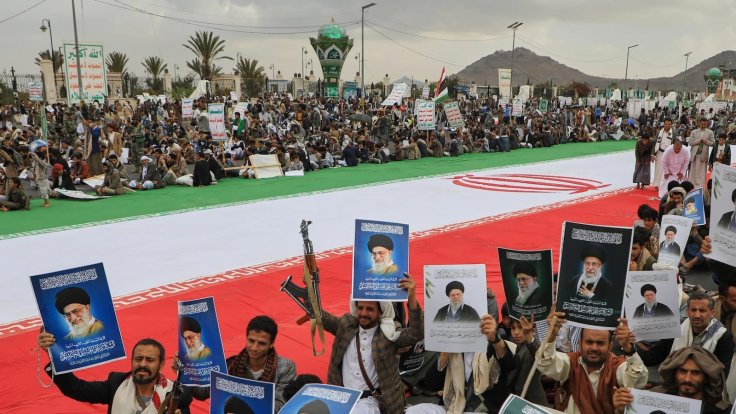
A Houthi entry into the war would close the Bab el-Mandeb Strait the southern gateway to the Red Sea and the Suez Canal alongside the already blockaded Strait of Hormuz to the east. The two chokepoints together handle an estimated 40 percent of global seaborne trade.
During the 18-month Red Sea campaign that followed October 7, 2023, Houthi attacks forced more than 60 percent of commercial shipping to divert around the Cape of Good Hope, adding weeks and billions to global supply chains. A simultaneous dual-chokepoint closure would be without modern precedent.
Houthi politburo member Mohammed al-Bukhaiti declared this week that "the decision to stand alongside Iran has already been made" and that the group was monitoring the situation closely. He separately confirmed that if the Houthis block the Bab el-Mandeb, they will not target Russian or Chinese vessels the same policy applied during the Red Sea campaign directing all attacks exclusively at the US, Israel and their allies.
Iran's new supreme leader Mojtaba Khamenei signalled in his first written statement this week that Tehran may open "new fronts" in the conflict a formulation analysts widely interpreted as a direct message to the Houthis. The US military has pre-positioned additional naval assets in the Red Sea region in anticipation of renewed Houthi action. Whether the Houthis act on their own timeline or wait for Iran's order may be the single most consequential variable in the war's next phase.


