- Trump says Israel will halt further South Pars gas field attacks
- Iran strikes Qatar and Saudi energy facilities after escalation
- Missile attacks damage LNG sites, raise global energy concerns
- US considers deploying more troops to Middle East conflict
U.S. President Donald Trump indicated that Israel will not undertake any more assault on the South Pars gas field of Iran unless Tehran provokes against regional targets, since the tension in the Middle East is still affecting global energy markets and increasing geopolitical risks.
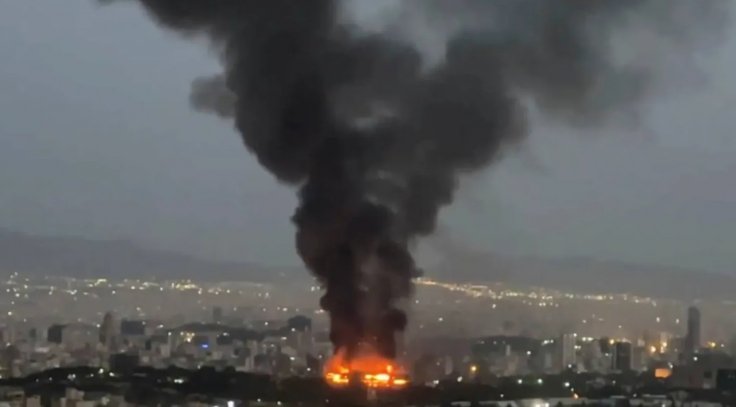
This has come after an Israeli attack on the South Pars field, a part of the largest natural gas reserve in the world that is divided between Iran and Qatar, which was retaliated by Iranian missile attacks on energy systems on the Gulf. The growth has raised apprehension regarding supply interruptions in a region that is very important to the world oil and gas supply.
Reuters reported that Iran has made new attacks on the facilities of liquefied natural gas in Qatar and fired missiles and drones to attack the capital of Saudi Arabia, Riyadh. The state-owned QatarEnergy of Qatar reported massive damage and large fires at the Ras Laffan Industrial City, a facility that processes a large volume of LNG to the world market.
Saudi officials claimed to have intercepted several of the ballistic missiles targeting Riyadh and foiled a drone attack on a gas plant in the east. Further attacks on the energy infrastructure in the region were reported such as the Red Sea port of Yanbu in Saudi Arabia and the scope of the damage of a refinery in Kuwait.
Conditional Restraint Incremental
According to Trump, the attack launched by Israel on South Pars was a response to the overall events within the region but indicated a break in further attacks on the gas field unless Iran attacks Qatar once again.
Trump said that Israel, angered by what has unfolded in the Middle East, has lashed out at a significant facility South Pars Gas Field in Iran.
'NO MORE ATTACKs WILL BE Launched by ISRAEL with regards to this very crucial and precious South Pars Field unless Iran makes a foolish choice of attacking a very innocent in this instance, Qatar.'
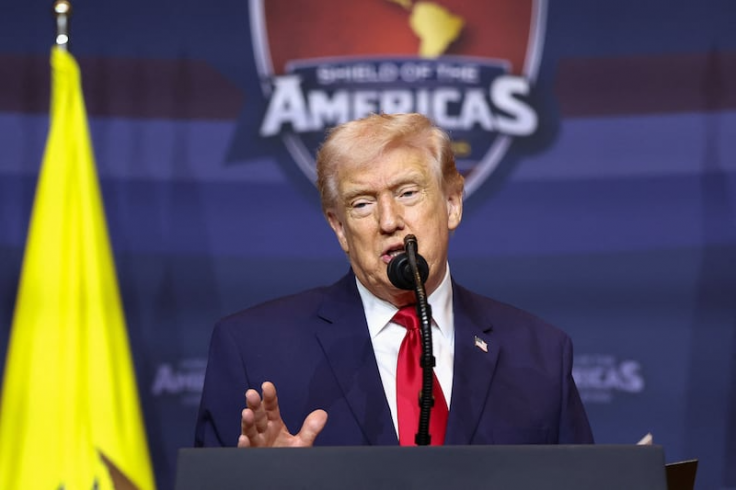
He also indicated that the 'U.S. would strongly respond in case Iran goes a notch higher indicating that the facility could be directly attacked by Washington, in some circumstances.'
The comments are made in the face of contradictory reports regarding U.S involvement. Although Trump claimed that Washington had no prior awareness of the Israeli attack, earlier claims had indicated that the government had been aware of the attack before.
Under Pressure in Energy infrastructure
The attack on South Pars is a significant change in the war, which puts the essential energy infrastructure in the spotlight. It is also one of the most strategically significant energy assets in the world, and it is a sphere that is central to the Iranian gas production and is connected to the North Field of Qatar.
The larger war has already interfered with the transportation of shipping by the Strait of Hormuz, one of the transit channels of approximately 20 percent of global oil and gas. The risks to supply have also been increased by attacks on processing hubs, refineries and export terminals.
As per the Reuters data, the increase has forced the oil prices to shoot high in the recent sessions with the Brent crude selling above 110 per barrel after increasing over 5 percent in the latest trading day, as compared to 2-3 percent rise in the previous session.
The European gas markets have also responded and their prices have increased over 60 percent since the war started in late February as a sign of worry over the long-term supply restrictions.
Diplomatic: Diplomatic Responses Intensify
The conflict has been accompanied by the proliferation of regional and international responses. Meeting in Riyadh, foreign ministers of several Muslim-majority countries denounced Iranian attacks on its neighbors and demanded an immediate cessation of the assault on civilian, as well as energy infrastructure.
Saudi Foreign Minister Prince Faisal bin Farhan added that "the attacks were unjustifiable under any condition and military actions would be taken in response to the attacks should the need arise."
Simultaneously, the US is considering further troop deployments to the area. Reuters reported that Washington is considering deploying thousands more staff to ensure the safety of shipping routes and even to protect critical infrastructure, especially in areas around the Strait of Hormuz.
European leaders also have to deal with the economic after-effects such as increased energy prices and inflationary pressures, and there are few policy alternatives.
The most recent events highlight how more central energy infrastructure is becoming involved in the war, with both parties attacking infrastructure that has significant externalities to the global markets and economic stability.


