Iran's military claimed a symbolic victory on Thursday as it released footage appearing to show a U.S. F-35 stealth fighter being hit by its anti-aircraft artillery. The black-and-white clip shows a U.S. fighter jet being hit by a missile, before the video cuts out abruptly.
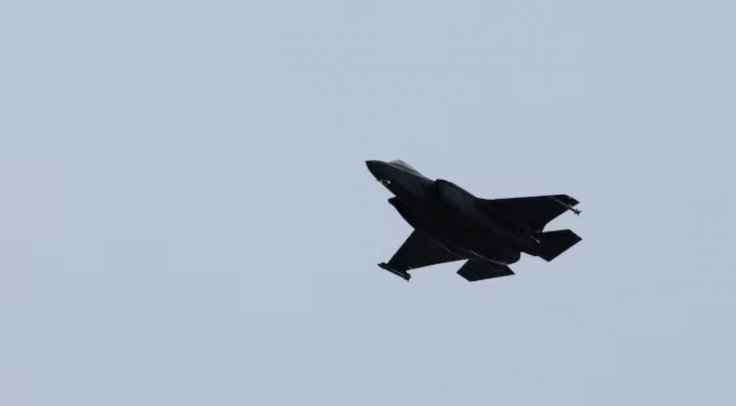
If verified, it could mark the first known instance of an American F-35 being struck by enemy fire in combat. U.S. Central Command said the aircraft was forced to make an emergency landing while it was "flying a combat mission over Iran." "The aircraft landed safely, and the pilot is in stable condition," Captain Tim Hawkins said. It is unclear if the pilot was injured."
Shot but Not Gone?
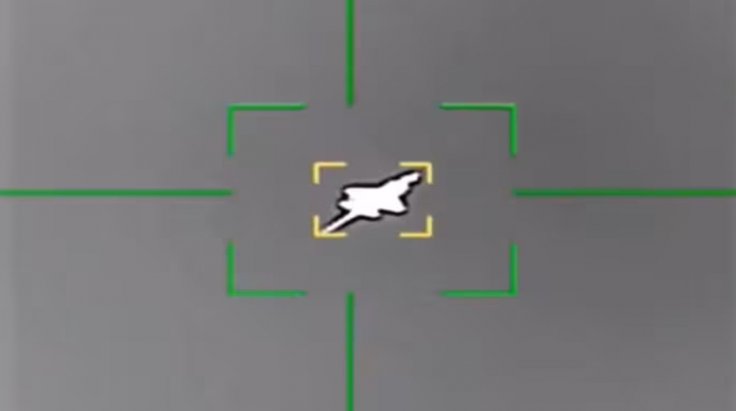
An hour later, Donald Trump told reporters that Iran's air defense systems had been taken out, adding confidently, "Nobody is even shooting at us." The alleged strike on the $100 million advanced fighter jet comes at a highly tense point in the conflict.
Around the same time, Trump also slammed Israel over its strikes on an Iranian gas field, which triggered fires across the Gulf and led to retaliatory attacks on America's Arab allies.
Meanwhile, Iran kept up its offensive on Thursday, with drones hitting a major oil refinery in Haifa, Israel, adding to the growing instability.
The impact was immediately felt in global markets—U.S. crude jumped 4.9 percent, while Brent crude, the international benchmark, soared to as high as $118 per barrel, marking a more than 60 percent surge since the war began.
As the conflict stretched into its 19th day, Iran intensified its attacks, targeting key oil refineries in the Gulf and forcing the shutdown of a Saudi oil port along the Red Sea.
Despite the escalating situation, the Trump administration has continued to present the war as a major success. At a Pentagon briefing, Pete Hegseth claimed that Iran's air defense systems had been completely "flattened" by joint U.S.-Israeli strikes.
At the same time, Gen. Dan Caine, chairman of the Joint Chiefs of Staff, said U.S. forces were pushing further into Iranian territory. He described ongoing operations that include warplanes pursuing Iranian vessels in the Strait of Hormuz and helicopters striking Iranian drones.
No Signs of War Ending
He also noted that U.S. forces had dropped powerful 5,000-pound bombs on underground weapons storage sites. Yet, even as officials spoke, television images showed thick smoke rising from oil and gas facilities across the region, fueling anxiety in global markets.
Reports also emerged of a ship catching fire off the coast of the United Arab Emirates and another being damaged near Qatar. In addition, an Iranian drone hit a Saudi refinery on the Red Sea—an important route the country had hoped to rely on as an alternative export channel.
Following the latest wave of attacks, Israeli Energy Minister Eli Cohen acknowledged that parts of northern Israel's power grid had been damaged. He said electricity had already been restored in some areas, while repair crews were still working to bring other sections back online.
Hegseth told reporters that the U.S. military effectively holds the upper hand in the conflict, saying it "controls the fate" of Iran.
"Iran has the ability to make the right choices," he said, adding that Tehran "should not, going forward, target Arab allies, Arab countries, trying to create pain, the pain that they created themselves."
The Pentagon is seeking an additional $200 billion to fund the ongoing war with Iran, according to a senior administration official.


