A month into the war with Iran, the United States has carried out strikes on over 11,000 targets across the country, Air Force Gen. Dan Caine, chairman of the Joint Chiefs of Staff said. Those strikes over the past month have helped the U.S. and Israel gain control of the skies above Iran.
"Over the past 30 days, we've struck more than 11,000 targets. Given the increase in air superiority, we've successfully started to conduct the first overland B-52 missions, which allow us to continue to get on top of the enemy," Caine said. "We've taken out more than 150 ships, including all Jamaran-class frigates inside their navy," he added.
US Continues Striking Iran
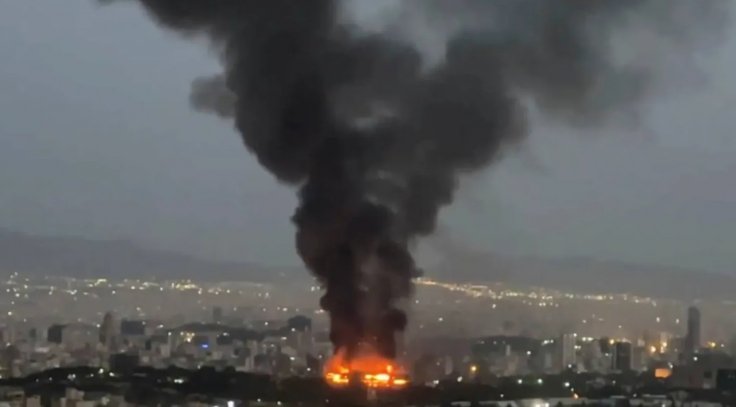
"We continue targeting their defense industrial base at scale, including factories, warehouses, nuclear research and development labs, and the associated infrastructure," he added. White House Press Secretary Karoline Leavitt had earlier announced on Monday that the 11,000-target mark had been reached, but military leaders later explained that the strikes have gone even further.
They said the operations have allowed the U.S. to push deeper into Iranian territory and begin carrying out more flexible, fast-moving "dynamic" strikes.
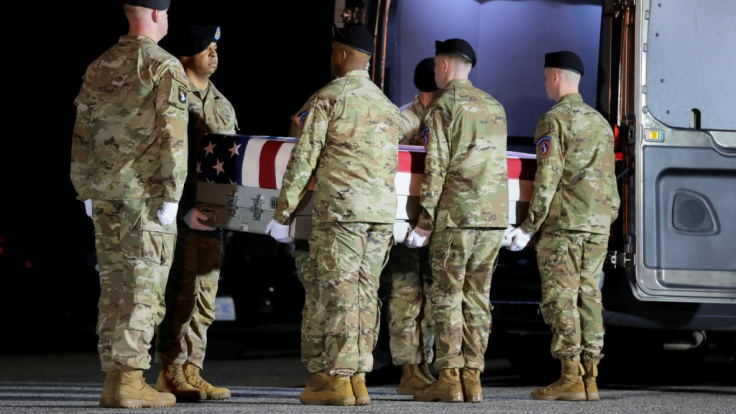
Dynamic strikes are essentially quick, on-the-fly attacks carried out using real-time intelligence instead of being planned ahead of time. War Secretary Pete Hegseth said the U.S. launched more than 200 of these rapid strikes across Iran on Monday alone.
"Over the last 24 hours saw the lowest number of enemy missiles and drones fired by Iran," Hegseth said. "We recently destroyed another one of their command bunkers... Just last night, we had 200 dynamic strikes alone."
President Trump shared a video on Truth Social showing a dramatic strike on an ammunition depot in Isfahan, which sparked a massive fire. The attack reportedly involved powerful 2,000-pound bunker-buster bombs.

Following the strike, Hegseth said the U.S. has seen the "lowest number of enemy missiles and drones fired by Iran" over the past 24 hours.
US Creates Pressure on Iran
He also said that intelligence assessments suggest the sustained bombing campaign over the past month has taken a toll on Iranian morale. At the same time, Hegseth emphasized that diplomatic efforts to bring the conflict to an end are still very much being considered.
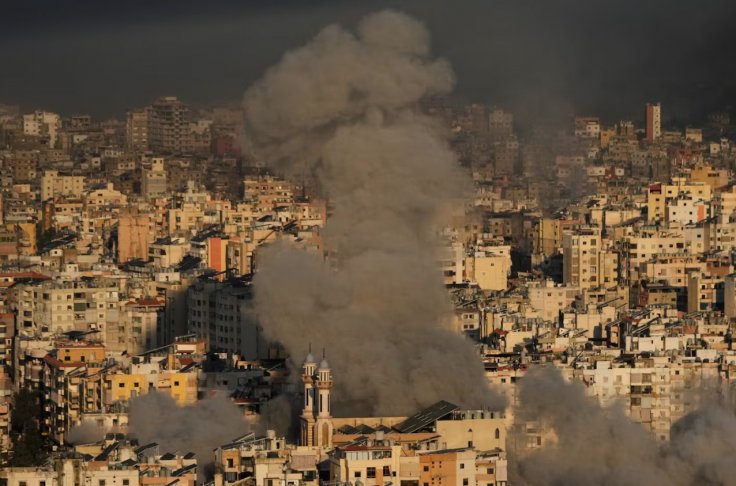
"The latest Intel is clear out of CENTCOM," the Secretary of War said. "Our strikes are damaging the morale of the Iranian military, leading to widespread desertions, key personnel shortages, and causing frustrations amongst senior leaders."
"If Iran is wise, they will cut a deal. President Trump doesn't bluff, and he does not back down," Hegseth warned Tehran at another point. "You can ask [Supreme Leader Ayatollah Ali] Khamenei about that."
The War Secretary said that diplomatic talks with Iran are "very real" and continuing to gain momentum. He added that he has been regularly briefed on the discussions by Secretary of State Marco Rubio, Vice President JD Vance, and special envoys Steve Witkoff and Jared Kushner, all of whom are actively involved in the negotiations.
"We would much prefer to get a deal if Iran was willing to relinquish material they have and ambitions they have," Hegseth said of Tehran's nuclear ambitions. "That's the goal. We don't want to have to do more militarily than we have to, but I didn't mean it flippantly when I said, in the meantime, we'll negotiate with bombs."


