President Trump on Monday intensified pressure on Iran, calling on it to reach a deal with the United States to end the war — and warning that otherwise, he could move to completely dismantle the Islamic regime and its power infrastructure. Trump added, however, that a deal was "probably" within reach.
"The United States of America is in serious discussions with A NEW, AND MORE REASONABLE, REGIME to end our Military Operations in Iran," Trump wrote on Truth Social. Trump didn't give any timeline or share details how a peace deal is possible. Instead, he mocked Iran saying that US will continue to fight a peace deal is not reached soon.
Trump Threatens Iran Again
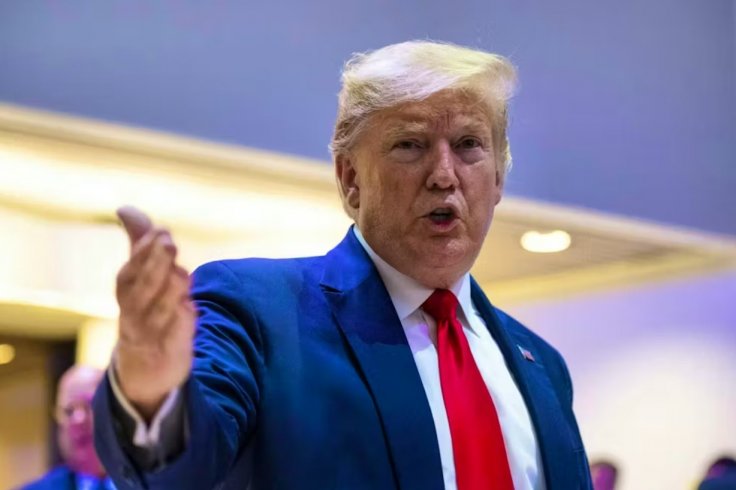
"Great progress has been made but, if for any reason a deal is not shortly reached, which it probably will be, and if the Hormuz Strait is not immediately 'Open for Business,' we will conclude our lovely 'stay' in Iran by blowing up and completely obliterating all of their Electric Generating Plants, Oil Wells and Kharg Island."
Kharg Island is Iran's main export hub. Trump said the US had intentionally avoided targeting those sites, even after previously setting an April 6 deadline for Iran.
"This will be in retribution for our many soldiers, and others, that Iran has butchered and killed over the old Regime's 47 year 'Reign of Terror'," he said.
The renewed threat came just hours after Trump said late Sunday that the U.S. was holding talks with Iran, both "directly and indirectly."
He also raised the idea of taking control of Iran's oil — a move that would likely involve seizing Kharg Island, the key terminal through which nearly all of the country's oil exports flow.
"Maybe we take Kharg Island, maybe we don't," Trump told the Financial Times. "We have a lot of options."
Trump Looking for a Solution
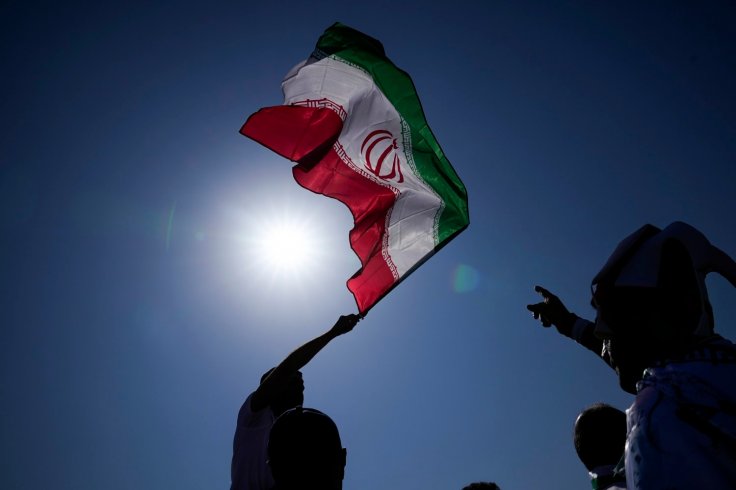
He went on to say that the U.S. still has around 3,000 potential targets in Iran it could strike, but stressed that "A deal could be made fairly quickly." The president also gave Tehran a 10-day deadline to reopen the Strait of Hormuz, whose closure has pushed oil prices up by as much as 50 percent.
On Sunday, nearly 3,500 U.S. Marines and sailors arrived in the Middle East aboard the USS Tripoli, which Trump said could be used to help secure the strait as well as Iran's nuclear sites.
While the Trump administration has not officially confirmed direct negotiations with Iran, reports suggest it views hardline parliament speaker Mohammad-Bagher Ghalibaf as a possible partner for talks.
"The enemy, openly, sends messages of negotiation and dialogue, but secretly is planning a ground attack," Ghalibaf claimed, according to Iranian state media.
He also warned that U.S. officials were "unaware that our men are waiting for American soldiers to enter on the ground so they can set them ablaze and punish their regional partners forever."
Meanwhile, officials from Egypt, Saudi Arabia, Turkey, and Pakistan have largely acted as intermediaries, with foreign ministers from those countries meeting in Islamabad on Sunday to discuss the situation.


