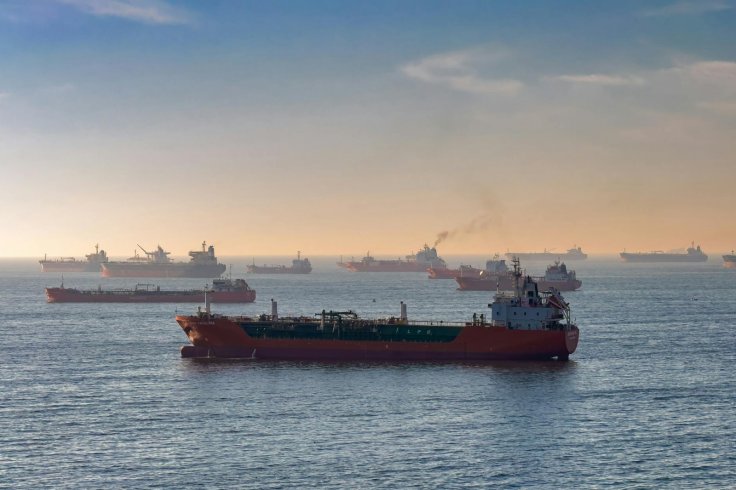
On day 32 of the U.S.-Israel military campaign against Iran, the war has fractured into two parallel crises. One is playing out in missile strikes and nuclear site attacks. The other is unfolding silently in the world's most critical oil chokepoint.
Neither shows signs of ending soon.
Brent crude, the international oil benchmark, climbed to $105.32 per barrel as the conflict entered its second month, according to AP News. Iran's closure of the Strait of Hormuz, the narrow passage between Iran and Oman through which roughly a third of the world's seaborne oil normally flows, has produced what the Altoona Mirror described as the largest supply disruption in global oil market history. Vessel traffic through the strait has collapsed from more than 100 ships per day to fewer than five, according to National Today.
The economic fallout has spread far beyond the Persian Gulf. Stock markets in the United Arab Emirates (UAE) lost an estimated $120 billion in value, with exchanges in Dubai and Abu Dhabi among the hardest hit, Al Jazeera reported.
The European Union warned member states to prepare for "prolonged disruption" to energy markets, according to The Hindu. For American consumers already absorbing elevated fuel costs, the trajectory of prices at the pump now depends substantially on how long the strait stays closed.
Trump's Peace Talk Claims Disputed by Tehran
President Trump has publicly asserted that peace negotiations with Iran are ongoing, framing the conflict as one moving toward a diplomatic resolution.
Tehran's government has rejected that characterization directly and on the record. Iran's position, as reported by Al Jazeera, is that Trump's claims of active peace talks are false.
The White House simultaneously issued a separate signal that complicated the diplomatic picture further. According to Time, the administration indicated that reopening the Strait of Hormuz is not a core condition it requires to declare the war over.
That position stands alongside a separate threat from Trump to strike Iran's electricity plants, oil facilities, and desalination infrastructure if the strait is not reopened, as reported by The Japan Times.
The Iron Mountain Daily News reported that Trump's simultaneous claims of peace talks and threats against civilian water and power infrastructure have drawn scrutiny from rights groups and foreign governments.
Human Rights Watch (HRW), the New York-based international human rights organization, called for investigations into inflammatory statements made by officials from all three governments, arguing that U.S., Israeli, and Iranian leaders must uphold the laws of war. HRW did not single out any one government's statements as uniquely unlawful.
Also Read: Naver Financial Pushes Dunamu Share Swap to September Amid Regulatory Review
Strait of Hormuz Closure and the Global Energy Supply Shock
The military dimension of the conflict has moved in tandem with the energy crisis. U.S. forces struck Iran's Isfahan nuclear facility, believed to store highly enriched uranium, according to ms.now.
Israel struck Iran's Arak Heavy Water Plant, a plutonium production site, while Iran's parliament began considering a withdrawal from the Nuclear Non-Proliferation Treaty (NPT), the 1968 international agreement governing the spread of nuclear weapons, according to United Against Nuclear Iran.
Iranian missiles struck central Tel Aviv, causing major structural damage and casualties, Al Jazeera reported. A separate Iranian missile strike hit an Israeli synagogue, killing nine civilians, including four teenagers. Amnesty International, the London-based human rights organization, called for the attack to be investigated as a war crime. Iran had not publicly responded to that characterization as of the time of reporting.
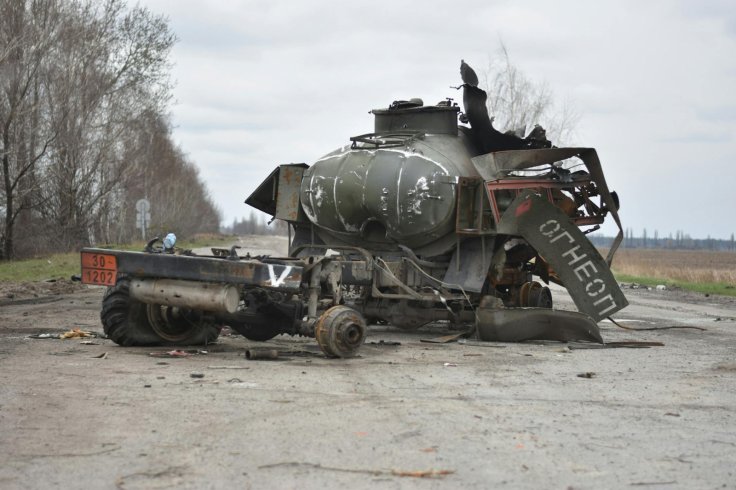
On the ground, the U.S. military presence in the region has expanded considerably. Hundreds of U.S. Special Operations Forces and thousands of Marines are now deployed across the Middle East for potential operations against Iran, CBS News reported. The scale of that deployment points toward contingency planning for ground operations, though no formal order for such operations had been announced.
Senate War Powers Vote Keeps Trump's Campaign Unchecked
On Capitol Hill, an attempt to reassert congressional authority over the conflict failed along near-party-line lines. The U.S. Senate blocked a Democratic-sponsored war powers resolution by a vote of 47 to 53, with Sen. Rand Paul of Kentucky the only Republican to cross party lines in support, CBS News reported.
The War Powers Resolution of 1973, which requires the president to notify Congress within 48 hours of committing forces to hostilities and limits unauthorized deployments to 60 days, has been a recurring point of contention between the executive and legislative branches during overseas military engagements.
The failed vote leaves the Trump administration's military campaign without a congressional mandate but also without a binding legislative check. Democrats argued the resolution was necessary to prevent further escalation without congressional approval. Republican supporters of the vote's defeat argued the president retains authority to conduct the campaign under his constitutional role as commander in chief.
For Americans tracking the conflict's direct costs, the convergence of spiking oil prices, a shuttered maritime corridor, and a diplomatically murky White House posture presents a picture with few clear endpoints. The Strait of Hormuz has never been closed for this long in the modern era. Whether the administration treats its reopening as a war aim or a side issue may ultimately determine how long the energy shock lasts.
Disclaimer: This article was produced with the assistance of artificial intelligence.


