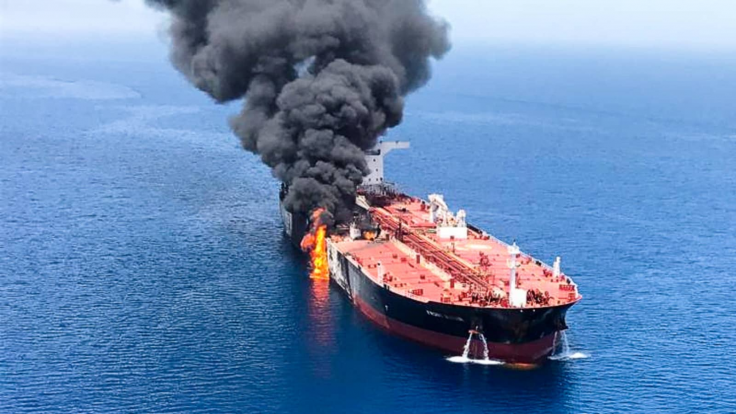
- Viral posts claim Iran targeting ships in Strait of Hormuz.
- Fact-check finds claims mixed with outdated and misleading information.
- Data shows rise in ships disabling tracking signals during conflict.
- Maritime traffic through Strait drops sharply amid security risks.
The core story is real. But four major claims circulating on social media are false, outdated or significantly overstated.
A trend on X that Iran was targeting commercial vessels in the Strait of Hormuz and forcing them to go dark went viral in the days following March 5, 2026, and attracted tens of millions of impressions and intense debate around the truth and veracity of the information being disseminated by social media.
The story was intensified by the @TruthTrumpPost account and the others with dramatic satellite images and broad statements related to Chinese exemptions, a hundred-long queue of ships in the Arabian Sea and crude oil prices taking off sky-rocketing to over 100 a barrel.
The fundamental statement is true, a fact-check into the depths reveals, but has a ring of falsehoods and expired claims about it that have greatly obfuscated people about what is actually occurring at the world's most important oil chokepoint.
What Viral Posts and Videos Are Missing
CLAIM - LARGELY FALSE: China gets a guaranteed "free pass" through the strait.
This statement was flooded on social media and echoed by various high-follower accounts. It is largely false. On March 7, Lloyds List senior analyst Bridget Diakun said it was simply a free pass to China to go through the Strait of Hormuz. It's not obvious in the data."
Some Chinese flagged ships have dodged, but they have done so by transmitting AIS messages with the particular clause stating that they are Chinese, with Chinese crew and their vessel in particular need of it as a signal to minimise the risk, not out of exception.
The Iranian attacks on the varied number of vessels attacking neutral ships and non-aligned ships took place on the first 48 hours by Windward, a consistent area denial policy, but not targeted national policy.
"There's been a lot of talk China gets a free pass to go through the Strait of Hormuz. It's not obvious in the data."
CLAIM - PARTIALLY TRUE: There are more than 150 waiting outside the strait.
The figure is generally in line with satellite photographic evidence of vessel formations around the UAE ports such as Fujairah. Nevertheless, the figure keeps on varying day in day out. The calculation of the tonnage is based upon about 44 to 45 total transits since March 1, which is about 90 percent less than the tonnage actually made, but the 150 figure represents the addition together of the number of ships anchored and the number of transits rerouted entirely to the Cape of Good Hope or Bab el-Mandeb.
Also Read: Comedian Ami Kozak's Satire On US-Israel Strike Goes Viral Online
CLAIM - FAKE: Every dark ship sails right through.
On March 7, the Maltese flagged tanker PRIMA was hit by an Iranian drone and on March 7, the tug MUSAFFAH 2 was also hit when it was at its prime dark-transit time. The darkness of AIS is not a privilege in terms of safety: the uses of Iran coastal radar, fast-attack vessels, and drone strikes are fully independent of the AIS signals.
CLAIM - OUTDATED: Brent crude is above $100 per barrel.
Initially, in early March, the cost of the gasoline rose to a high of around 120 per barrel. By March 9-10, the market has calmed down to approximately 88 per barrel amid the anticipation of the G7 reserve releases and Trump log guarantees that the US Navy would escort the ships. Still referring to the fact that there is a half-life of over-100 at Brent is already stale at least four days old.
What Is Verified and True
The core claim is real. Ships are going dark. In the initial 24 hours of Operation Epic Fury, Windward Maritime AI marked a rise of over 200 percent in the dark vessel activity all by its own. As of March 7, Lloyds list intelligence had verified nine dark transits and its senior analyst observed that the number would be updated to higher numbers as ships re-emerged on satellite feeds in the days after they had passed.
In the most dramatic known confirmed incident, a vessel, a tanker of about one million barrels of Saudi crude loaded at Juaymah Terminal, performs a switchoff of its AIS around March 4 and fails to reappear until about 07:00 UTC on March 9 five days later, the middle of an active war zone, in what Windward called one of the most egregious commercial transits since the beginning of the Hormuz disruption. The operator must have been driven reflectively by the unprecedced freight premiums available: the day rates of VLCC supertankers have almost increased by 94 percent since the battle broke out.
"One of the most audacious commercial transits attempted since the start of the Hormuz disruption."
Non-Iranian operators have virtually stopped trading commercially. March 8 had only recorded two crossings of outbound Iranian-flagged vessels; no outbreak crossings. It is a fall of a pre-crisis level of 60 to 90 daily transits. All the CMA CGM, Hapag-Lloyd, Maersk, suspended the operations in the Gulf.
The divorce of protection and indemnification insurance of approximately 90 per cent of the tonnage oceangoing in the world was suspended in favour of coverage of the Gulf war zone on March 5, and the economic risk was so prohibitive to operators who might be ready to run the physical risk.
Iranian AIS and GPS jamming is widespread and reported. More than 1,650 vessels were affected by the GPS interference on March 7 alone and this is 55 percent higher than was recorded in the previous week as recorded by Windward.
The spoofed signals at Bandar Abbas and Assaluyeh have been used to electronically position ships at airports, nuclear sites and on dry land and generate false compliance indicators with banks and insurers and increase the risk of collisions in an already too narrow 21-mile waterway.