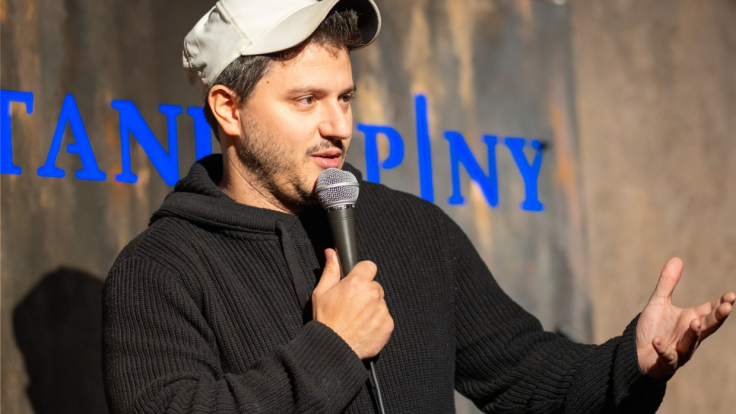
- Israeli comedian Ami Kozak releases satire on U.S.-Israel strike.
- Video mocks pilot dialogue during Operation Epic Fury attack.
- Clip spreads widely on social media within days.
- Analysts say satire helps audiences process geopolitical conflicts online.
One of the most popular titles on the internet today is a satirical audio track recorded by the Israeli comedian Ami Kozak, which mocks Copilot dialogue between Israeli and American Pilots as they fly a combined military aircraft attack on Iran.
Released on March 9, the video superimposes cockpit-style camera shots and comic dialogue with the disciplinary impression one might have of American pilots and a more easy style of communication that one might attribute to Israeli pilots.
The parody is a reference to Operation Epic Fury, an operation on February 28 2026 when the United States and Israel launched attacks against military and nuclear-related targets in Iran. The attack was preceded by a build-up of tensions in the region such as the actual murdering of the Supreme Leader of Iran Ayatollah Ali Khamenei in the initial stages of the battle.
In his clip, Kozak has included parody radio transmissions like the one that says "Do you copy brother? Listen, chill," and "I'm starving," -- spoken in the middle of the mission, as the exemplifications of the comic in portraying cultural differences between the two allied militaries. The satire emphasizes the security co-operation between Washington and Tel Aviv that has existed over time and how humor is usually omitted during the time of geopolitical tension.
Satire Picks Up Ground on Social media
The video spread over the social media quite swiftly, in just days after the release it has received thousands of views as well as close to 3,000 likes. The comments from many online viewers were the overall acclaim given to the impersonations conveyed by the comedian and the exaggeration of cultural differences between two air forces by the clip.
Also Read: Researchers Sue Trump Administration Over Visa Limits On Disinformation Studies
Satiric articles tend to spread more in times of international crises, according to the analysts of digital media, as it gives the audience a means to perceive the complicated and disturbing events.
As Jasmine Enberg, the main analyst of Insider Intelligence, said, people always seek methods of explaining challenging geopolitical events by humor and satire. According to the quote, the digital platforms have enhanced the same dynamic due to the fact that the content can be disseminated throughout the world in a few minutes.
This is also the case with technology companies which provide user-generated content, whose consistent traffic has increased through geopolitical tension. The parent company of YouTube, Alphabet, and Meta Platforms, which owns Facebook, ended on Monday at 182.74 and 523.41 a gain of 0.6 percent and 0.8 percent, respectively, according to the Reuters data.
Online Humor Captures Larger Conflict Narrative
Media critics note that parody videos are becoming influential in the way audiences can discuss conflicts in the world over the web. The viral formats of short-form content creators often combine raw videos with written comments, quickly leaking into the news cycle with a ready-to-spread format of content.
According to a founder of Sonata Insights, Debra Aho Williamson, "comedy has the ability to bring forth differences in cultures, yet it can also bring out similarities. That is why the satire about the international cooperation can be accepted by the audience so frequently."
Also Read: Americans First: US Small Business Admn Bars Foreigners, Green Card Holders From Loans
Operation Epic Fury has constantly been the focus of the world attention because the United States and Israel are coordinating their military engagements on Iranian targets. Following these trends, the viral clip by Kozak shows that the satire has become a part of the overall online discourse of international conflicts.