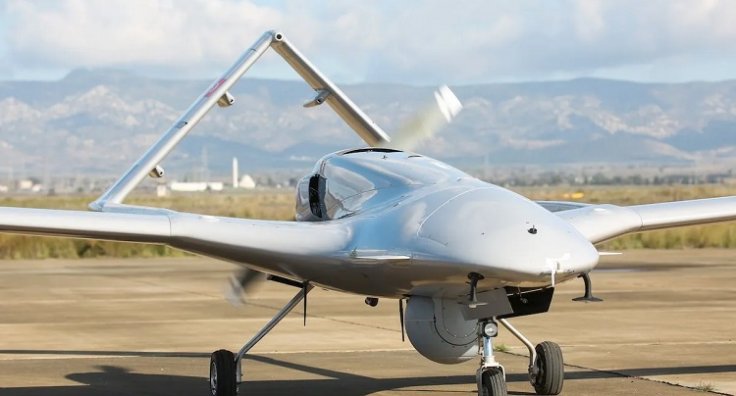
- Iran and allies depleting aerial munition stockpiles during conflict.
- Israel claims destruction of over 300 Iranian missile launchers.
- Iran launched about 600–700 ballistic missiles in early war phase.
- Long-range drones expose gaps in Gulf states' air defenses.
The growing war between Iran, the United States, and Israel is also turning out to be a battle of survival of missile and air defense systems in that each country tries to outlast the other in the case of air attacks. According to the military analysts, the key dynamic of the latest stage of the war can be summarized as a race to the bottom where Iran will target the regional defense with the missile and drone attacks and the United States and Israel will seek to eliminate the launch systems that carry out such attacks.
"Integrated air and missile defense remains critical to protecting our forces, allies and partners from evolving threats including ballistic missiles and unmanned aerial systems," the U.S. Department of Defense said in a statement on regional defense operations.
The Iranian strategy aims at depleting missile defense systems throughout Israel and allies in the Gulf by firing ballistic missiles and long-range drones at military bases, infrastructure, and population hubs.
On the contrary, American and Israeli troops are focusing on destroying mobile launchers of missiles and weakening Iranian command and missile manufacturing strengths. The attempt to find and destroy transporter erector launcher or TELs, or mobile vehicles that transport and launch ballistic missiles, is one of the most significant points in this strategy.
These launchers have been traditionally hard to hunt since they can move speedily, conceal themselves in rough landscapes and fire missiles within minutes of deployment. In the previous wars like operation Desert storm in 1991 and operation Iraqi freedom in 2003 the coalition forces failed to locate and destroy the Iraqi mobile launchers of the missiles even with vast superiority in the air.
Nevertheless, recent advances in surveillance technology and drone warfare seem to make the air forces better able to monitor such systems. Official reports found in military evaluations indicate that Israeli forces state that they have eliminated over 300 Iranian missile launchers since the onset of the present war. Analysts propose that prewar intelligence may have contributed to such successes revealing where storage facilities and transportation routes of missile units of Iran were found.
Drones Surveillance Altering Battlefield
The extensive deployment of surveillance drones flying over the Iranian airspace seems to be one of the factors that allowed the campaign against launch systems of Iran. The military analysts are of the opinion that the United States and Israeli troops are using mass formations of medium and high flying drones that are able to offer round the clock surveillance of the areas of suspected missiles launching.
The unmanned airplanes can monitor the movement of vehicles moving out of underground tunnels and send their targeting details to attack airplanes or precision-guided weapons. Iran has also been reported to have highly resorted to underground stockpiles of missiles and launch vehicles, which is a strategy that ensures that weapons cannot be detected by air.But when launchers come out of these shelters so as to launch missiles they are exposed to detection and destruction.
According to analysts, "this omnipresence has rendered it harder to organize massive missile attacks by Iran". The recent missile attacks seem to be less coordinated and smaller in scale as compared to the previous ones between Iran and Israel. The diminished coordination could be an indication of destruction of command-and-control networks due to continued airstrikes against the Iranian military infrastructure.
This means that the Iranian missile forces can now be operating in smaller units with pre-established strike plans, and in certain cases, uncoordinated as opposed to coordinated campaigns. This change may be the reason behind why missile attacks in the ongoing war have been less frequent compared to the previous encounters.
Missile Firing Reduce During Air Battle
Estimates that are available indicate that Iran released between 600 and 700 ballistic missiles within the initial six days of the war. Although large, it is not dramatically greater than the use of missiles in other confrontations in the past. Iran unleashed an estimated number of 500 to 600 ballistic missiles during the 12 day war between Iran and Israel last June 2025.
Nevertheless, during the previous war Iran used mostly medium range missiles with the range to strike Israel and failed to install shorter range rockets targeting American bases and the states of the Gulf. Medium and short-range missiles are available to Iran in the present conflict, which could increase the scope of potential targets in the region.
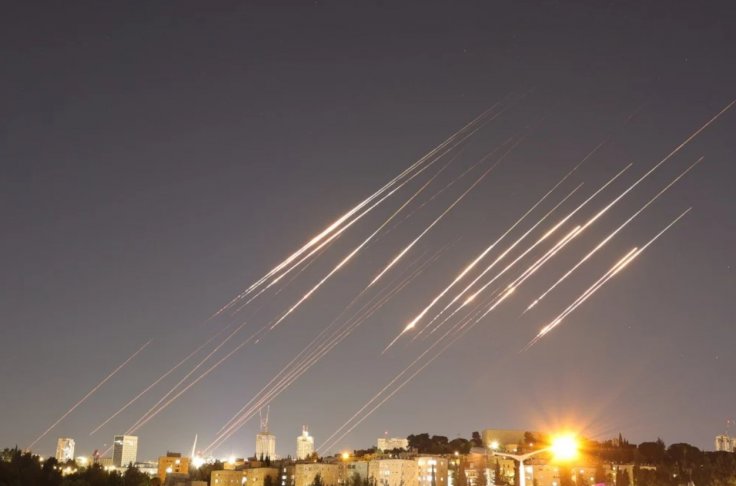
Although this was larger, the magnitude of missile attacks has been observed to have dwindled in recent days, which may be as a result of airstrikes on launch infrastructure and the missile supply chains. The survival of large scale missile operations will be determined by what is left of the launchers and how the forces will manage to sustain a coordinated command under the continued bombing of Iran.
The most important question to U.S and allied forces is whether missile defense systems can go on intercepting the incoming projectiles without depleting the supply of interceptors. Analysts indicate that most Gulf states have hitherto been seen to be in a position to sustain defensive operations without having to experience critical shortages.
Drones Becoming Major Menace
Although ballistic missiles have taken up the headlines, military observers believe that drones with long range capabilities will be an equally challenging threat. Shahed-type drones have become a more common almost any cost of Iran, which can be used to saturate the airspace and overwhelm air defenses due to the sheer quantity of them.
"Our strategy focuses on locating and destroying missile launch capabilities before they can be used," the Israel Defense Forces said, adding that mobile launchers remain among the most challenging targets in modern warfare.
These drones have been employed to attack the targets throughout the region such as the U.S military bases and infrastructure in the Gulf states. The interception of such drones has been rather challenging since they move relatively low and slow, which is challenging to detect and follow using the standard missile defense. In most situations, the defense forces have used manned aircraft to intercept the incoming drones. These attempts notwithstanding, a number of drones have flown through air defenses and hit high profile targets.
Some of the sites that have been mentioned in recent attacks include the U.S embassy compound in Riyadh and the Amazon Web Services related facilities. These events point to the weaknesses of the regional defense systems that are mostly meant to counter the ballistic missiles as opposed to high swarms of the low-cost drones.
Analysts opine that such a change of tactics may transform the manner in which future conflicts will be fought in the region. Although ballistic missiles will continue to be effective tools of coercion, drones can offer a less expensive and more versatile tool of maintaining pressure on enemy lines.
With the war going on, the result can be less dramatic in terms of missile volleys, and more about whether either party can hold enough armaments and defensive interceptors, respectively. The dynamic nature of the fight between missiles, drones and air defenses depicts how the present-day warfare is more centered on logistics and technological stamina than on winning on the battlefield.