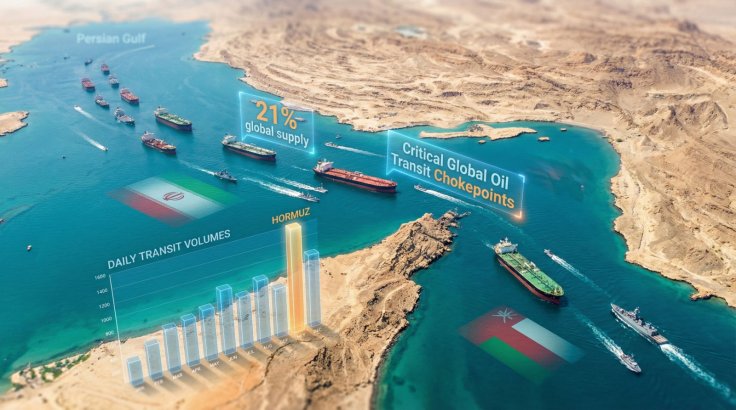
- Iran approves Hormuz toll plan banning U.S. and Israeli ships
- Proposal requires vessels to pay transit fees in Iranian currency
- Strait disruption cuts global oil flows and impacts multiple commodities
- Move escalates tensions as U.S. disputes Iran's control over waterway
Iran's Parliament Security Committee approved a sweeping plan to impose transit tolls on the Strait of Hormuz, banning U.S. and Israeli vessels outright. The committee voted in favor of the Strait of Hormuz Management Plan on March 31, 2026. The measure still requires full parliamentary passage before it becomes law.
The strait is the world's most consequential maritime chokepoint, handling roughly 20% of global crude oil and liquefied natural gas transit annually. Around 30,000 vessels pass through it each year, carrying not only petroleum but also fertilizers, aluminum, helium, and petrochemicals that underpin supply chains far removed from the energy sector. Disrupting it, even partially, radiates through commodity markets on every continent.
Under the approved plan, vessels transiting the strait would pay fees denominated in Iranian rials, the country's heavily sanctioned national currency. The requirement to transact in rials is notable: it would compel foreign shipping operators to acquire and hold a currency that the United States has spent years trying to isolate from global financial systems.
The legislation would also formalize Iran's "sovereign role" in the waterway and strengthen military oversight of ship movements. A package of security arrangements, ship safety protocols, and environmental protection measures is bundled into the same plan.
The toll structure carries an additional layer of enforcement. According to the Saudi Gazette, some vessels have reportedly already paid Iran approximately $2 million for safe passage through the strait, though that figure could not be independently confirmed from a second source. If accurate, it suggests an informal toll regime has been operating ahead of any formal legal framework.
Beyond Oil: The Commodities Hidden in Hormuz Traffic
Most coverage of Hormuz disruptions focuses on crude oil. The freight mix passing through the strait tells a broader story. Al Jazeera reported that the waterway carries annual volumes of fertilizers, aluminum, helium, and petrochemicals, commodities whose supply chains are largely invisible to energy-market analysts but deeply consequential for agriculture, manufacturing, and technology industries.
A prolonged closure does not merely raise gasoline prices. It tightens the supply of ammonia-based fertilizers reaching South Asian farmlands, constrains aluminum feedstock moving to European smelters, and crimps the helium supply that semiconductor fabrication plants depend upon.
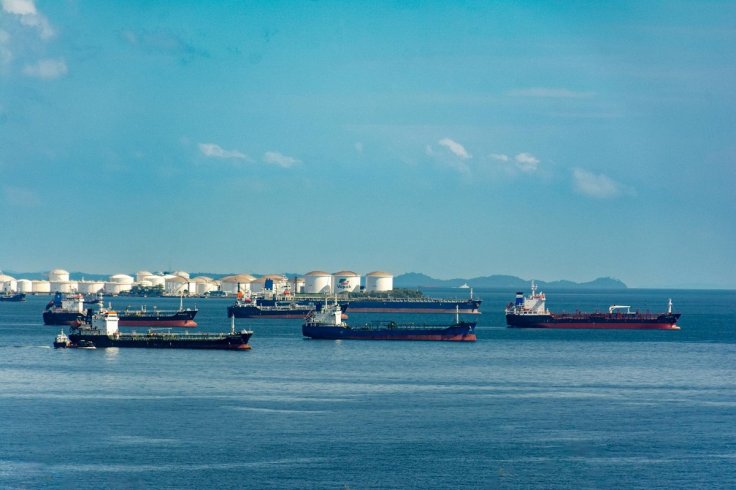
India's situation illustrates the civilian dimension most sharply. The country imports nearly 90% of its liquefied petroleum gas (LPG), the cooking fuel used by hundreds of millions of households, through the Strait of Hormuz. Iran's effective closure of the waterway since the current conflict began has triggered a severe LPG shortage across India, according to India Today. That shortage has no short-term alternative supply route capable of absorbing demand at scale.
Ship crossings through the strait have fallen by approximately 95% since the conflict began, according to Al Arabiya, though that figure has not been confirmed by a second independent source. Even at a fraction of that estimate, the reduction represents the most acute supply disruption in global energy market history, according to Al Jazeera. Brent crude, the international oil benchmark, has topped $114 per barrel as a direct consequence of the disruption, according to the Straits Times.
Washington's Response and the Legal Question Nobody Is Answering
The United States has not accepted Iran's framing of the waterway as sovereign territory subject to Iranian toll authority. U.S. Treasury Secretary Scott Bessent stated publicly that the United States plans to retake control of the Strait of Hormuz to ensure freedom of navigation. President Donald Trump went further, threatening to target Iran's civilian energy infrastructure if Tehran does not reopen the strait.
Those positions rest on a foundational legal dispute that neither side has fully litigated in an international forum. The Strait of Hormuz runs between Iran and Oman. Under the United Nations Convention on the Law of the Sea (UNCLOS), the legal framework governing international maritime transit, vessels enjoy the right of transit passage through international straits used for international navigation.
Iran is not a signatory to UNCLOS. Tehran has historically argued that the strait falls within its territorial waters and those of Oman, giving it co-authority over access. The United States, which also has not ratified UNCLOS but applies its navigational provisions selectively, contests that interpretation.
The plan approved by Iran's Parliament Security Committee on March 31 would, if enacted, convert that legal ambiguity into operational policy backed by military enforcement. It does not resolve the underlying sovereignty dispute. It asserts a position within it.
The conflict driving the current crisis entered its second month as of March 2026, with the strait at the center of a geopolitical standoff that has drawn in regional and global actors. Oman, whose coastline forms the strait's southern boundary, has historically served as a back-channel between Tehran and Washington, though no Omani-mediated framework for strait governance has been publicly reported in connection with the current plan.
Iran's government has not issued a detailed public statement on the timeline for full parliamentary consideration of the Management Plan. The United States did not respond publicly to the committee vote by press time.


