President Donald Trump is reportedly considering a highly complicated and potentially dangerous military plan that would involve deploying U.S. special forces deep into Iran to take control of its enriched uranium reserves.
Such an operation could leave American troops operating inside hostile territory for several days — possibly even up to a week — raising the risk of a sharp escalation in the conflict. It was said to be just one of several options the Pentagon is currently considering. The covert plan would focus on securing roughly 1,000 pounds of enriched uranium believed to be stored at one or possibly two nuclear facilities in Natanz and Isfahan, according to some U.S. officials.
Trump's Plan to Seize Iran's Uranium
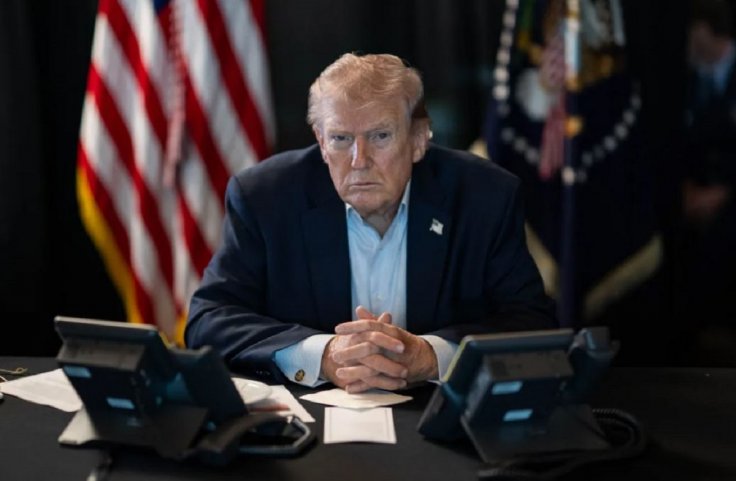
The objective of the mission would be to take the radioactive material completely out of Iran's hands, cutting off any potential route to developing a nuclear weapon. The plan is still being reviewed, and Trump has not given it final approval. However, officials told The Wall Street Journal that he is seriously weighing the option, even as advisers caution about the risks to U.S. troops and the chance of the situation spiraling into a wider conflict.
Defense experts say such an operation would rank among the most challenging missions the U.S. military could attempt.
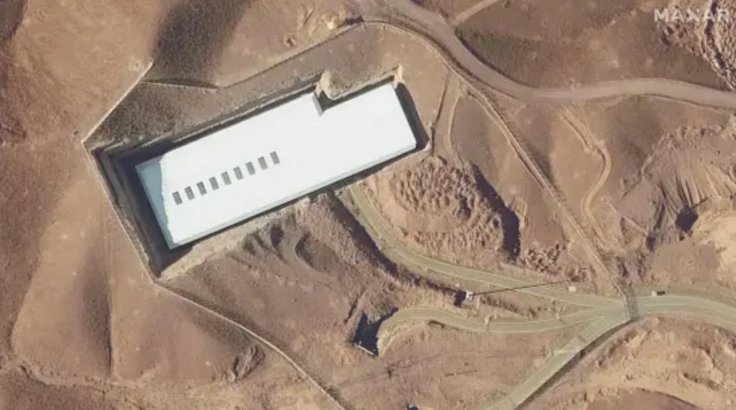
Troops would likely have to enter heavily guarded territory, possibly facing fire from Iranian air defenses and drones, before they could secure the nuclear facilities believed to store the material.
After landing, combat units would work to secure the area, while specialized teams move in to locate the uranium, secure it, and get it ready for removal.
"This is not a quick in-and-out kind of deal," retired Gen. Joseph Votel — a former head of U.S. Central Command and U.S. Special Operations Command — told the Journal, highlighting just how complex such a mission could be.
Officials believe the uranium is spread across several fortified locations, including underground facilities in Isfahan and Natanz — sites that have already been hit in earlier strikes.
The growing military presence in the region shows how seriously this option is being taken.
Several hundred U.S. special operations forces — including Army Rangers and Navy SEALs — have already been deployed, joining thousands of Marines and Army paratroopers, according to The New York Times.
Risk of war Escalating Further
While these elite units have not yet been given specific assignments, officials say they could be sent to multiple hotspots. Their roles might include protecting the Strait of Hormuz, supporting a possible move to seize Kharg Island, or participating in an operation targeting Iran's nuclear facilities.
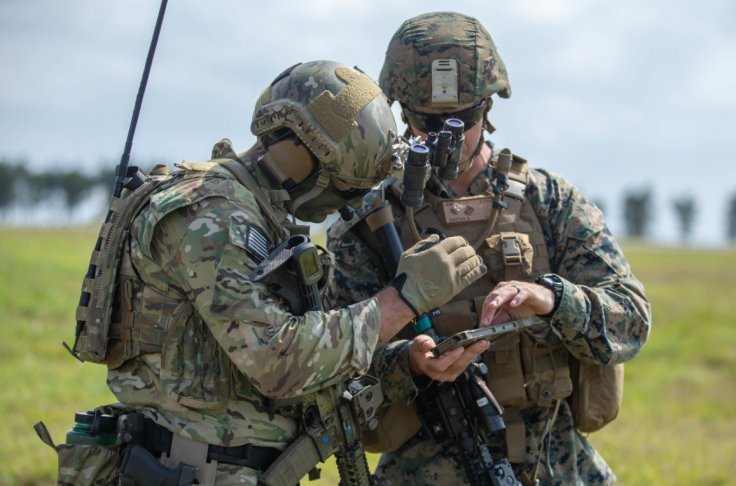
In addition, around 2,500 Marines and 2,500 sailors have recently arrived, along with roughly 2,000 troops from the Army's 82nd Airborne Division.
Altogether, more than 50,000 U.S. personnel are now stationed across the Middle East — about 10,000 more than usual — positioned at bases and aboard ships in countries such as Saudi Arabia, Bahrain, Iraq, Syria, Jordan, Qatar, the United Arab Emirates, and Kuwait.
Even with this buildup, military analysts warn that the challenges would be immense if forces were ordered into Iran.
Experts point out that while special operations troops can carry out precise missions, any prolonged ground campaign in a country as large and heavily armed as Iran would demand far more troops than are currently in place.
Behind closed doors, Trump has also directed his advisers to push Iran to voluntarily hand over the uranium as part of any potential deal to end the war.


