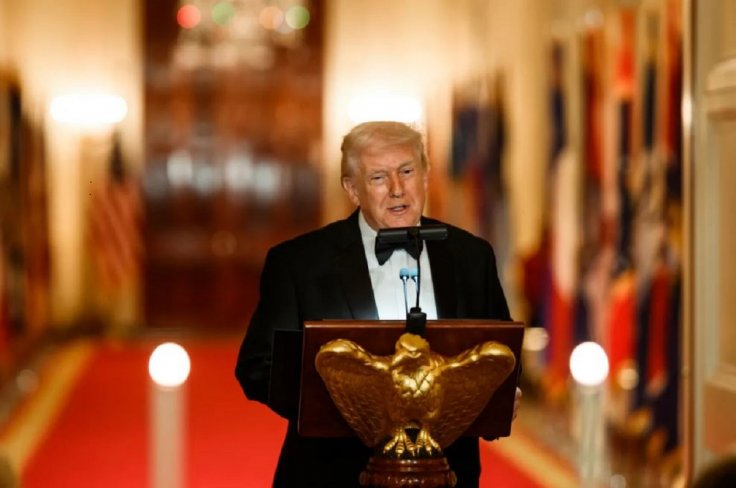
President Donald Trump reported that Iran has recently presented the United States with a very big gift, which relates to oil and gas flows and added that the U.S. could take over the oil export center of the country.
The statements were made at the end of March, when Trump addressed reporters in Washington and interviewers on the story regarding the war between the United States and Iran that had started at the end of February 2026. The president was not very specific on what the gift was, but associated it with the energy channeling in the Strait of Hormuz.
He further said that the development had an oil and gas connection and a relationship with shipping via the Strait of Hormuz, which was among the most important energy maritime routes in the world. Approximately one-fifth of oil exports in the world are in the narrow waterway between Iran and the Arabian Peninsula.
The remarks appeared at a time of increased military activity in the Persian Gulf, as well as a new round of speculation over the U.S. intentions with regard to attacking the Iranian oil infrastructure.
Kharg Island and the strategic oil calculus
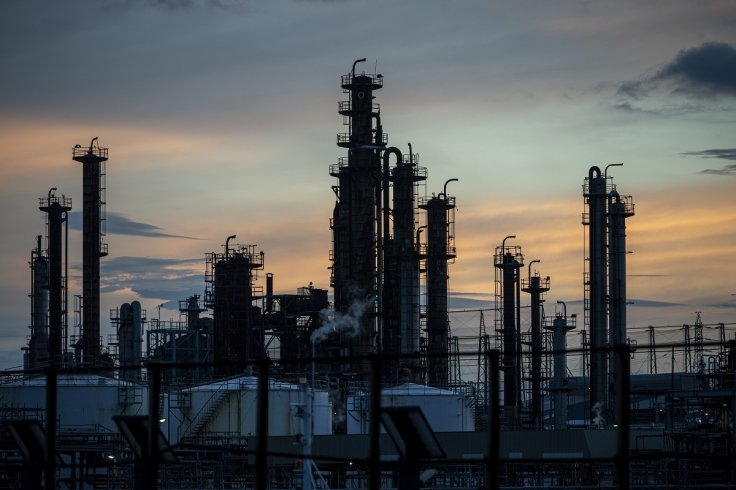
Another option, which Trump mentioned, was the possibility of the United States seizing Kharg Island, the primary oil export terminal of Iran in the Persian Gulf.
The Kharg Island is approximately 16 miles away along the southwest coast of Iran, and it is the location where most of the seaborne crude shipments in the country are conducted.
Energy data companies project that approximately 90 percent of Iranian oil exports pass via the storage tanks and loading terminals on the island. When comments were made about the possible military action, it was said that the island could be captured quickly.
Trump stated, "To be honest with you, my favorite thing is to take the oil in Iran". He further stated that the United States has plenty of choices in what to do with the island and that it would take American troops to stay there long enough to occupy it.
U.S Central Command already confirmed that in an earlier strike in March, American troops had undertaken a massive precision strike on Kharg Island. The operation was directed against over 90 Iranian military bases, such as missile storage, weapons and naval mines depots related to attacks on shipping lanes.
At first, the Pentagon stated that the attacks were not targeted against the oil infrastructure.
The possession of the island would accord the United States or its allies immense bargaining power over the economy of Iran. As widely explained by analysts, Kharg Island is the most significant energy export hub in the country.
In a public post earlier in March, the U.S. Senator Lindsey Graham said, "If Iran loses the ability to operate its oil infrastructure from Kharg Island, its economy is annihilated".
Iranian leadership and regional reaction
Iranian officials have rejected suggestions that the United States could occupy the island without major retaliation.
Tehran has warned that any attempt to seize territory or energy infrastructure would escalate the conflict across the region. Iranian leaders have repeatedly said attacks on oil installations could trigger wider military responses in the Persian Gulf.
Iran's parliament speaker Mohammad Bagher Ghalibaf has accused Washington of preparing for a broader ground assault while publicly discussing diplomacy.
Iranian authorities have also denied participating in direct negotiations with the United States, despite Trump's statements that talks are underway.
Oil markets react to escalation signals
Trump's comments about potentially "taking the oil in Iran" quickly echoed in global energy markets.
Brent crude futures climbed above $115 per barrel on March 30 as traders weighed the possibility that the conflict could disrupt additional oil supply from the Middle East.
The fighting has already affected shipping through the Strait of Hormuz and raised concerns about the stability of energy exports from the region. Analysts estimate roughly 20 percent of global oil and liquefied natural gas shipments pass through the strait each year.
The International Energy Agency (IEA) has released hundreds of millions of barrels from strategic reserves to stabilize markets after the conflict disrupted energy flows in early March.
Diplomacy moves alongside military planning
At the same time Trump floated the idea of seizing Kharg Island, diplomatic efforts to end the war continued.
Pakistan has offered to host talks between U.S. and Iranian representatives as regional governments push for a ceasefire.
Trump said Iran allowed several oil tankers to pass through the Strait of Hormuz in recent days as what he described as "a sign of respect."
Iranian officials have not confirmed any such arrangement.
The combination of negotiation signals and military planning has left analysts focusing on the strategic value of Iran's energy infrastructure.
Kharg Island remains at the center of that calculation.
Also Read: New Strategy Unfolding? Vance and Rubio Go Suddenly Quiet on Iran


