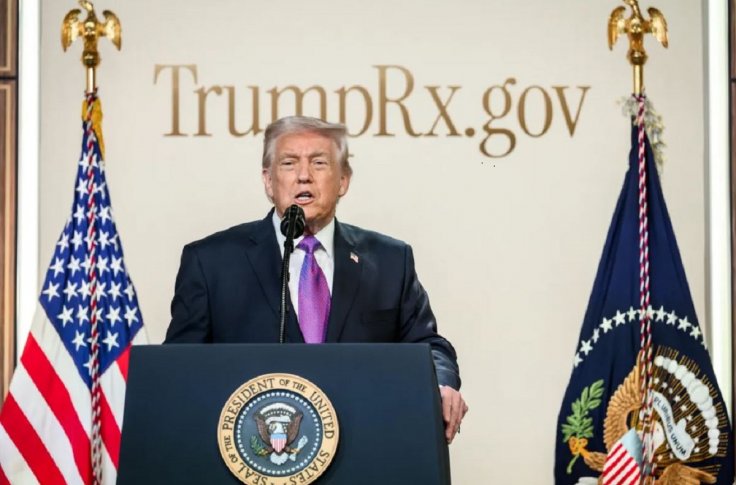
One question is circulating quietly among Trump's inner circle. Not about troop movements or uranium stockpiles. About the next president of the United States.
As reported by various sources, each in late March 2026, President Donald Trump has been posing his allies and advisers a stinging question: JD or Marco? That question has been taken on board with urgency by the Iran conflict, which is about a month old. Both Vice President JD Vance and Secretary of State Marco Rubio agree that the way they conduct themselves in this war would spell the difference between either of them attaining the White House in 2028.
The notable thing about both men right now is how little they are saying publicly about any of it.
Vance, Rubio, and the Calculus of Silence
Vance is in the still more complex role. Part of the political brand he constructed was based on doubts about foreign military engagements, politics that found an echo in the America First side of the Republican Party. The conflict with Iran places that instinct in a head-on collision with his institutional duty as the vice president and personal devotion to Trump.
According to most estimates, Vance has not publicly opposed the Iran policy of the administration. He has remained supportive of the choices made by Trump with what allies declare to be a privately reserved position on the expansion of the war. An imbalance seems to be causing burns. One report made by mexc.co indicates that Trump has been sending snide and annoying remarks towards Vance regarding him not being as much in favor of the Iran campaign as other senior officials, which could not be confirmed in a second source. The office of the Vice President was not forthcoming on that characterization.
The positioning of Rubio is different. The Secretary of State, who also represented Florida in the Senate of the U.S. for over 12 years and has since joined the administration, has had his profile elevated by direct involvement in high-stakes foreign policy business in the Iran battle. A report issued by finedayradio.com indicates that, according to some Republicans, Trump shows more favor towards Rubio during the crisis, even during meetings and in other social situations, which is, in fact, body language, which in itself implies subjectivity, as any such observation is subjective by its very nature.
This is one statement that Rubio has at least made that successfully removes a possible danger of internal conflict. He stated that he would never run in a 2028 presidential campaign in which Vance would be a candidate and would be his running mate. Such a statement, be it strategic or genuine, precludes one of the possible situations that could have divided the pro-Trump coalition at its inception.
Trump's Approval Rating and the Risk Each Man Is Managing
The silence strategy is easier to comprehend within the larger political context. The approval rating of Trump has fallen to 36 due to the Iran war and the increase in fuel prices. That, as true, poses a certain type of exposure to any potential successor: excessive conspicuity to Trump could jeopardize the Republican base, excessive conspicuity to an unpopular war could be more general election-damaging.
Vance and Rubio have not managed to work out that tension in the open. They seem to have decided, in the meantime, that it is the safer course not to settle it publicly.
Trump, on his part, conducted his first wartime Cabinet meeting around one month into the Iran conflict, with the tone of the meeting being one of diplomacy mixed with military threat. The administration is also considering a military operation to raid the Iranian stockpiles of enriched uranium, a situation which would force the U.S forces to work within Iranian soil for days or more. Another uncertainty that Trump has shown is whether it would be appropriate to respect a five-day pause of the attack previously announced. As the disagreement intensifies, the pressure on both men to assume a more distinct role in the public will increase, respectively.
CPAC Numbers and What They Actually Measure
Out of the war room, the beginning of the 2028 polling tells one tale. Vance was elected to the 2028 presidential straw poll in the Conservative Political Action Conference (CPAC) of conservative activists, which has been a longtime temperature check of the Republican base. Rubio drew 35%. This disjunction is indicative of the structural advantage that Vance has within the activist base, which was the voters that supported the America First agenda of Trump and have mostly digested Vance as its successor.
CPAC straw polls are not binding and have not been dependable predictors of primary results in the past. Their merit is that they are an indicator of the position of the motivated, organized wing of the party at a particular time. At this point, he is with Vance on that wing.
The route that Rubio would follow to 2028, should he pursue it, is through an alternative form of coalition; that of foreign policy credibility, establishment Republican and a general election electability case. The Iran conflict, with its result, may make it difficult to resolve the case significantly.
The two men are not in open competition, at least not in public. The declared readiness of Rubio to work under Vance, along with a domination of CPAC by the latter, establishes a facade hierarchy. What lies under there is what Trump, in question, has been asking his allies in the past weeks, is probing.
The war with Iran has not been solved. The tastes of Trump are not determined yet. The two men are going silent and awaiting the outcome of the break.


