
- U.S. intelligence warned Trump of potential Iranian retaliation before strikes
- Iranian attacks hit Gulf states, including U.S. military bases
- Trump says retaliation against regional allies came as a surprise
- Iran disrupts Hormuz shipping, driving global oil price increases
According to the officials who had read the pre-war intelligence assessment, U.S. President Donald Trump had been warned before the military action against Iran by the possibility that Tehran would retaliate against the US allies in the Gulf, cast the question of the calculations the administration made against the enemy on the rise.
The warnings, which preceded the entrance of the United States into the fight against Iran by joining nuclear attacks on the country on Feb. 28, were to show that a response was indeed a realistic possibility, especially in the event that the Gulf states were felt to be behind or facilitate the campaign by Tehran.
An American official and experts who have listened to intelligence briefings indicated that the evaluations did not assure such kind of reaction but they evidently named it as a possibility.
Premedication of intelligence during the pre-war period indicated that Iran might have tried to cripple shipping in the Strait of Hormuz, which is a major global energy route and this has actually come to pass with the water passage being virtually shut.
Trump has warned, however, in the current week that the extent and magnitude of Iranian retaliation was not anticipated.
Trump said that they (Iran) were not meant to attack all these other nations in the Middle East. "Nobody expected that. We were shocked."
Strikes at a Regional Level Highlight The Importance of Intelligence Issues
Within the last two weeks, Iranian missile and drone strikes have been directed to the Gulf nations, such as Qatar, Saudi Arabia, the United Arab Emirates, Bahrain and Kuwait.
The strikes have targeted various targets, such as military installations of the United States, the facilities of the allied forces, and even the civilian facilities, including airports, hotels, and energy plants.
In the United Arab Emirates, drone attack targets an oil tank outside Dubai International Airport, and other attacks were made on oil facilities and transport infrastructure in the region.
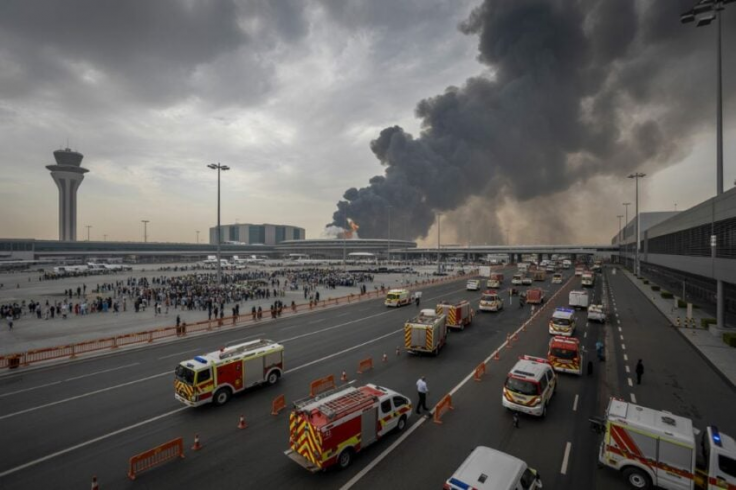
The rising has intensified the fear that the conflict may be extended to a wider regional clash of several countries and strategic assets.
In a report by Reuters, Iran has also successfully blocked majority of shipping via the Strait of Hormuz through which about 20 percent of the world oil passes thereby adding to a significant increase in energy prices.
The reaction to the disruption has been very strong in oil markets. In recent sessions, Brent crude has risen to more than 105 per barrel, more than 40 percent above the levels at the end of February, because of supply issues surrounding the conflict.
The destabilization has intensified the burden on governments and central banks because the growing energy costs are transferred to the inflation process and pose threats to the economic growth of the whole world.
The Washington Debate on Politics Heats Up
The intelligence revelations have contributed to the political discourse in Washington on the validity of the military operation and the management of its possible outcomes.
Democratic legislators who were briefed by the administration officials declared that they were not shown any sign of an imminent threat posed by Iran that would have forced it to take immediate military action.
Those officials who were aware of the intelligence tests stated that the analysts had also cautioned that the attack on the high-profile leaders of Iran or its essential infrastructure would bring the retaliation against U.S. citizens and assets in the country.
These threats were not limited to direct targets of the U.S. but also to allied nations where the American troops were stationed or cooperating with the U.S. action.
The administration has in the past mentioned various issues to justify the strikes such as Iran being able to launch missiles and having a nuclear program yet some of the claims have not been upheld publicly using specific intelligence discoveries.
The office of the director of national intelligence refused to comment on the assessments and the white house did not react instantly to calls requesting clarification.
Strategic Risks And Market Fallout
The warnings of the possible escalation have also become relevant again when the war enters the third week, and the exchanges of attacks in the region are still continuing.
Iran has also proven its capability of launching sustained operations despite continuous attacks on its military assets through drones and missiles to strike military and economic targets.
One of the most crucial effects of the conflict has become the almost complete stalling of the Strait of Hormuz, which had a direct impact on the energy distribution in the world and increased volatility in the market.
This has caused investors to reevaluate risk in the asset classes with the increase in oil prices adding to the issue of inflation and central bank policy expectations.
The war has also complicated the diplomacy process as the United States is trying to enlist the help of its allies to guarantee the open sea routes and some of the partners have indicated that they are not willing to join directly.
The topic of intelligence testing, combined with military policy and geopolitical processes, remains to influence the situation in the region and the world economy in general as the situation advances.
The degree to which early-warning coincides with the ongoing developments is the center of attention to the policymakers and analysts trying to evaluate the course of the conflict and the implications of the conflict in general.


