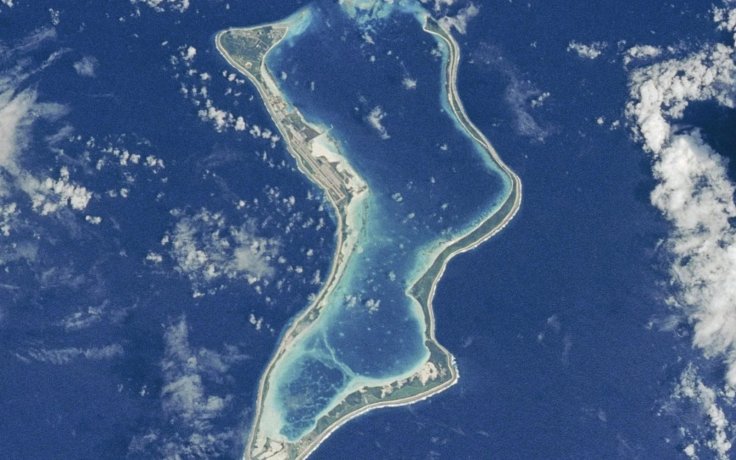
- Iran fired two ballistic missiles at US-UK base Diego Garcia.
- Missiles failed; one malfunctioned, interception outcome remains unconfirmed.
- Strike suggests capability to reach targets about 4,000 kilometres away.
- Analysts assess missile type, accuracy limits, and possible external intelligence support.
On Friday morning local time, Iran fired two ballistic missiles at Diego Garcia, a joint US-UK military base on a tiny coral atoll in the middle of the Indian Ocean, roughly 4,000 kilometers from Iran's coast. Neither missile struck the base.
One failed in flight. A US warship fired an interception at the other. Whether the interception succeeded has not been confirmed. But the fact that Iran tried at all has sent shockwaves through the intelligence communities of a dozen nations because according to Iran's own foreign minister, speaking just two weeks ago, it was supposed to be impossible.
What Is Diego Garcia?
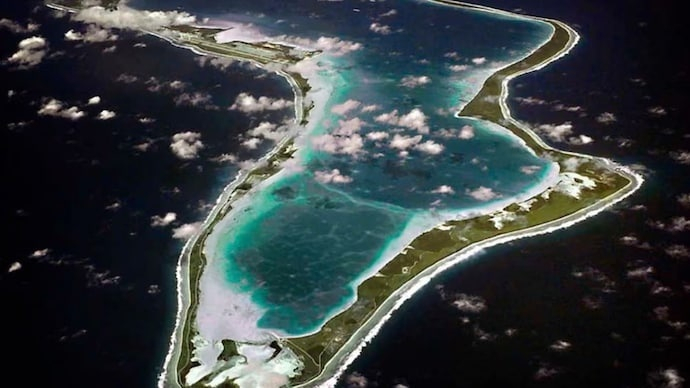
Diego Garcia is the largest island of the Chagos Archipelago, a chain of more than 60 coral islands scattered across the central Indian Ocean, roughly equidistant between Africa and Indonesia, and about 1,600 kilometers south of India. The island itself is shaped like a footprint and covers just 44 square kilometers. Its population today is entirely military.
Britain has administered the islands since 1814, when France ceded them after the Napoleonic Wars. In the 1960s and early 1970s, the British government secretly and forcibly removed the entire indigenous Chagossian population between 1,500 and 2,000 people to make way for a US military base. That eviction remains one of the most controversial episodes in modern British colonial history. The United Nations General Assembly and the International Court of Justice have both called on the UK to end its administration of the islands and transfer sovereignty to Mauritius.
The base itself is described by the US as "an all but indispensable platform" for military operations across the Middle East, South Asia, and East Africa. It hosts approximately 2,500 mostly American personnel, a deep-water harbor capable of berthing aircraft carriers and nuclear submarines, a runway long enough for B-2 Spirit stealth bombers and B-52s, and extensive fuel and munitions storage.
It has been used in virtually every major American military operation since its construction Vietnam, the Gulf War, the 2001 invasion of Afghanistan, the 2003 Iraq War and now the Iran war. US B-2 stealth bombers flew missions against Yemen's Houthis from Diego Garcia as recently as 2025.
Britain had initially refused to allow Diego Garcia to be used for US-Israeli offensive strikes on Iran. After Iranian retaliatory attacks struck the UAE, Qatar and Bahrain, London reversed course, authorizing American bombers to use Diego Garcia and RAF Fairford for "specific and limited defensive operations" specifically targeting Iranian missile sites being used to attack shipping in the Strait of Hormuz. That decision made Diego Garcia a target.
How Did Iran's Missiles Reach This Far?
This is the question that has alarmed every intelligence agency tracking the conflict. Iran's foreign minister, Abbas Araghchi, said publicly on March 8 that Iran had voluntarily limited its ballistic missile program to a maximum range of 2,000 kilometers.
Diego Garcia is approximately 4,000 kilometers from Iran, double that stated limit. The Wall Street Journal, which first reported the strike citing multiple US officials, described the missiles as intermediate-range ballistic missiles. Israel's military described them as two-stage intercontinental ballistic missiles.
The most plausible technical explanation, according to Justin Bronk of the Royal United Services Institute, is that Iran may have improvised by converting its Simorgh space launch rocket into a ballistic missile.
The Simorgh is a two-stage rocket designed to place satellites in orbit, but its two-stage architecture, with one engine burning to reach space and a second propelling the payload to target, is exactly the configuration Israel's military described. The trade-off, Bronk noted, is dramatically reduced accuracy, which may explain why neither missile came close enough to require a direct interception of the base.
Trita Parsi of the Quincy Institute raised a second concern on CNN: that Iran may not even have generated its own targeting intelligence for a base so far from its surveillance assets. "They don't have eyes there essentially through their satellites," Parsi said. "So that intelligence is most likely coming from the Russians and the Chinese." CNN had separately reported this month that Russia is actively providing Iran with intelligence on the locations and movements of American troops, ships and aircraft.
Zamir's framing that the missiles were a message to Europe rather than a military operation against Israel captures the strategic significance of Friday's launch precisely. The missiles missed. But the range they demonstrated did not.
Iran has now shown that it can, or at least attempt to reach targets more than 4,000 kilometers away, across an ocean it has never previously been considered capable of threatening. Whether that range can be consistently achieved, accurately targeted, and repeated under wartime conditions are the three questions every defense ministry in Europe woke up asking on Saturday morning.


