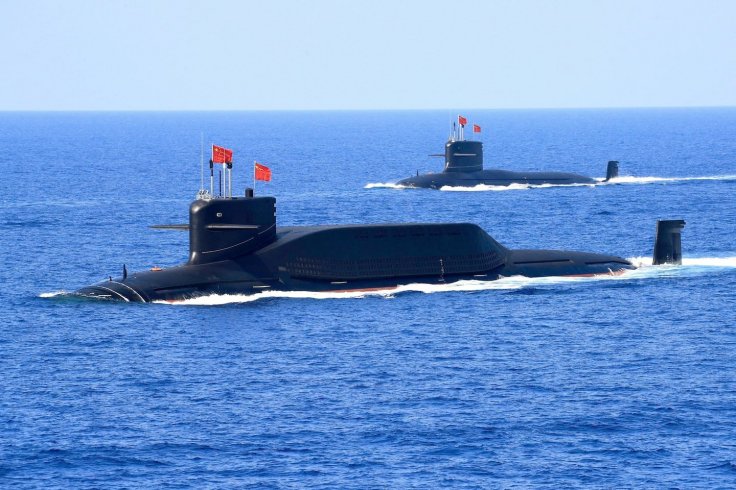
- China maps oceans, deploys sensors to enhance submarine warfare capabilities.
- Strategic analysis tracked 42 vessels over five years globally.
- Sensor network around India raises concerns over naval surveillance.
- Experts say data aids detection of US and Indian submarines easily.
China has been conducting one of the most extensive undersea mapping and sensor deployment operations in history across the Pacific, Indian, and Arctic Oceans, building a detailed picture of ocean floor topography and water conditions that nine independent naval warfare experts confirm is specifically designed to give Beijing an asymmetric advantage in submarine warfare against the United States and its allies. For India, which sits at the center of the Indian Ocean mapped by the operation, the implications are direct, immediate, and deeply concerning.
The investigation, published today by Reuters and based on five years of ship-tracking data from 42 Chinese research vessels analyzed by New Zealand firm Starboard Maritime Intelligence, reveals for the first time the full geographical scope of what Beijing calls its 'transparent ocean' program. The scale, said Ryan Martinson of the US Naval War College, is "frankly astonishing."
What China Has Built Around India
The Indian Ocean section of the Reuters investigation is the most alarming for New Delhi. Chinese Academy of Sciences and Ministry of Natural Resources documents describe a sensor array that effectively rings India and Sri Lanka.
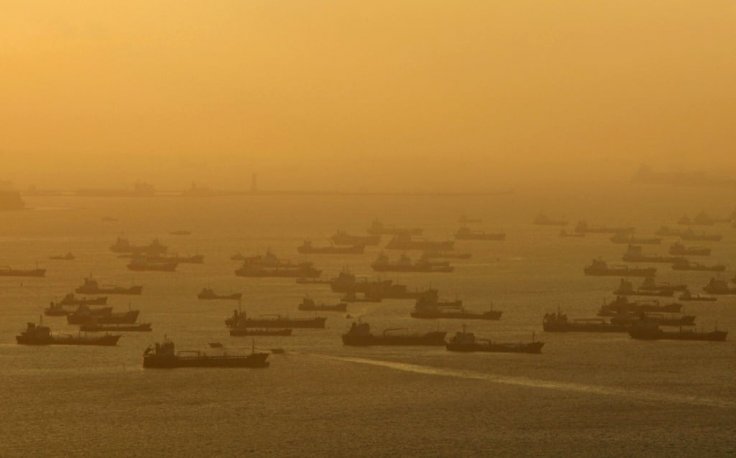
The array includes installations along the Ninety East Ridge, one of the world's longest undersea mountain ranges, which sits directly astride the southern approach to the Malacca Strait, through which the majority of China's oil supply passes. By mapping this ridge and deploying sensors along it, China gains simultaneous intelligence on its own supply route vulnerabilities and on any US or Indian submarine movements approaching the strait.
In March 2025, the research vessel Dong Fang Hong 3, operated by Ocean University of China, whose president has publicly celebrated its "close ties" to China's navy, crisscrossed the waters between Sri Lanka and Indonesia.
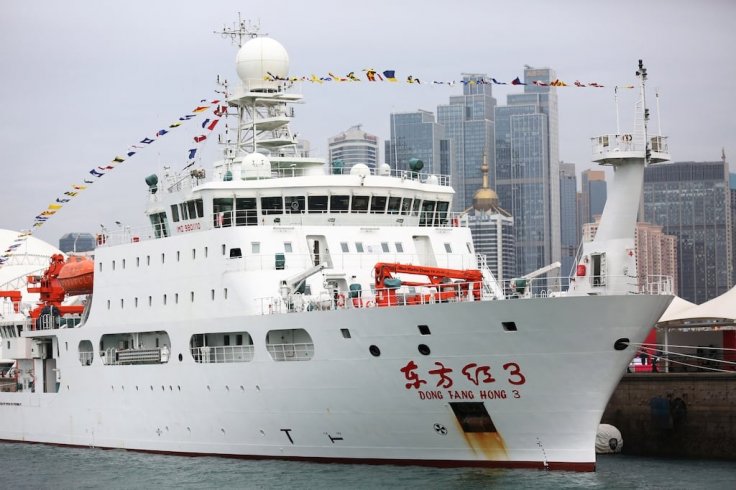
Ship-tracking data confirms the vessel was conducting the systematic back-and-forth surveying pattern naval experts identify as seabed mapping. Ocean University describes the work as climate research and mud surveys. Nine independent naval warfare experts who reviewed Reuters' findings say the data collected serves a military function regardless of how it is labeled.
The Transparent Ocean Project was proposed around 2014 by Ocean University scientist Wu Lixin, who received at least $85 million in funding from China's Shandong provincial government. It began in the South China Sea and has since expanded systematically outward.
In the Indian Ocean, the sensor network now provides what Chinese researchers claim is real-time data on water temperature, salinity, currents, and subsea movements. Some naval experts expressed caution about the real-time claim given technical constraints, but even delayed data is operationally valuable: it reveals when and how US and Indian submarines are moving through the ocean.
Why This Matters for India's Security
India operates six Scorpene-class diesel-electric attack submarines and is commissioning its first domestically built nuclear ballistic missile submarine, INS Arighaat. Its naval strategy depends critically on operating undetected in the Indian Ocean, an assumption that China's transparent ocean program is designed to undermine. Indian Navy planners have long treated the Indian Ocean as a home-ground advantage. The report suggests that the advantage may be eroding faster than publicly acknowledged.
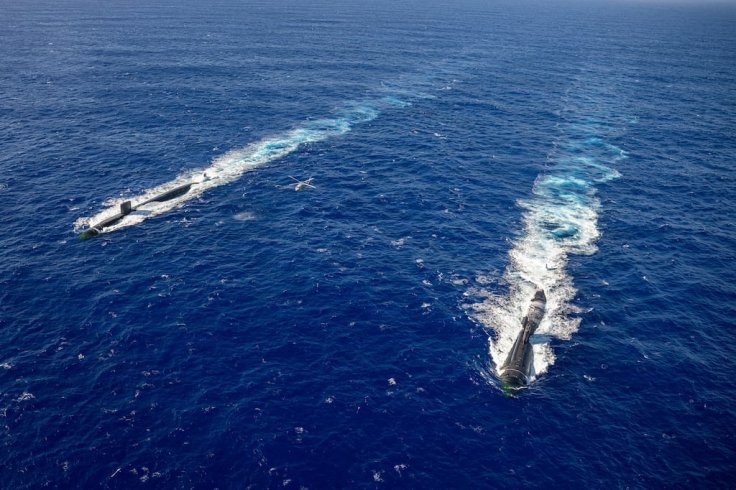
The sensor array around India and Sri Lanka means China now has persistent intelligence on subsurface movements through the Bay of Bengal, the Arabian Sea, and the waters south of the subcontinent. The Malacca Strait sensor deployment means any Indian submarine movements through that chokepoint are potentially visible. The Ninety East Ridge array gives China surveillance of the deep-water routes Indian submarines would use to operate in the southern Indian Ocean.
The timing of the investigation compounds India's strategic picture. China has dramatically reduced military flights near Taiwan in recent weeks, a development analysts attribute in part to the Iran war absorbing US attention and munitions. Meanwhile, Iran's new supreme leader, Mojtaba Khamenei, has signalled willingness to engage with China diplomatically, and Russia has been providing Iran with targeting intelligence on US assets. The transparent ocean programme sits within a broader pattern of China positioning itself as the dominant power in the Indian Ocean region, while the United States is consumed by its Middle East campaign.
In testimony to a US congressional commission this month, Rear Admiral Mike Brookes, director of the US Office of Naval Intelligence, said China's expanded surveying provides data that "enables submarine navigation, concealment, and positioning of seabed sensors or weapons," adding that Chinese research vessel activity "represents a strategic concern."
A Chinese Ocean University researcher named Zhou Chun, who oversees the Indian and Pacific sensor arrays, pledged in a 2025 press release to "transform the most advanced scientific and technological achievements into new types of combat capabilities for our military at sea." Beijing's ministries of defense, foreign affairs, and natural resources did not respond to Reuters' request for comment.


