- Alphabet insiders record 201 share sales with no purchases
- Selling occurs during major expansion in AI and cloud businesses
- Company completes $32 billion Wiz acquisition and boosts cloud growth
- Analysts maintain positive outlook despite stock pressure and insider activity
Googles parent company, Alphabet Inc., has experienced an unusually lopsided history of insider trading operation during the last six months, with 201 deals, all sales and none acquisitions, under scrutiny by investors as the company upsurges investment in artificial intelligence and cloud infrastructure.
The scope and consistency of the selling operation are remarkable especially because it coincides with one of the most aggressive expansion periods in the history of Alphabet. The company recently finalized its $32 billion acquisition of cybersecurity firm Wiz, which was its biggest acquisition since acquiring, and its Google Cloud division is recording high growth as companies seek AI-related services.
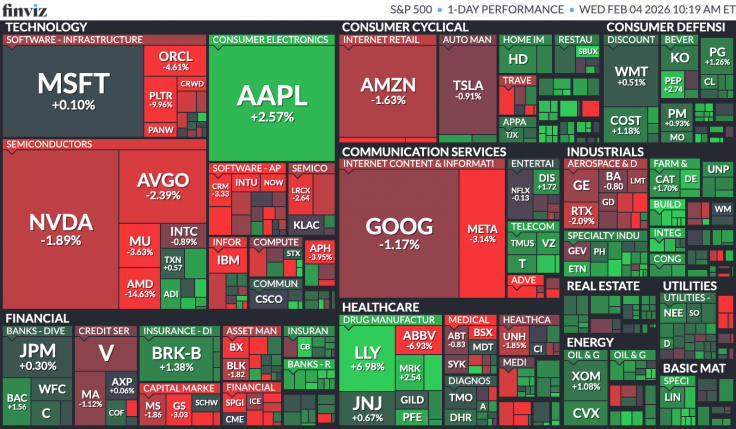
Market data revealed that Alphabet shares dropped by 3.22 percent during the latest trading session, which is not as good as compared to the technology sector in general during the last trading period. Although it suffers this in the short-term, the company performance in the long-term is healthy and shows a consistent level of investor confidence in its core businesses.
Advertising business remains largely centralized and controlled by Alphabet, which is still able to generate about 238 billion dollars of revenue in 2024 with new aspects of the business like cloud computing and AI playing a growing role in revenue generation.
Insider Selling Is a Boost to the Market
Although insider selling is typical of well-established tech companies, the lack of any insider buying across such a vast area of deals has led to increased investigation.
To diversify their personal wealth, satisfy tax requirements, or re-balance portfolios, executives tend to sell shares under pre-established trading programs. Nevertheless, analysts observe that a steady trend of selling but not redeeming purchases can indeed be viewed as a warning at times, especially when it accompanies periods of high valuations or a change of strategy.
The selling pattern "may reflect a range of factors unrelated to operational performance, including personal financial planning and automated trading mechanisms," analysts note.
The timing of the sales has been cited by market participants as it coincides with the continued investments Alphabet is undertaking in high cost areas including artificial intelligence infrastructure and cloud expansion.
Retail investors and market watchers have also been interested in the selling trend, with debate as to whether the activity indicates internal perceptions of valuation, or is merely a routine financial management activity.
Analysts warn that it is easy to jump to conclusions drawing only on insider transactions, and that it is the rare case when a firm can be viewed in a one-sided manner.
Growth In AI and Cloud is Accelerated
The strategic focus of Alphabet has not changed as it is still based on artificial intelligence and cloud computing, which are transforming the world of technology.
Google Cloud has shown to experience excellent growth over the past quarters, with a boost in AI infrastructure and enterprise services. In its quest to find uses of tokenized financial systems, the division has further extended its collaboration with key financial institutions such as Bank of Montreal, CME Group among others.
Wiz, which was acquired by Alphabet, is viewed as an important move in solidifying its stance in cloud security, an aspect of enterprise technology offerings that is becoming more and more important. The company is looking forward to competing more with big companies in securing contracts by incorporating the most modern cybersecurity services.
Alphabet is also driving forward its AI-based initiatives in consumer and enterprise products. Its re-architecture of the Stitch platform indicates a more general move to an AI-first approach, which means the company is now able to compete more directly with existing software vendors.
In addition to the key business units, Alphabet has been investing in new technologies. Its Wing drone delivery business is about to commercially launch in San Francisco Bay Area, with continued work on additional next-generation logistics.
Competitive Forces And Sentiment
The growth of the Alphabet occurs in the context of increased rivalry in artificial intelligence and cloud computing. Competitors such as Microsoft and OpenAI are pouring resources into related fields and this is fueling a competition to establish a leadership role in AI infrastructure and applications.
Insider transactions alone "rarely provide a complete picture of a company's outlook," analysts caution.
Such competitive nature has contributed to the increase in capital expenditure in the sector with companies investing heavily to stay ahead technologically. Such spending is essential to long run growth but has cast doubt on profitability in the short run, according to analysts.
The overall tone of investors regarding Alphabet is positive. All the analysts have a Moderate Buy rating on the stock, and average price targets indicate potential upside although the stock has been volatile of late.
Nevertheless, the dislocation between external optimism and internal selling action has produced some amount of uncertainty, especially among short-term investors.
Trading Off the Growth and Valuation
The bigger question that investors should contemplate is how to make sense of the correlation existing between the aggressive expansion strategy and insider behavior at Alphabet.
The long-term growth story of the company is intact in the light of its leading role in digital advertising and its acquisition in the high growth markets like AI and cloud computing. The performance in the past supports this perception, with high value creation since its IPO in 2004.
Meanwhile, the size of recent investments, as well as the rate of technological change, bring new variables to the equations of valuation. Analysts mention that the effectiveness of the Alphabet strategy will be determined by the capability to transform the large amount of capital spending into the sustainable increase of revenues.
Insider selling pattern, although conspicuous, can represent various factors that do not pertain to the operational performance such as personal financial planning and automated trading mechanisms.
The direction of Alphabet remains informed by its thrust into AI-driven expansion and enterprise services, as the industry evaluates the consequences of internal sales of shares against the backdrop of robust external demand and changing competitive pressures.


