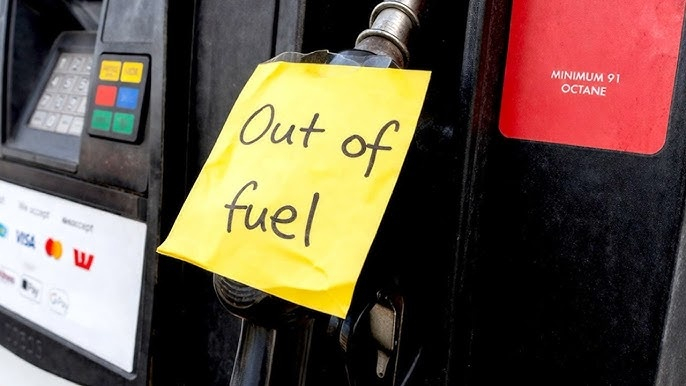
- Australia fuel imports disrupted as six shipments cancelled amid war
- Panic buying empties stations; petrol demand rises sharply nationwide
- Fuel prices surge over 30 percent; diesel rises 40 percent
- Government warns supplies may last only until mid-April
Australia relies on imports for about 90 percent of its liquid fuel, refined petrol, diesel, and jet fuel, which in turn rely on refineries based in South Korea and Singapore, which rely on Middle Eastern crude.
Instead, on 28th February, when the Strait of Hormuz was closed abruptly, that supply chain did not constitute right away. Four weeks later, it is tearing away because the backlog in the supply chain has finally met a nation that is under an acute exposure.
The energy minister, Chris Bowen, stated that out of the 81 monthly fuel deliveries to Australia, six have been cancelled or postponed directly due to the war. The alternatives to cargoes imported into Mexico, the United States, and Malaysia are being sourced at higher cost and longer lead times. The government is insisting that it will deliver fuel until mid-April. This qualifier mid-April is the expression that has rallied minds in Canberra.
The shelves have been Bare Bone Panic Buying
Panic buying created a shortage where none existed previously. In some locations, demand was up by 50 percent, with motorists filling tanks and jerry cans after reading war news. As of the middle of March, NSW Premier Chris Minns announced 107 empty petrol stations in the state and 42 empty of all their fuel. The same dry-pump scenario was reported in some parts of Queensland, in regions, Western Australia, and Victoria, and farmers experienced shortages of diesel that is vital to their harvesting and transporting equipment.
Prices reflect the strain. The Australian Institute of Petroleum showed an increase of unleaded petrol to 219.5 cents per liter nationwide as of the week ending March 15, an increase of 31 percent over a price of approximately 169 cents before the intensification of the conflict.
The price of diesel went to 245.6 cents per liter, an increase of 40 percent, with some isolated cases of 3 per liter in Sydney. The Albanese government presented the parliamentary bill that doubled fines on the oil price gouging while petrol station operators were accused of making a profit off the crisis.
Work-From-Home: The Crisis Policy No One Anticipated
That was the most notable event of the week, with the Energy Minister of Australia seemingly commending the concept of work-from-home arrangements as a type of fuel conservation policy, which the IEA had advised to all member countries, but members of the government had largely not wished to publicly promote due to the political disagreements of the post-COVID return-to-office movement.
The IEA executive director, Fatih Birol, was quoted at a conference in Sydney this week in full support of the move, citing European experience that demand-side conservation actions are effective following the invasion of Ukraine by Russia. Real-life tests included the post-invasion of Ukraine by the Russian troops. The European governments announced these measures, and they were embraced by European countries. It assisted them much in surviving these painful times without Russian energy, however, with the lights on, Birol informed the meeting.
Australia is not alone. Thailand has instructed civil servants to work at home and use the stairs. Vietnam advised businesses to minimize traveling. The Philippines advocated four-day working hours. Pakistan shut schools and brought the government week to four days. Bangladesh introduced the Eid holiday as a way of saving fuel. The Iran war has made work from home a national security issue, something that the post-pandemic return-to-office movement has failed to make.
A Structural Vulnerability Viewing
The crisis has revealed a structural issue that the analysts and the IEA have urged against over the years but that the former Australian governments have not been able to act on. Since 2012, the completion of the IEA minimum requirements has been non-compliant with Australia's emergency strategic fuel reserve. By the beginning of the year 2026, Australia had an estimated 36 days of petrol, 34 days of diesel, and 32 days of jet fuel, the largest in 15 years, though still below the IEA target of 90 days of stock for member countries.
The Reserve Bank of Australia has already increased interest rates twice within the year, with energy risks as one of the material inflation risks. It increased the rates last week to a 10-month high, a major difference when central banks reduced rates during the pandemic as the demand dropped. Now, demand is not collapsing; supply is.
And the RBA has to shrink into a supply shock, which is the toughest monetary policy outlook. Prime Minister Albanese has taken to the international counterparts to get other fuel supplies. All options and contingencies have been considered by the government, including rationing, yet nothing has been confirmed by it.
The working at home is the most recent of a tidal wave of Australian news trends that are reflecting how ordinary life is being reorganised around a war that is 8,000 kilometers away.
As one of the welfare workers told local media, he has a family to feed when he saw the petrol prices virtually doubling in the course of a week: "Mortgage rates and electricity bills were skyrocketing, yet I've a family to feed." The crisis has been put on a time bomb by the supply cliff in the middle of April that the government is struggling to defuse.


