- China expands ocean mapping across Pacific, Indian and Arctic regions
- Research vessels collect seabed data with potential military applications
- Experts say data aids submarine navigation and detection capabilities
- Activity raises strategic concerns among U.S. and allied defense officials
China is in the process of conducting a massive ocean mapping and surveillance operation of the global oceans that employs dozens of research ships and hundreds of sensors in strategic maritime areas, a campaign that the naval analysts believe would greatly boost its submarine warfighting power.
The project stretches across the Pacific, Indian, and Arctic oceans, and ship-tracking data and scientific reporting of activities indicate the continued presence of activities at strategically sensitive areas, such as waters around Taiwan, Guam, Japan, and major shipping routes.
Although the Chinese officials refer the work as a study on the climate, fisheries, and mineral surveys, the analysts explain that the information collected has obvious military uses. Submarine navigation and anti-submarine warfare require detailed knowledge of the terrain of the seabed, the water temperature, salinity, and currents.
The move reflects the greater interest of Beijing in building up its naval forces and extending its area of operation beyond its coastal waters into what military theorists call "blue-water areas."
Mapping Effort Dwells Upon Strategic Maritime Regions
The Dong Fang Hong 3, one of the ships that have been the core of the endeavor, has been plying the past few years in strategic areas, including waters around Taiwan and the U.S. territory of Guam and in U.S. waters around its crucial shipping routes nearer to Taiwan.
Reuters reports that the ship-tracking data indicates that the ship was sailing in grid-like patterns many times, a technique employed in the mapping of the seabed to obtain high-resolution information.
It has also surveyed submarine sensor systems and checked the routes between Sri Lanka and Indonesia, including approaches to the Malacca Strait, a strategic chokepoint in world trade, in the same ship.
According to naval experts, such mapping is not restricted to exploration of resources. The magnitude of their operation is not merely in resources, according to Jennifer Parker, a defense expert and former anti-submarine warfare officer. It is quite obvious that they aim at having an expeditionary blue-water naval force that is also based on submarine work.
The wider campaign entails the deployment of at least 42 research ships, which are deployed in the various oceans and many are in a position to map deep seas and deploy sensors. Such operations have been focused to regions that are of high strategic value, and they include waters around U.S. military bases and major sea routes.
Data Collection Driven by Civil-Military Fusion
The ocean mapping project of China is an indication of a policy practice that is referred to as "civil-military fusion," in which civilian scientific studies are combined with military agendas. The researchers and institutions that are on the program usually have close connections with the defense organizations, and the data that is gathered to be used in academic research can be employed to plan the strategy.
In the program alone at least eight ships have undertaken mapping the seabed; another 10 have equipment capable of carrying out these activities, says Reuters.
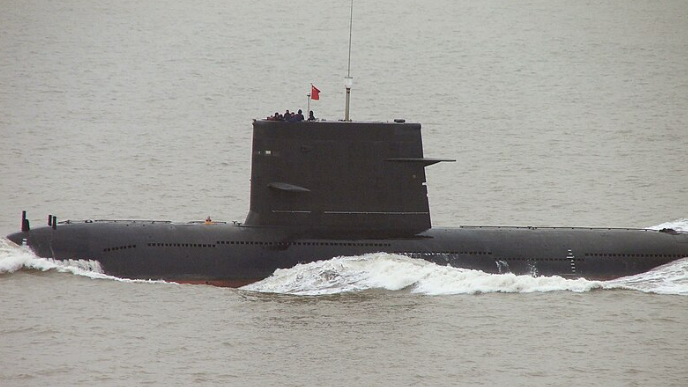
The information gathered entails detailed and important data on underwater geography and the environment that are very important to the deployment of submarines as well as the detection of enemy ships. The temperature and salinity of water affect sound propagation at water, which is vital in the sonar application, and therefore such data is very valuable in the field of the naval operations.
Peter Scott, an ex-chief of the Australian submarine force, stated that the information would be potentially invaluable in battlespace preparations regarding submarine warfare.
The U.S. officials have been concerned too. Rear Admiral Mike Brookes of the Office of Naval Intelligence informed a congressional commission that "the surveying activities of China furnish evidence that can be utilized to guide submarine navigation, concealment, and placement of seabed sensors or weapons."
Strategic Objectives Cut Across World Waters
The mapping operations of China are also focused on major maritime routes, especially in the so-called First Island Chain, a sequence of islands that exist between the waters of Japan and Taiwan and then the southeast coast of Asia that serves as a natural obstacle between coastal Chinese waters and the Pacific Ocean.
Analysts declare that Beijing is trying to address this geographical limitation by attaining a close understanding of the surrounding sea world. Peter Leavy, a former Australian naval attaché, said, "They are paranoid that they will be put in a box to the First Island Chain".
The campaign further extends to the Indian Ocean, where China relies on maritime channels in energy imports. Mapping activities in the area involve a survey of the Ninety East Ridge, a submarine mountain range in the Malacca Strait.
The project extends to the Arctic, where China has already proclaimed that by 2030s, it will have become a polar power. The mapping of routes in the areas around Alaska and the northern sea lanes is indicative of the long-term strategy that is aimed at ensuring access to the new shipping routes and resources.
Vision Transparent Ocean Increases Surveillance Completely
One of the most important aspects of the program is the creation of a system of a transparent ocean, the network of sensors to maintain continuous control over the situation on the bottom of the sea.
The idea is to place arrays of sensors, buoys, and underwater devices in the sea to monitor the conditions of the ocean in real time, as suggested by the Chinese researchers, and with the assistance of large state funds.
Reuters reported that hundreds of these sensors have been placed in the Pacific and Indian oceans, especially around Japan, the Philippines, and Guam.
Such systems will measure the variables of temperature, salinity, and currents so that sonar is performed more correctly and better objects underwater are detected. Although the project is being described by the Chinese officials as a scientific project, the statements of provincial governments have already connected it to the defense purpose of the maritime.
Experts warn that the issue of ensuring the real-time data transmission between underwater sensors is technical. Nevertheless, even delayed data can be useful in revealing the trend of submarine movement and environmental states.
The strategic importance of the project is further emphasized by the positioning of the sensors in strategic points such as important straits and transit routes.
The growing ocean mapping and monitoring capability of China is viewed as a potential threat to the old-established edge of the United States and its allies in undersea warfare.
Ryan Martinson, an expert in maritime strategy, said that over decades, the U.S Navy could enjoy an asymmetric edge in its knowledge of the ocean battlefield. The efforts of China are posing a threat to eliminate that advantage.
Mapping data combined with sensor networks and high-tech submarine technology would help China to act in a more efficient manner in disputed waters and be able to act both offensively and defensively.
Meanwhile, the dual-use aspect of the study makes the responses of other countries difficult because the activities presented as scientific exploration can be aimed at military purposes as well.


