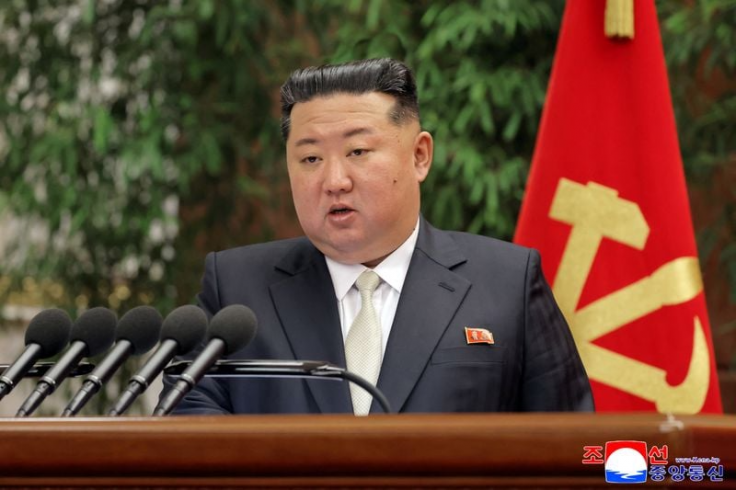
- North Korea fires more than 10 ballistic missiles into sea
- Launches occur during U.S.-South Korea Freedom Shield military drills
- Missiles fired from area near Pyongyang toward east coast waters
- Japan says projectile landed outside its exclusive economic zone
On Saturday, during ongoing U.S. South Korea military exercises, North Korea fired over 10 ballistic missiles into the sea in an act which highlights the escalating tensions on the Korean Peninsula as it was announced by the South Korean military.
At an estimated time of 1:20 p.m. local time (0430 GMT), the missiles were launched at about 11.00 AM from the area in the proximity of the North Korean capital Pyongyang and fell in waters off the eastern coast of South Korea according to a statement of Joint Chiefs of Staff of South Korea.
"Our military has strengthened surveillance and vigilance while maintaining a full readiness posture in close coordination with the United States," South Korea's Joint Chiefs of Staff said after detecting the missile launches.
The coast guard of Japan also reported that there was a ballistic missile that landed in the sea and it seemed to be a missile. According to the Japanese military, NHK, a state-owned TV station, stated that the projectile landed in an exclusive economic zone of Japan.
"North Korea's repeated missile launches threaten the peace and stability of the region and the international community," Japan's Chief Cabinet Secretary Yoshimasa Hayashi said while responding to the launches.
The attacks occurred when the U.S and South Korean troops were holding the Freedom Shield military exercises, which Washington and Seoul termed as defense exercises aimed at enhancing defense against any perceived threats by the North Korea.
Reuters reported that North Korea has made numerous tests in ballistic and cruise missiles the last twenty years in its quest to develop weapons that can launch nuclear warheads.
War Drills Increase the Level of Tensions
The launching of missiles was accompanied by some joint exercises between hundreds of U.S and South Korean troops near the demilitarised zone between the two nations.
On Saturday, the drills involved the forces of both countries carrying out a river- crossing exercise in Yeoncheon in South Korea. The training was on military equipment such as tanks and armoured combat vehicles and was headed by the commander of the allied combined forces.
The exercises are a part of the yearly Freedom Shield training programme to enhance coordination and operational preparedness of the two allies.
The United States has a strong military presence in South Korea and approximately 28 500 U.S troops are deployed all over South Korea as well as fighter aircrafts squads and additional defence equipment.
North Korea has often condemned such drills claiming that they are training to make a military invasion.
Pyongyang has on numerous occasions characterized joint U.S.-South Korean exercises as dress rehearsals to armed aggression something that Washington and Seoul have dismissed.
Prolonged Missile Programme And Sanctions
The missile development programme in North Korea has been the fighting point in the region over the decades.
Since the early 2000s, the country has undertaken several missile launches as part of its initiative to come up with long-range delivery capabilities to deliver nuclear warheads.
Pyongyang has been widely thought to have nuclear weapons and it is still trying to advance technologies that may enhance the range and accuracy of its missiles.
Due to these operations, North Korea has faced several sets of sanctions by the United Nations Security Council since 2006 against its weapons programmes and restrictions to international trade and financial networks.
North Korea has been undertaking tests on missiles and developing its military potential despite the sanctions.
Diplomatic Work Ongoing.
The missile launches were made during new diplomatic negotiations between Washington and Seoul concerning possible involvement with North Korea.
South Korean Prime Minister Kim Min-seok held a meeting with U.S. President Donald Trump in Washington on Thursday to see how to reestablish dialogue with Pyongyang.
Kim reported that Trump was willing to meet North Korean leader Kim Jong Un under the conditions.
Trump is also keen on having a chance to have an opportunity to meet with the North Korean leader Kim Jong Un, which the South Korean prime minister told reporters that came out of the meeting.
Although diplomatic talks are still up on the table, the recent missile attacks indicate that there is still more to be done to enhance the security of the region as the military drills and arms tests are ongoing concurrently.


