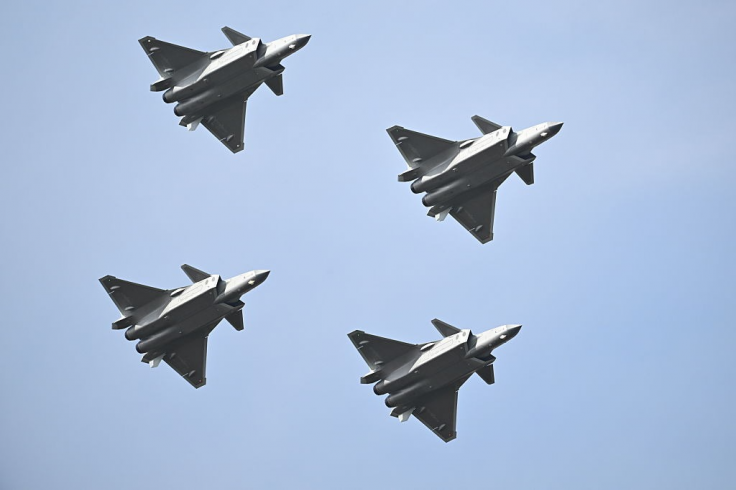
- China reduces military flights near Taiwan for 12 of 13 days.
- Taiwan defense data shows sharp break from years of daily sorties.
- Chinese naval activity near Taiwan remains largely unchanged.
- Analysts cite diplomacy, training shifts, or leadership changes as factors.
China has sharply reduced military flights near Taiwan in recent weeks, marking an unusual pause in activity that analysts say breaks from years of near-daily aerial operations around the island.
For 12 of the past 13 days, Taiwan's Ministry of National Defense recorded no Chinese military aircraft operating near its airspace. The only exception occurred on Sunday when two Chinese planes approached the island, according to daily data released by the Taiwanese military.
The sudden drop represents a stark shift from recent years, when Chinese military jets regularly flew near Taiwan as part of Beijing's pressure campaign against the self-governing island.
"It is such a stark change from established behavior," said Ben Lewis, founder of PLATracker, a website that compiles data from Taiwan's defense ministry.
"This gap in activity is the longest we have seen since 2021," Lewis added.
Break from Years of Intensified Military Pressure
China's People's Liberation Army (PLA) has steadily increased military operations around Taiwan since 2020. Taiwan recorded an average of around 10 Chinese military flights per day last year, with activity occasionally rising to dozens of aircraft in a single day.
Those operations intensified further after then–U.S. House Speaker Nancy Pelosi visited Taipei in 2022, prompting China to conduct large-scale military drills that included aircraft flights, naval patrols and missile launches near the island.
The recent lull has therefore drawn attention from military analysts monitoring regional security dynamics.
While temporary decreases in Chinese air activity have occurred before, they typically coincide with major events such as China's annual legislative session or severe weather conditions.
However, analysts note that the current pause is unusual because weather conditions around Taiwan have remained stable.
Taiwan's defense minister, Wellington Koo, urged caution against interpreting the drop in flights as a reduction in Chinese military pressure.
"We can't simply look at whether the fighter aircraft are coming," Koo told reporters in Taipei. "We need to look at a range of indicators."
Naval Activity Remains Unchanged
Despite the decline in aircraft activity, Chinese naval presence near Taiwan has not shown a similar reduction, according to security experts.
"We haven't seen a comparable decrease in the reported number of P.L.A. naval vessels around Taiwan," said Brian Hart, deputy director of the China Power Project at the Center for Strategic and International Studies in Washington.
"The dip seems to be isolated to air activity," Hart added.
The continued presence of naval vessels suggests that China has not reduced its broader military posture in the region, analysts say.
Several potential explanations have been suggested for the pause in air activity, although none have been confirmed by Chinese authorities. China's Ministry of National Defense has not publicly commented on the drop in flights.
Possible Diplomatic and Strategic Factors
Some analysts believe the reduced activity could be linked to diplomatic considerations ahead of a planned summit between Chinese President Xi Jinping and U.S. President Donald Trump, scheduled for early April in Beijing.
According to this view, Beijing may be attempting to avoid actions that could be perceived as escalating tensions while Washington is already engaged in a conflict with Iran.
"I think that Xi doesn't want Trump to think that Beijing is adding to the trouble," said Ou Hsi-fu, deputy chief executive officer at the Institute for National Defense and Security Research in Taipei.
"Beijing wants the Xi-Trump summit to go ahead smoothly, maintaining China's image as a great power on equal footing with the United States," Ou said.
Other analysts suggest the reduction may reflect internal changes within China's military, including leadership purges that have affected senior officers in the Chinese Air Force and Eastern Theater Command, which oversees operations involving Taiwan.
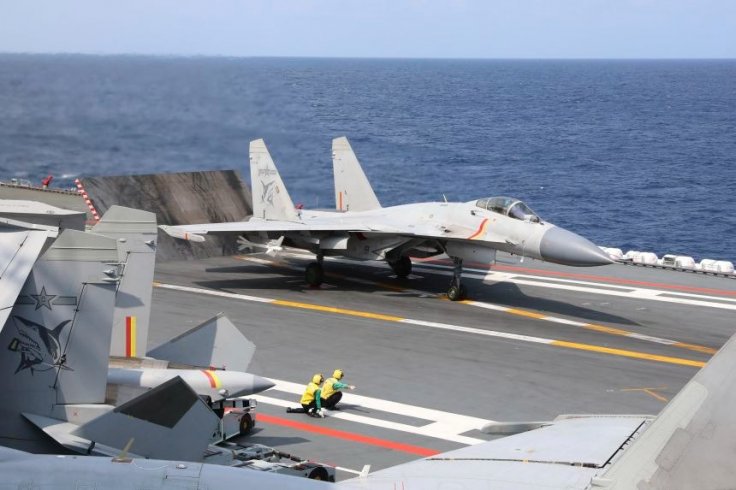
Another possibility is that the Chinese military is adjusting its training patterns after years of intensive activity around the island.
K. Tristan Tang, a nonresident fellow at the National Bureau of Asian Research, said the trend may have been developing gradually.
"What we are seeing now has actually been developing for more than half a year," Tang said.
"The difference is that the decline has become much more noticeable recently."
Uncertainty Over Future Military Activity
Security analysts and Taiwanese officials are closely monitoring whether Chinese military flights resume after the conclusion of China's annual legislative session.
The flights remain one of the most visible indicators of Beijing's military pressure on Taiwan, which China claims as part of its territory despite the island operating with its own democratic government and military.
While the current pause has drawn attention, experts say it is too early to determine whether the shift represents a temporary adjustment or a longer-term change in China's operational approach around Taiwan. Taiwan's defense authorities have indicated they will continue monitoring military activity across the Taiwan Strait and surrounding waters as regional tensions remain high.