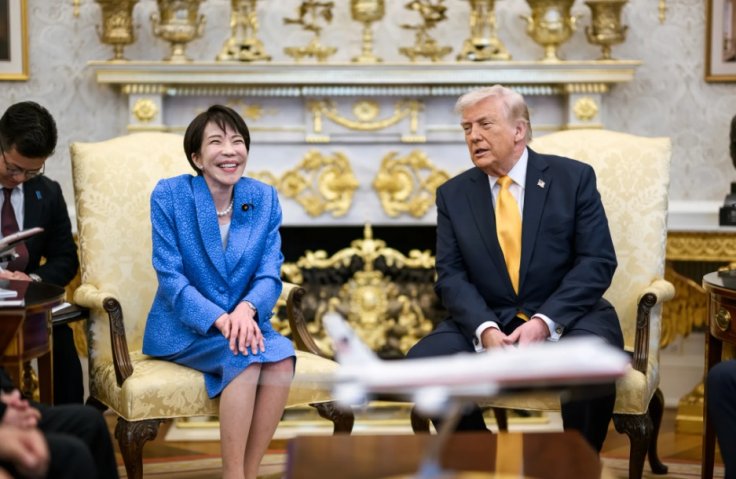
When US President Donald Trump turned to Japan's Prime Minister and asked "Why didn't you tell me about Pearl Harbor?", the Oval Office fell silent. What followed that silence tells you everything about the most complicated friendship in the Pacific.
Sanae Takaichi, Japan's first woman Prime Minister, was only weeks into her historic landslide election victory. Her visit to the US sought to reaffirm the alliance between Tokyo and Washington at one of its most pressurised moments, with oil prices spiralling, the Strait of Hormuz effectively shut, and an anxious Japanese public watching her every move.
Japan's entourage had prepared for hard questions about trade, energy security, and Japan's pacifist constitution that prhibits Tokyo's deployment of army overseas, though it was tweaked a little recently. But Takaichi had not prepared for Pearl Harbor.
When a Japanese reporter asked President Donald Trump why the United States had not told allies like Japan before carrying out strikes on Iran on February 28, Trump cryptly said: "We went in very hard and we didn't tell anybody about it because we wanted surprise. Who knows better about surprise than Japan? OK, why didn't you tell me about Pearl Harbor?" Quickly he added, "You believe in surprise, I think, much more than us."
His comment drew laughs at first, followed by silence when he mentioned Pearl Harbor. An audible gasp could be heard from the back of the room, filled with many Japanese reporters.
Takaichi Said Nothing
Takaichi, 68, closely aligned with the late Trump ally Shinzo Abe, sat awkwardly, clasping her hands with her eyes widening as the president spoke, clearly taken aback by his remarks. Clearly, she appeared to lose her initial smile in the Oval Office, where U.S. officials including Vice President JD Vance, Secretary of State Marco Rubio and Defense Secretary Pete Hegseth were present.
The Japanese PM said nothing to challenge Trump but composed herself immediately, registering businesslike mood she had maintained throughout the visit. Takaichi told reporters in the Oval Office: "The global economy is about to experience a huge hit because of this development. But even against such a backdrop, I firmly believe that it is only you, Donald, that can achieve peace across the world."
Why Trump's Joke Resonates Differently in Japan?
Back home in Japan, the repercussion were different as her statesmanship came under fire. Others called it a "silence" that had cost something for the country. Many recoiled in shock over Trump's joke about Pearl Harbor, perceiving the incident as an insult to a long-time ally of Washington.
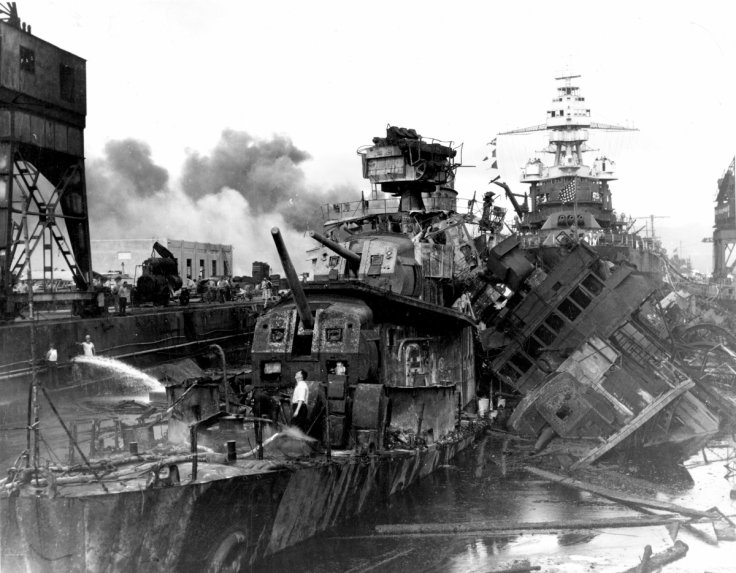
To understand why, you need to understand what Pearl Harbor means in Japan, which is quite different from what it means in America.
In the United States, it is shorthand for treachery, for sneak attack, for the day that forced a reluctant nation into the defining World War II. In Japan, it is more than that, something particular: a source of lasting national shame bound up in a diplomatic failure so spectacular that historians still argue about whether it was incompetence or deliberate concealment.
[Fore more details on Japan's pre-war cancellation of bilateral talks, read the historical recollection of events by the same author here: Pearl Harbor Day Dec 7: Japan lived in 'infamy' ever after ]
On December 7, 1941, the Japanese ambassador in Washington, Kichisaburo Nomura, was to deliver a message cancelling ongoing bilateral negotiations, which Japan assumed would amount to a declaration of war, just 30 minutes before the Pearl Harbor attack. A 5,000-word document took longer to transcribe, and it was eventually handed over more than one hour after the Pearl Harbor strikes had already begun.
Washington refused to consider the message's annulment of negotiations as an actual declaration of war. The final paragraph read: "The Japanese Government regrets to have to notify hereby the American Government that in view of the attitude of the American Government it cannot but consider that it is impossible to reach an agreement through further negotiations." No mention of war, nor any mention of escalating hostilities.
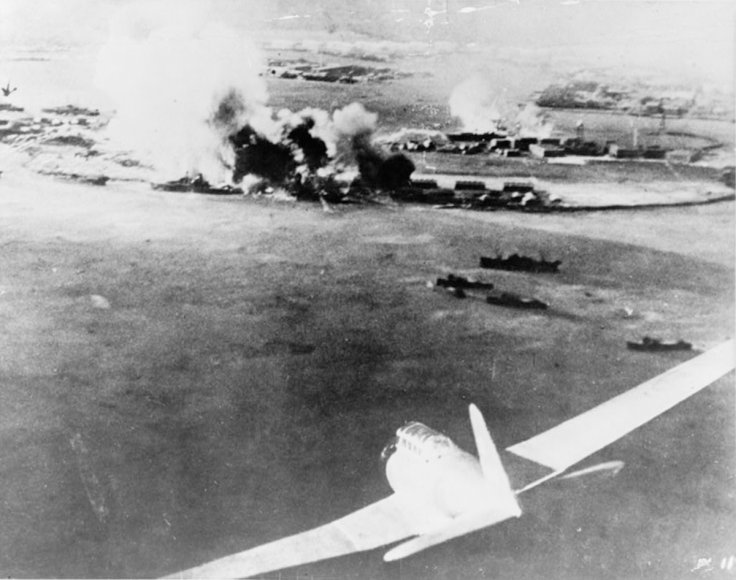
It was almost 60 years later that Japanese historian Prof. Takeo Iguchi of the International Christian University in Tokyo discovered documents hinting at a conspiracy that is now traceable to high-level military officials who deliberately delayed Japan's Foreign Ministry telegrams. Moreover, the notes to then–secretary of state Cordell Hull shortly after the attack "were not declaration-of-war ultimatums as required by international law but watered-down notices about the termination of bilateral negotiations."
That diplomatic folly was what Roosevelt quickly transformed into a rallying cry. "A date which will live in infamy," he told Congress and it still does among the Japanese. And now a sitting American President had casually wielded that infamy, in front of the visiting Japanese Prime Minister on live camera.
Alliance Under Pressure
Thursday's Oval Office meeting marked the start of a crucial trip for Takaichi, who came to Washington seeking to reaffirm the US-Japanese alliance as a global energy crisis deepens three weeks into Trump's war in Iran.
Trump had called on Japan and other countries to help secure the Strait of Hormuz. But Takaichi had said on Monday that there were no plans to dispatch naval vessels to escort boats in the Middle East. Her office said there was "no specific request from the United States to Japan for the dispatch of vessels."
Japan imports nearly 90 per cent of its energy from the Middle East. The closure of the Strait of Hormuz is not an abstraction for Tokyo, it is an economic emergency felt at every petrol station and factory floor from Hokkaido to Okinawa. Japan needs the strait open. But its Self-Defense Forces are governed by its pacifist constitution, which renounces war and the threat or use of force for settling international disputes. Sending warships into an active war zone is not simply a political decision; it requires a reinterpretation of the country's constitution, not mere a tweaking done recently.
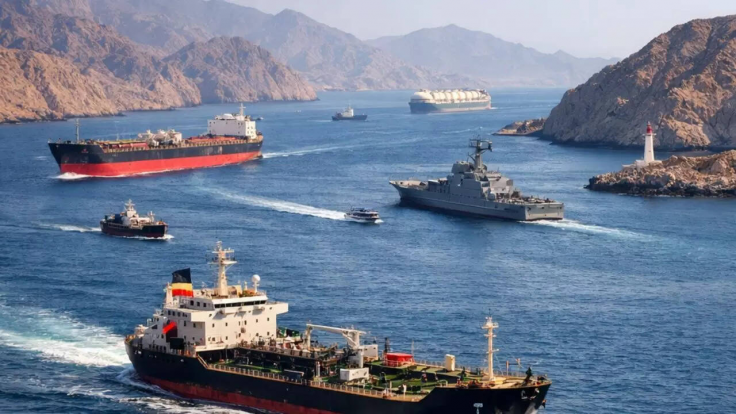
Japan and five European nations had, on the morning of the meeting, released a joint statement urging Iran to cease attacks on the Strait of Hormuz and indicating readiness to contribute to "appropriate efforts" to ensure safe passage for vessels, without offering specific details.
In fact, Takaichi arrived at the White House with a carefully calibrated offer, conditional, noncommittal on military deployments, and bound by constitutional constraints her host has never shown any particular interest in understanding. Then came the Pearl Harbor joke, and the room had to somehow move forward anyway.
Will Trump's Surprise Turn Into Shock Next?
It is worth pausing on the logic of Trump's remark as beneath the awkwardness there is a genuine argument, one that reveals something about how his administration thinks.
Trump's answer, beyond the Pearl Harbor deflection, was about the strategic logic of surprise. He had chosen not to tell allies because giving them advance notice risked alerting adversaries. That is a defensible military position from Japan's perspective in 1941. The delayed delivery of diplomatic note, invoking an attack that killed 2,403 Americans that set off a chain of events leading to the atomic bombing of two Japanese cities, Hiroshima and Nagasaki, a surprise that left not only Japan but the entire humanity in a shock ever after.
Trump's 'surprise' remark underscored the pressure Washington is placing on Tokyo to increase its patrols in the Strait of Hormuz, despite Japan's pacifist constitution.
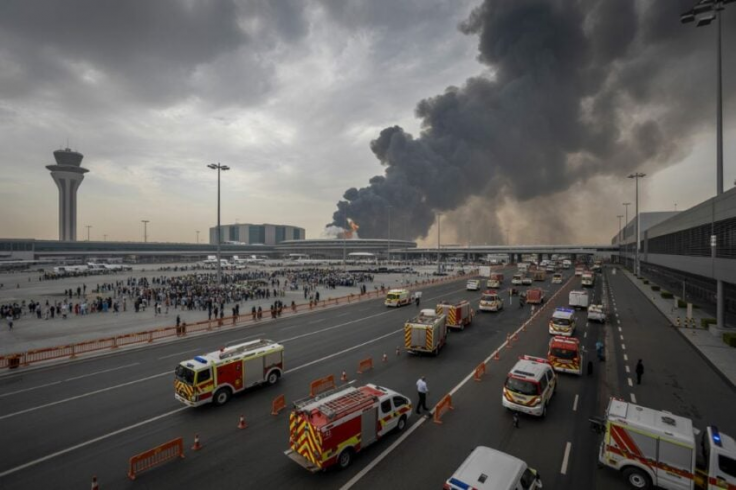
Citing the catastrophe of a modern nation's history is not diplomacy. Trump had singled out Japan and other US allies earlier in the week for not joining the escalating conflict in the Middle East. Days later, he made a joke that any Japanese schoolchild would recognise as reaching for the most painful chapter in their country's modern memory. The question Japan asking is whether it is the price of an alliance with the US that is becoming increasingly unidirectional.
In 19141, Japan's military had chosen surprise over transparency, concealment over communication, and the consequence was 80 years of international "infamy," as Roosevelt had put it, that Japan has spent decades trying to atone for.
Later, Shinzo Abe visited Pearl Harbor in December 2016, the first sitting Japanese Prime Minister to do so, to lay that ghost to rest. Takaichi, who was close to Abe, inherited his vision of a Japan that had made its peace with that history. Sitting in the Oval Office on March 19, 2026, she discovered that ghosts, invoked by none other than the US President, do not stay laid to rest.
What the Pearl Harbor moment will cost the alliance, if anything, will not be measured in headlines but certainly it has all the characteristics of turning prophetic at a time in history when the US forces are facing Iran's missiles, if not with nuclear heads, as many fear. History may repeat but humanity can't afford to suffer another catastrophe.


