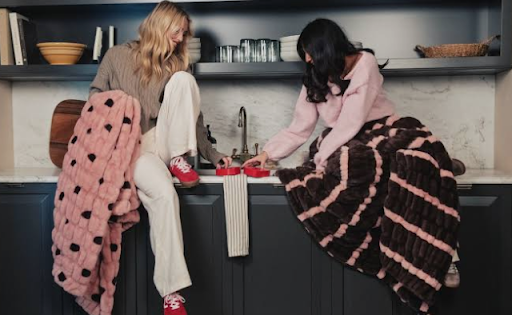
In a crowded direct-to-consumer market where competitors multiply by the month and attention spans shrink by the day, sustained growth is supposed to be hard. Yet one brand continues to defy that logic. In 2025, Minky Couture posted another year of more than 50 percent sales growth, even as the blanket and home comfort category became more saturated than ever.
The explanation is not just product quality, though that matters. It is something deeper and harder to copy. Minky Couture has built a business rooted in care, trust, and showing up for people, and that foundation has allowed it to transcend the category it helped create.
People came for the blanket, but stayed for the brand
There is no denying the product played a critical role early on. Minky Couture helped popularize the ultra-soft, oversized blanket that went viral across social media, celebrity homes, and creator communities. These blankets are tactile, instantly comforting, and unmistakable once you touch one. Customers often describe them as the softest thing they have ever owned, the kind of product that becomes a household staple almost immediately.
That product-led moment matters. Great brands still need great products. But what happened next is where the story shifts. Customers did not just buy one blanket and move on. They bought again. They gifted them. They talked about them. They advocated for the brand in a way that goes far beyond typical consumer behavior in home goods.
Trust scales better than features
This pattern mirrors what has happened in other categories when brands stop selling features and start selling belief. Nike does not win on shoe specs alone. It wins because it represents identity, ambition, and belonging. Patagonia built loyalty by consistently choosing values over convenience, even when it cost them revenue in the short term. Glossier grew by listening to its community and letting customers shape what the brand stood for, not just what it sold.
In wellness and lifestyle, Rituals turned everyday routines into intentional moments, while Lululemon transformed yoga apparel into a broader lifestyle and community platform. Trust, once earned, compounds. It makes customers more forgiving, more vocal, and more loyal.
At the center of that trust is founder Sandi Hendry and the values that shaped the company from day one. Hendry is quick to point out that the brand's generosity is not a strategy and never will be. It is simply what matters to her and why the company exists at all.
From ongoing support of NICUs to quietly responding to families and communities in crisis, Minky Couture has embedded care into its operations, not its campaigns. These efforts are not tied to launches, hashtags, or seasonal messaging. They happen consistently, often without public attention.
That distinction matters. Many brands attempt to retrofit purpose after they scale. Minky Couture scaled because the purpose was already there. As Hendry has said publicly, she did not start the company to build a movement. She started it to create comfort and show up for people. The fact that so many others believe in and support that mission is a byproduct, not the goal.
Advocacy beats awareness
This approach has created something increasingly rare in retail: genuine advocacy. Customers do not just like the blankets. They feel proud to support the brand. They talk about the softness, yes, but they also talk about the company's heart. That combination turns customers into storytellers.
Creators and celebrities helped introduce Minky Couture to a wider audience, but they did not manufacture belief. They amplified something that was already authentic. That trust transfer is powerful. When people feel a brand aligns with their values, they do the marketing for you, and they do it far more credibly than any ad ever could.
This is one reason Minky Couture continues to grow while competitors struggle to differentiate. Designs can be copied. Materials can be sourced. But a culture built on care and consistency cannot be reverse engineered overnight.
Transcending the category
Blankets may be the entry point, but comfort is the real category Minky Couture operates in. Comfort shows up at births, losses, recoveries, and moments when words fail. It is universal and timeless. By anchoring itself to that emotional role rather than a specific product type, the brand has given itself room to grow without diluting its identity.
This is the same strategic move that allowed brands like Nike, Patagonia, and Lululemon to expand far beyond their original offerings. They were never just selling products. They were selling how people wanted to feel and what they wanted to stand for.
People may have discovered the brand through a viral blanket. They stayed because the company showed up for others when it mattered. That is not a tactic. It is a belief system. And in today's economy, belief scales.


