Singapore's next major national challenge after water security is energy resilience and addressing it will require a combination of sustainable energy generation and careful demand management, Defence Minister Chan Chun Sing said on Thursday, January 30.
Speaking at the launch of a new solar farm at Sembawang Air Base, Chan said the project forms part of a broader national push to strengthen Singapore's energy resilience. He added that similar initiatives could potentially be rolled out at other airbases, including those in Paya Lebar and Changi.
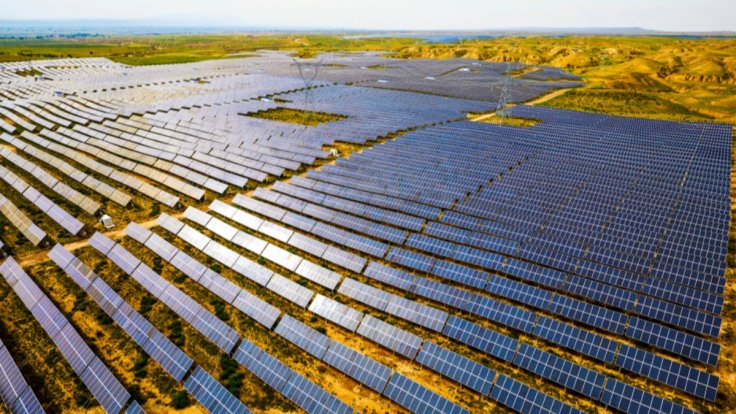
The solar farm is expected to generate up to 18 megawatt-peak (MWp) of electricity by the end of 2026. This amount of energy is equivalent to powering about 4,700 four-room Housing Board flats each year and could result in annual cost savings of approximately S$1.9 million.
With the completion of the project, the Ministry of Defence (MINDEF) said it has achieved its target of generating 50MWp of solar energy by 2025, a goal set in 2021 under the Singapore Green Plan 2030.
MINDEF added that it plans to continue installing solar panels across other Singapore Armed Forces (SAF) camps and bases, with the aim of generating around 68MWp of solar energy by the end of 2027.
Chan noted that while renewable energy will never form the bulk of Singapore's energy supply, every effort to diversify and strengthen the energy mix is important. Beyond expanding sustainable energy generation, he stressed the need for the SAF to manage its power consumption carefully, especially as more military systems become technologically advanced and energy-dependent.
To address energy demand, the SAF will work closely with partners such as the Defence Science and Technology Agency and DSO National Laboratories, covering areas from system design to maintenance. Chan said new areas of focus will also include diversifying energy sources and managing energy distribution across operational systems. These efforts, he added, are part of the SAF's broader adaptation to climate change, which has made safe operations increasingly challenging due to unpredictable weather conditions.
"There is no going back to thinking that this will pass and that we can return to old ways of doing things," Chan said, as quoted by The Straits Times, adding that climate change must be treated as a given when planning future operations and training. He said the SAF will need to develop new work-rest cycles and better acclimatisation methods for soldiers operating in varied environments.
Describing the Sembawang Air Base solar farm as a milestone for the SAF, Chan highlighted the safety, security and technical challenges involved in installing solar panels within an active airfield. The base houses the Republic of Singapore Air Force's helicopter squadrons, and the varied take-off and landing patterns of helicopters posed additional operational risks.
To address these concerns, the solar panels were mounted on structurally reinforced sections, with screw piles drilled 20 per cent deeper into the ground and fitted with additional plates for stability. Senior Lieutenant-Colonel Timothy Koh, head of plans and strategy at the SAF Sustainability Office, said detailed glare analysis was also conducted to ensure that reflections from the panels would not affect pilots or air traffic control personnel.
"In the long run, this renewable energy source will enhance the base's operational resilience by providing an additional supply of power," he said, as quoted by The Straits Times.
The Sembawang project is the second solar farm in Singapore to be built on an airfield. The first was initiated at Changi Airport in early 2025 and is expected to have a capacity of 5MWp when completed in 2026.
Other sustainability initiatives showcased by the SAF on Thursday included a smart utility monitoring system and an automated wash system for the RSAF's Chinook helicopters. Military Expert 1-2 Ng Jing Wei said the automated system reduces manpower needs from five personnel to one operator, cuts water usage by 60% through recycling, and saves about two hours of work compared with manual washing.


