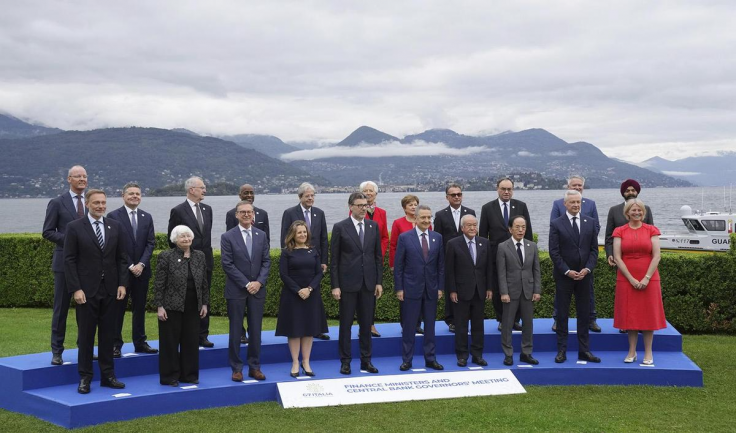
- G7 foreign ministers meet amid wars in Iran and Ukraine
- Allies express concern over unpredictable U.S. foreign policy direction
- Talks focus on Iran conflict, Hormuz disruption, and energy risks
- European officials stress continued support for Ukraine against Russia
The leaders of the Group of Seven countries gathered in France this week with mounting geopolitical crises in Ukraine and Iran, and mounting concern among allies about the turn of U.S. foreign policy.
Representatives of the European Union, Britain and Canada, France, Germany, Italy, Japan and the United States join the two-day meeting in the Abbaye des Vaux-de-Cernay near Paris. The meeting is timed during a period when the world is experiencing a heightening level of concern of security and economic uncertainty.
The talks, according to Reuters, are occurring against the backdrop of an increasingly tense conflict in Iran, a stalemate in negotiations in Ukraine and a greater shift of global alliances that has put the G7 bloc to the test.
The uncertainty has also been experienced in the markets as the energy price has been high and the global equities have been fluctuating relative to the last trading days as the effect of the geopolitics is still felt by the investors sentiment.
Allies Eclipse Policy Direction of US
Among the key topics of the gathering is the instability of the U.S. policy regarding President Donald Trump, according to European officials, which has made coordinating with allies difficult.
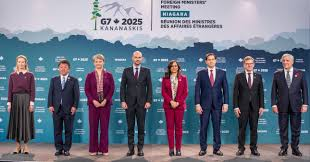
Diplomats have cited sudden changes in U.S. standings on tariffs, Ukraine and the Middle East as destabilizing factors. According to Thomas Gomart, head of the French Institute of International Relations, "the U.S. attitude is a factor of destabilization of the international system to all actors, not just members of the G7, but to China, and to many, many nations in the world."
It has been such a burden that officials have even discarded any plans to write a single final communiqué, a long-standing characteristic of G7 meetings, to spare them airing out differences publicly.
Military leadership in France has also expressed fear over the effect of the U.S. change of policies on the security interests of the allies, expressing wider anxieties in European capitals.
Emphasis Shifts on Iran War and Energy Threats
One of the priorities of the meeting is to gain a clear picture of the U.S. Secretary of state, Marco Rubio, regarding military action against Iran and the chances of a diplomatic solution.
The war has practically shut the Strait of Hormuz, where approximately a fifth of the world oil and liquefied natural gas flows. The volatility has increased long-term energy prices and Brent crude remains around $100 a barrel following recent volatility.
European and Asian economies that are highly reliant on Middle East energy, are keeping a watchful eye. Authorities will negotiate steps to curb supply shocks and price stabilization.
Besides the G7 countries, ministers in other countries such as Brazil, India, South Korea and Saudi Arabia are also in attendance indicating the global effects of the crisis and the importance of teamwork.
The Fight Over Ukraine War And Sanctions Deepens
Another key subject of attention is the war in Ukraine, and European officials fear that American representatives at the negotiation table with Moscow will host a compromise that will not favor Kyiv.
Authorities announced that they "would urge further military and financial aid to Ukraine and harsher sanctions against Russia". Planning to meet the upcoming winter, especially the safety of the energy infrastructure in Ukraine, is likely to take center stage in discussions.
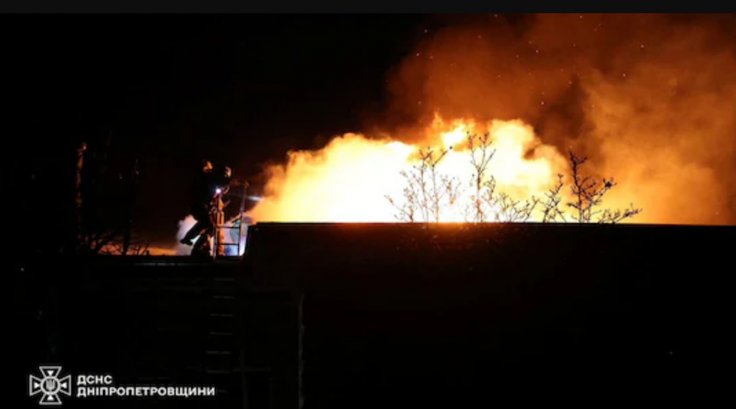
Firm support of Kyiv and U.S. mediation efforts will be restated, with great attention paid to exerting strong pressure on Moscow, using sanctions, an Italian diplomatic source said.
The foreign minister of Ukraine is also present at the negotiations, which reflects the priority of the conflict in the agenda of the G7.
Multilateral Tensions And Wider Agenda
In addition to urgent crises, the meeting outlines wider issues the G7 is grappling with, such as the future of multilateral cooperation.
The team that used to work with a high level of consensus is currently struggling with conflicting national interests and changing geopolitical relationships. One of the issues that France has tried to tackle, through its G7 presidency is on global economic imbalances and the role played by emerging powers.
Among the areas that officials anticipate finding some consensus is the establishment of a task force to fight drug trafficking as one way of seeking points of convergence amidst the wider conflicts.
According to analysts, inclusion of major non-G7 economies in the talks is an indication that the world recognizes that global issues are becoming more common concerns that need broader collaboration than the old West blocs.
Any sign of the G7 sticking together to address overlapping crises, or divisions, especially on U.S. policy, will be closely monitored as the result of the meeting.


