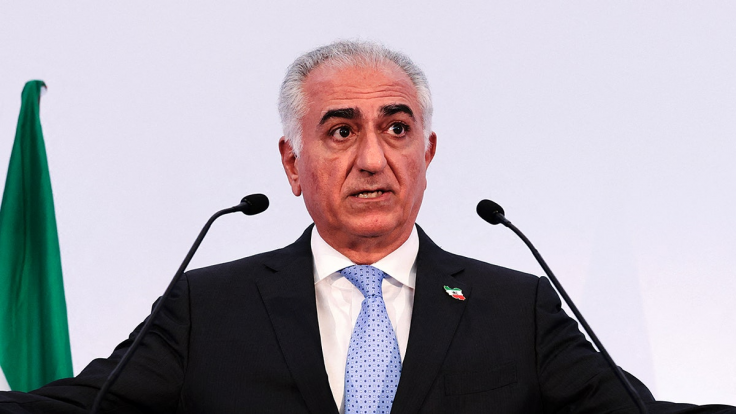
- Exiled Iranian Crown Prince Pahlavi says regime change moment approaching.
- Pahlavi discusses transition plan in interviews with CBS and All-In Podcast.
- Proposal outlines secular democracy, territorial integrity and equal citizenship.
- Pahlavi says Iran's nuclear weapons programme should be dismantled.
The exiled Crown Prince Reza Pahlavi of Iran told the 60 Minutes of CBS that it may soon reach a political turning point due to the recent military attacks which have undermined the leadership of the Islamic Republic, and said that it was their time to change now after decades of clerical system rule.
In two different appearances on the 60 Minutes and the All-In Podcast Pahlavi argued that this will be the only moment IP will have to reconstitute control over their own political future after approximately 50 years since the revolution in 1979 that dismantled the monarchy.
Pahlavi is a man who left Iran when he was 17 during the revolution and said that he does not feel that he is going to become an Iranian ruler, but a bridge man who may help them conclusively turn into an elective nation.
In the interview with the All-In Podcasts he stated that he was interested in the process, not the outcome as the final form of government should be attained by the people of Iran.
He explained that preparations towards a post-regime scenario was already in progress through a policy structure referred to as the Iran Prosperity Project (IPP) which he termed as a blue print that was designed by economists, legal experts and policy consultants.
Pahlavi said on the All-In Podcast that the first thing the organisation he has established (IPP) is the first 100 days, how we stabilize the situation in Iran immediately.
Democratic Transition Proposal
Pahlavi claims that the transition regime was based on four major principles that were supposed to assist a new political system that would be implemented in Iran.
The first is the territorial integrity of Iran. The second one, one is the strict separation of the state and religion... number three, equality of all citizens before the law... and the very process of democracy, he said to the 60 Minutes of CBS Television.
On that he claimed that these principles would be the pillars in rebuilding the institutions and conducting free elections once the present political system comes to a stop.
Pahlavi also indicated that the international affairs of Iran would have to be restored by dismantling the military nuclear programme in the nation.
In the 60 Minutes interview, he said that he believes that it must be completely decommissioned because Iran has no requirement to weaponise the nuclear program through military means.
He indicated that the elimination of the nuclear programme would assist in restoring lost international confidence and may result in the sanctions long imposed on the economy of Iran being lifted.
Economic and Regional Effects
To explain with reference to the natural resources of the country and geopolitical position of the country, Pahlavi has stated that the democratic Iran will be able to reform the economy of the country and the geopolitics of the region.
According to him, "Iran is one of the untapped economic prospects of the 21 st century on the All-In Podcast, the economic opportunities open up so far through political change would allow foreign investment to thrive in a rebuilding process.
He pointed out though that the choice concerning the leadership in Iran should be left to the people of Iran as opposed to foreign powers.
Pahlavi said that it was the prerogative of the Iranian people to decide the future leaders.
When questioned on whether he would like to go back to Iran after many decades in exile, Pahlavi replied that he would love to travel back to Iran once the conditions permit him to do so.
Would like to be able to be there, being able to help as much as I could in this process, he said.
Also Read: Iran Says Self-Defence Will Continue Until U.S.-Israel Attacks End Or UN Acts
Pahlavi was born in Tehran in 1960 and he had been living outside Iraq since the revolution that saw the end of the monarchy era in Iran and the rise of an Islamic republic. He has been at the forefront of supporting opposition groups, as well as, a section of the Iranian diaspora who propose the Iranian people to have a secular democratic system.


