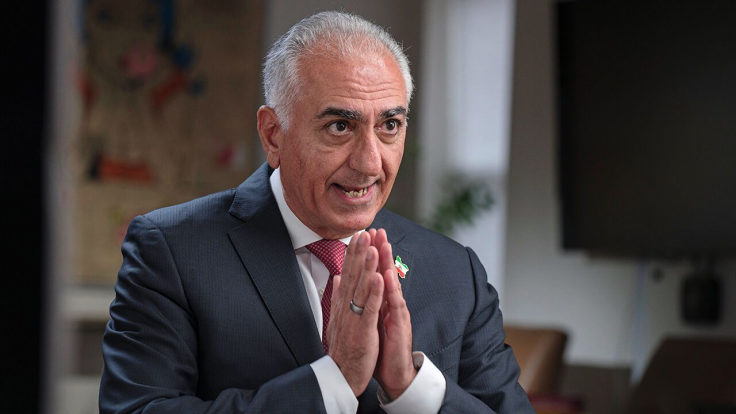
- Reza Pahlavi calls for regime change after Khamenei death.
- US-Israeli strikes reportedly killed Khamenei, senior officials.
- Pahlavi urges Iranian military to abandon regime.
- Legitimacy questioned amid divided opposition and unrest.
Born as a prince of the crown, sent to exile at the age of 18, re-made as a democrat. At this moment, when Iran is in convulsion with Khamenei dead, the 65-year-old son of the final Shah is taking the biggest gamble of his life.
Reza Pahlavi, a US resident in the Washington suburbs, filmed a video in his home on February 28, 2026, hours after US and Israeli planes destroyed the compound in Tehran belonging to Ayatollah Ali Khamenei. His message was to the point, and his voice was evened out. He advised the Iranian military to leave the regime, advised common Iranians that ends were near and that the strikes were a humanitarian intervention.
In Los Angeles to Munich to Toronto, the Iranian diaspora members went to the streets singing Long live the Shah. There were others who were chanting the same inside Iran. The issue of whether the feeling within the nation is as profound as it can be abroad and whether a man who never lived in Iran since 1978 can translate it into ruling power is the main issue of the post-Khamenei moment, which is, nonetheless, not resolved to date.
The Making of an Exile
Heir to the Peacock Throne, Reza Pahlavi was born in Tehran in 1960 and was named Crown Prince in 1967. In 1978, he never came back to Iran and left to train on US military flights. In one year, his father Shah Mohammad Reza Pahlavi was overthrown by the Islamic Revolution. In 1980 the Shah was killed in exile in Egypt.
Reza was 20. Since then, he has dedicated the four and a half decades to the Washington, DC area, becoming the most recognizable voice of the Iranian opposition in the public, featuring before congress, talking to international media, and leading rallies. He has gone far in his ideological positioning.
Much of the royalty of his base still refer to him, even now, as Reza Shah II, but Pahlavi himself has been clear: he will not come to the throne without a national referendum, and his introduction of a secular, democratic, parliamentary republic, rather than a restored monarchy, is pointed. The extent of the immigrative weight of that difference within Iran is disputed.
Like a Sceptic to Ally: The Complex Dance of Pahlavi with Trump
In the January 2026 protests, Trump stated publicly that Pahlavi was a very nice guy in a question of whether he was capable of real support inside Iran. It was a damaging hedge. After a few weeks the calculus had changed. The protests were going around, US-Israeli plans of strikes gathering steam, and Pahlavi was trying to position himself at the civilian end of what Trump was now starting to package as a liberation campaign.
Also Read: Trump Signals Possible Iran Strike As Mediator Says Nuclear Deal Near
He described Trump as morally clear and decisive in action and he made it plain to him: The people of Iran have heard all the things you have said about help on the way, and they believe you. Target contact tightened: the highest US envoy Steve Witkoff had a meeting with Pahlavi, and the prince acknowledged contact at the high levels.
Following the February 28 strikes, Trump characterized the demise of Khamenei as the only best opportunity the Iranian residents should get to recover their Nation. The language was almost literally reiterated by Pahlavi who wrote in The Washington Post: The hour of Iran freedom.
The Challenge of Legitimacy and the Prosperity Project
Pahlavi has been advocating what he terms the Iran Prosperity Project a road map out of the regime transition that according to him will be an organized transition. Iran is not Iraq as he has repeated several times, with the spectre of what happens in post-2003 Baghdad to dispel fears of state collapse.
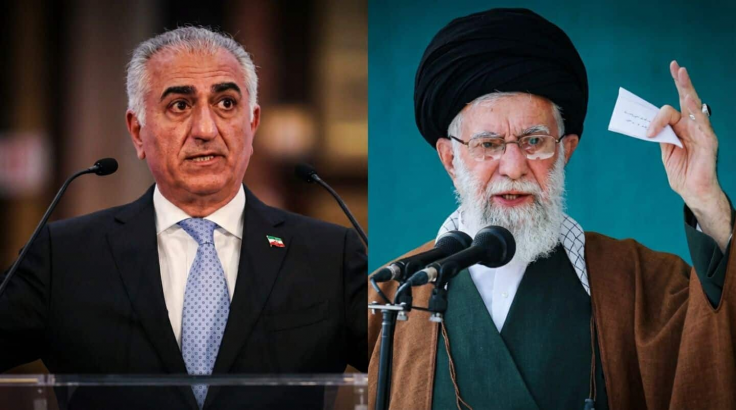
Instead of defending a regime that he reckons is functionally dead, he has urged a military Iran to rally on the side of the people and he has been actively engaged in restoration of relations with Israel, saying that with a free Iran, Tel Aviv would normalise and Iran would as well. But legitimacy is haunting every move. The surveys of Dutch pollster Ammar Maleki carried out on sizable samples of Iranians over the past few years revealed that approximately every third thought they were sure about Pahlavi, the most confidence with any opposition figure.
However, there are also a large number of opponents of him with the same percentage, and the opposition itself in the Iranian republic is overwhelmed with discord: there are monarchists, republicans, leftists and nationalists who introduce competing interests and mistrust towards one another. Some critics, such as American Enterprise Institute senior fellow Michael Rubin, have alleged cyber trolling and slander campaigns on the office of Pahlavi against other opposition figures.
With comparison made to the larger organisation of Pahlavi Iran Freedom Congress, which is an organisation of other opposition groups who have concurred on shared democratic ideals, others in Washington have viewed the coalition as more inclusive.
The Vacuum and What Comes Next
The succession crisis after the death of Khamenei has never been experienced in the history of Iran. Forty plus Iranian seniors were killed in the attacks of February 28 together with him. By Iranian constitution, an Assembly of Experts should elect a new supreme leader; in the meantime, interim powers are assumed by an interim council of three people the president, the head of judiciary and a jurist of the Guardian Council.
However, none of the constitutional gears would predict a situation when the regime is both being subject to military attack and mass dissent. The Basij militia is merely the half of the Revolutionary Guard and despite its estimated strong numbers of 1.2 million, the Basij militia remains the most well-organised force in the country and no transition under the leadership of any exile group (Pahlavi or otherwise) can go on without either gaining its support or enduring its resistance.
The official comment up to March 1, 2026, is clear about Pahlavi: "The last triumph is at hand." Whether that turns out this time to be the first line of a new Iran, or the last of a series of endeavors throughout a lifetime, made when she has ample distance, is, as always, the question.


