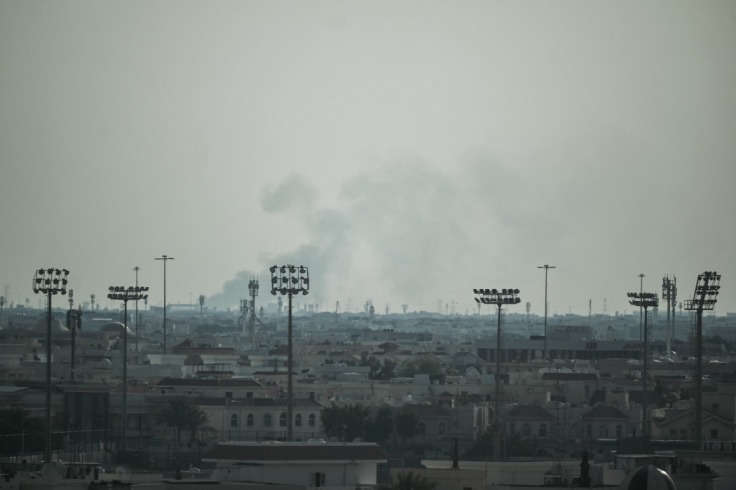
- Iranian drone strikes reportedly damaged radar sites supporting U.S. missile defenses.
- Attacks targeted facilities in Qatar, Kuwait, Bahrain, Jordan, Saudi Arabia.
- Radar stations support THAAD and Patriot air-defense systems across Gulf.
- Analysts say low-cost drones aimed at weakening regional early-warning networks.
Iran has been increasing aerial assaults on radar stations in the Middle East, knocking out a number of facilities that support the U.S. mix of missile-defence structures, exposing gaps in the layered air-defense infrastructure of the region.
Satellite surveys, military assessments and regional security reports show that radar, communications and air-defense posts in Qatar, Kuwait, Bahrain, Jordan and Saudi Arabia were damaged in the recent spate of Iranian retaliatory assaults. Many of the attacks have been carried out using low-cost one-way attack drones, which analysts believe are designed to overwhelm and incapacitate advanced detection systems.
The radar locations support the U.S. and allied missile defense systems such as Terminal High Altitude Area Defense (THAAD) and Patriot batteries positioned throughout the Gulf. These systems rely heavily on early-warning radars to detect incoming missiles and drones before interceptors are launched.
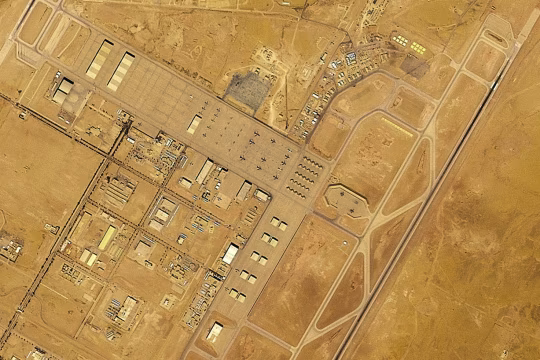
According to satellite images reviewed by analysts, several installations appear to have sustained damage. A radar station at Qatar's Al-Udeid Air Base, the largest American military base in the Middle East, experienced one of the most significant incidents. Photographs showed debris and burn marks around the radar dome, indicating impact damage followed by firefighting activity.
Former U.S. Air Force assistant secretary Ravi Chaudhary said the pattern of strikes suggests Tehran is deliberately targeting detection and command infrastructure.
"On the whole, we are doing very well in defense. With that said, it is evident that the Iranians grasp the kind of targets they should keep pressing against, command and control and our capabilities of detecting inbound missiles and drones," Chaudhary said.
Drone Strategy Targets Detection Network
Military analysts say Iran's strategy appears aimed at weakening the early-warning system that allows the U.S. and its regional partners to track incoming threats.
The Shahed-style one-way drones frequently used in the attacks can fly at low altitudes and maneuver through gaps in traditional missile defense systems, which are primarily designed to intercept faster ballistic missiles. The drones are also significantly cheaper than interceptor missiles used by the U.S. military, creating an asymmetric threat for defenders.
U.S. officials say the radar network forms the backbone of a regional missile-defense architecture. Systems such as THAAD batteries, Patriot interceptors and naval missile defenses operate together to track and intercept missiles launched by Iran or militia groups allied with Tehran.
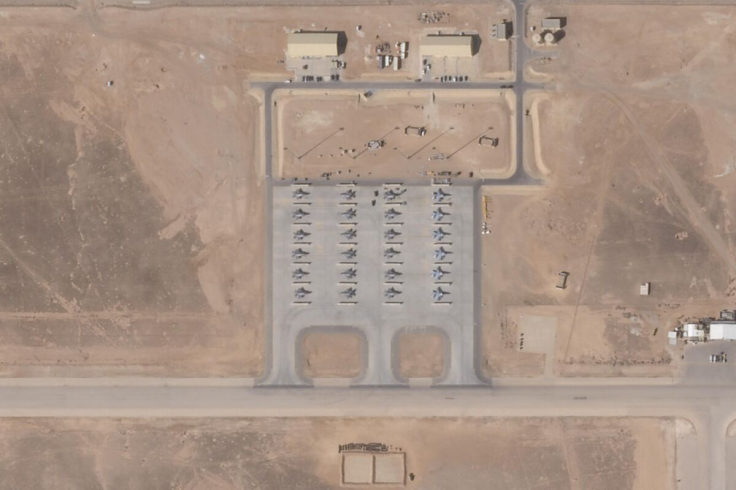
The AN/FPS-132 radar system at Al-Udeid is among the installations believed to have been hit. The radar is a large early-warning system capable of monitoring multiple aerial targets simultaneously. Defense analysts say facilities like this form part of a broader detection network designed to track long-range missile threats to the United States and its allies.
According to the International Institute for Strategic Studies, such radar systems can cost up to $1 billion each due to their advanced detection capabilities and strategic importance.
Thomas Karako, director of the Missile Defense Project at the Center for Strategic and International Studies in Washington, described these radar installations as critical assets.
"These are scarce and strategic resources," Karako said.
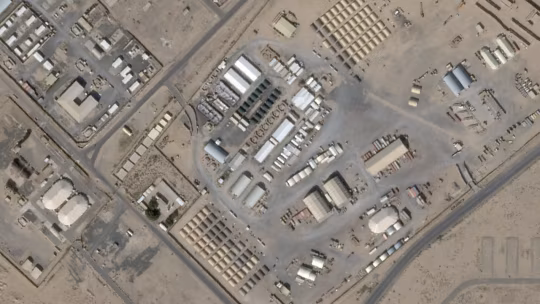
Damage has also been reported at radar facilities supporting THAAD batteries in Jordan and Kuwait. Satellite imagery showed structural damage to radar domes at Camp Arifjan in Kuwait, while communications infrastructure at the U.S. Fifth Fleet base in Bahrain was also hit.
Bases Across The Region Damaged
Additional evidence of the radar-focused campaign emerged from satellite images over Prince Sultan Air Base in Saudi Arabia. The images showed smoke rising from a radar tower and debris scattered near a site that previously housed a radar system supporting a THAAD battery.
Prince Sultan Air Base remains one of the most active hubs for U.S. and allied military operations in the Gulf, hosting dozens of aircraft and air-defense systems.
According to CNN, at least five radar facilities linked to U.S. missile-defense systems have been hit since the conflict intensified. Four of them were associated with THAAD batteries designed to intercept ballistic missiles.
Each THAAD radar unit costs roughly half a billion dollars, according to recent budget documents from the U.S. Missile Defense Agency.
The U.S. Army operates a limited number of THAAD systems worldwide, with seven active batteries deployed across locations including Guam, South Korea and the Middle East.
Mobile batteries are currently positioned across the region, with two located in Israel and Jordan, while Saudi Arabia and the United Arab Emirates have also purchased THAAD systems from the United States.
Despite the strikes, a spokesperson for U.S. Central Command said American forces in the region would continue operations.
"Our forces remain fully capable and continue to operate across the region to defend U.S. interests and support regional stability," the spokesperson said.
The U.S. is also deploying additional air-defense equipment and interceptor missiles to the region as the conflict continues.
Defense Sector Being Watched By Markets
The growing strategic importance of missile-defense systems is also beginning to be reflected in financial markets.
According to Reuters data, shares of Lockheed Martin, the manufacturer of the THAAD system, fell 1.3 percent on Thursday to close at $492.67. Raytheon Technologies, which produces Patriot missile defense systems and radar equipment, rose 0.8 percent to end the session at $118.42.
Defense stocks have attracted increased investor interest amid expectations that countries may expand military spending on missile defense and counter-drone systems.

Northrop Grumman shares also climbed to $470.55, rising 0.9 percent as investors anticipated stronger demand for advanced radar and detection technologies.
Jessica Reif Ehrlich, a media and defense analyst at Bank of America, said conflicts often accelerate defense procurement cycles.
"Security shocks typically accelerate defense procurement. Countries that become targets of drones and missiles are far more likely to increase spending on radar coverage and interception systems," Ehrlich said.
Radar technology, early-warning systems and interceptor missiles manufactured by defense contractors have historically benefited during periods of heightened geopolitical risk.
Military planners say radar infrastructure remains the foundation of modern missile defense. Even the most advanced interceptor missile cannot function effectively without early detection systems.
The United States has installed radar facilities around the world to monitor missile activity by potential adversaries including Iran, North Korea and Russia.
One such installation operates in Kurecik, Turkey, as part of the NATO missile defense system. The radar there once detected a missile launched toward a Turkish base, which was later intercepted by a U.S. naval vessel in the Mediterranean.
Analysts say Iran's increasing reliance on drones highlights how modern air warfare is evolving, with low-cost unmanned systems capable of threatening high-value military infrastructure.
The United Arab Emirates' defense ministry said earlier this week that more than 500 drones were launched toward targets across the Gulf during the first two days of the conflict, with more than 100 additional drones detected daily since.
Also Read: Iran Says Self-Defence Will Continue Until U.S.-Israel Attacks End Or UN Acts
While U.S. officials say Iranian missile launches have declined since the conflict began, drone activity remains high.
Adm. Brad Cooper, the top U.S. naval commander in the Middle East, said the intensity of attacks has dropped but the threat remains.
"Missile attacks have fallen by about 90 percent and drone attacks by roughly 83 percent since the early phase of the conflict," Cooper said.
Pentagon officials have warned that interceptor missile supplies could come under pressure in the event of a prolonged conflict involving sustained drone or missile attacks.
Karako said the strikes demonstrate how modern warfare increasingly combines multiple aerial threats.
Here the problem of complex and integrated air and missile attack exists. "We must fight the entire gamut of the air missile threats, not merely the ballistic ones," said Karako. "You must have a protection of your defenses. Military experts believe that the defense of radar stations can gain relevance soon, and the defense against aerial threats evolves."


