Just one week before Pakistani warplanes bombed Kabul, Pakistani Prime Minister Shehbaz Sharif stood before the inaugural meeting of the Trump-hosted Board of Peace in Washington and declared Donald Trump the "saviour of South Asia," a leader who had helped avert a nuclear war between Pakistan and India and protected tens of millions of lives.
Seven days later, Pakistan was at war again. Not with India, but with Afghanistan.
The timing is the starkest evidence that the "President of Peace" brand, meticulously assembled by Trump and his State Department over the past year, is yet to respond or the need for peace fame carries a shorter shelf life than its architects have advertised.
What Actually Happened This Week
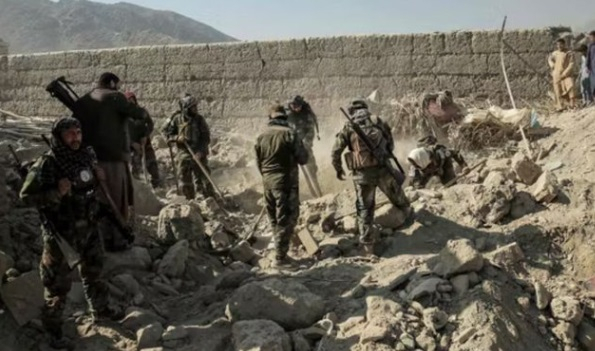
On February 21, Pakistan's Air Force carried out airstrikes on alleged training camps in Nangarhar, Paktika, and Khost provinces in Afghanistan, targeting what it described as seven hideouts belonging to the Tehreek-e-Taliban Pakistan and the Islamic State Khorasan Province. Pakistan said the operation was retaliation for a suicide bombing at a Shia mosque in Islamabad on February 6 that killed at least 36 worshippers, and a subsequent attack in Bajaur that killed 11 Pakistani soldiers and a child.
Afghanistan launched a cross-border attack on Pakistan late Thursday, saying it was retaliation for those deadly Pakistani airstrikes. Pakistan then struck back, and Pakistani Defence Minister Khawaja Asif posted on X: "Our patience has now run out."
Asif declared the two countries were now at "open war." Afghanistan's government spokesman Zabihullah Mujahid said its attacks were meant as "a message that our hands can reach their throats and that we will respond to every evil act of Pakistan," while also insisting, "Pakistan has never sought to resolve problems through dialogue."
Afghanistan's deputy spokesman Hamdullah Fitrat accused Pakistan of having "deliberately targeted the residences of ordinary civilians," saying most of the dead and wounded were women and children. Pakistan denied targeting civilians. The casualty claims of both sides could not be independently verified.
The Road to This Point: Qatar, Not Trump
The roots of this crisis reach back to October 2025, when clashes between the two countries produced the deadliest cross-border fighting in years. From October 11 to 19, a large-scale conflict erupted after Pakistani airstrikes on TTP targets in Kabul triggered Taliban retaliation. After mediation by Qatar, Turkey and Saudi Arabia, the two sides announced a ceasefire ten days later.
That ceasefire, and the diplomacy that produced it, was Doha's doing, not Washington's. The Qatar Ministry of Foreign Affairs announced: "Pakistan and Afghanistan Agree to an Immediate Ceasefire During a Round of Negotiations in Doha." The United States played no recorded role in that negotiation.
Subsequent talks failed to produce a lasting agreement, and low-level incidents continued. The operation this week took place days after a Saudi Arabia-mediated release of three Pakistani soldiers who had been captured during the October 2025 clashes.
What stopped the last war, in other words, was Qatar and Saudi Arabia. What ended the ceasefire, according to both governments, was a cascade of terrorist attacks inside Pakistan and Islamabad's subsequent decision to strike Afghan territory.
Trump's Peace Record and Afghan-Pakistan Gap
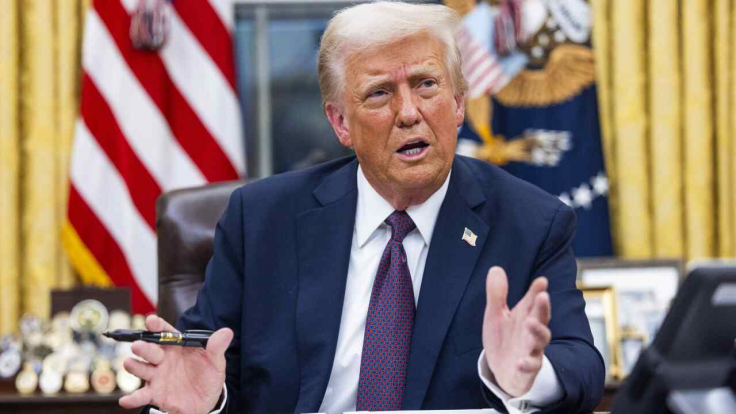
At his State of the Union address on February 24, just two days before Pakistani warplanes bombed Kabul, Trump reiterated his claim of ending eight wars in the first ten months of his presidency, saying: "First 10 months, I ended eight wars, including Cambodia and Thailand, Pakistan and India, would've been a nuclear war, 35 million people said the Prime Minister of Pakistan would've died if it weren't for my involvement."
Trump listed Kosovo and Serbia, Israel and Iran, Egypt and Ethiopia, Armenia and Azerbaijan, Congo and Rwanda, and Gaza as the conflicts he had resolved. The audience snickered at some of the claims. "It isn't funny," Trump responded, as he began to list the countries. Conspicuously absent from that list: Afghanistan and Pakistan. The conflict between them, simmering since the Taliban's takeover in August 2021, has never featured in Trump's peace scorecard. Security analyst Sami Omari told Al Jazeera there have been 75 clashes between Afghan and Pakistani forces since 2021, the same year U.S. and NATO forces withdrew from Afghanistan.
Fact-checkers have already raised flags about Trump's broader peace claims. Experts said Trump played a key role in ending fighting in some conflicts, but other examples Trump cited were not wars, and some hostilities are ongoing. The U.S. State Department officially branded Trump "THE PRESIDENT OF PEACE: 8 wars ended in 8 months" in an October 2025 post, which generated 4.1 million views on X. PolitiFact rated the six-wars claim "Mostly False," finding that Trump had a hand in temporary ceasefires in a few conflicts, but there was little evidence he had permanently resolved them.
Trump's Response This Week: Praise, Not Peace
When reporters asked Trump on Friday whether he would intervene in what Pakistan itself had described as "open war," the President's answer was notably short on diplomatic urgency. Trump told reporters: "I would (intervene). But I get along with Pakistan very very well. They have a great Prime Minister, a great General. They have a great leader. Two of the people that I really respect a lot. Pakistan is doing terrifically well."
It was a statement more suited to a trade rally than a war briefing. There was no announcement of a mediating envoy, no emergency phone call to the Taliban, no ultimatum of the kind Trump deployed, to evident effect, against Thailand and Cambodia when he threatened to cut off trade talks unless they stood down last July.
During an earlier round of violence last October, Trump had suggested he could step in as tensions between Kabul and Islamabad were simmering, saying he would "get that solved very quickly." This time he said merely that he would consider it.
Who Is Actually Trying to Stop War
Qatar's minister of state, Mohammed bin Abdulaziz al-Khulaifi, spoke Friday with the foreign ministers of Afghanistan and Pakistan in an effort to de-escalate tensions, Qatar's Ministry of Foreign Affairs posted on X.
Russia, China, Turkey and Saudi Arabia were also trying to mediate, diplomats and news reports said, while Iran, which borders both Afghanistan and Pakistan, has also offered to help.
UN Secretary-General António Guterres expressed serious concern. His spokesperson, Stéphane Dujarric, said Guterres was "deeply concerned by the escalation of violence" and its impact on civilians.
Zalmay Khalilzad, a former U.S. ambassador to Afghanistan, described the tit-for-tat attacks as "a terrible dynamic that must stop," saying a better option was "a diplomatic agreement between the two countries that neither would allow its territory to be used by individuals and groups to threaten the security of the other."
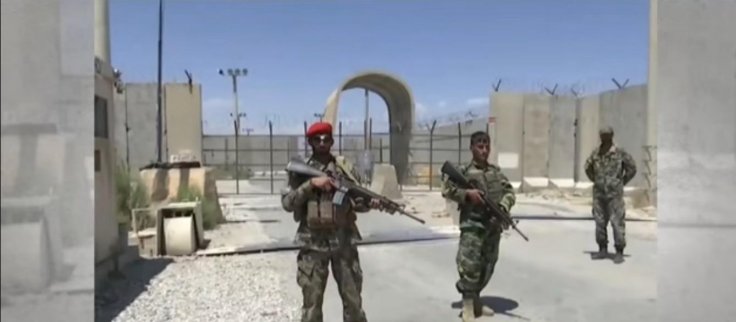
That framing, a bilateral security compact rooted in the original obligations of the 2020 Doha Agreement, is precisely what Pakistan's information minister invoked this week when he urged the international community to pressure the Taliban to honour commitments under the 2020 Doha Agreement not to allow Afghan soil to be used against other countries.
That agreement, it bears noting, was negotiated during Trump's first term. It also, by widespread consensus, gave the Taliban the strategic breathing room to retake Kabul fourteen months later.
The Broader Picture
Trump has frequently boasted about ending eight wars since returning to office, including stopping clashes between India and Pakistan following the Kashmir attack last year. Pakistan credits him with averting a full-blown war between the nuclear-armed neighbours; India has minimised his role.
A Norwegian peace research expert at PRIO asked the harder question: Is it legitimate to use trade agreements and threats of tariffs to pressure parties into peace? Such pressure, the expert noted, can weaken the parties' sense of ownership of an agreement. "Does Trump's approach represent a new, harsher, and more ruthless type of peacemaking, or is it simply political theatre with one goal: to win the Nobel Peace Prize?"
In the case of Pakistan and Afghanistan, no one has yet answered that question, because Trump has not made a meaningful attempt to intervene. There is no trade lever to pull against a Taliban government already under broad Western sanctions. There is no Pakistan-Taliban ceasefire framework Washington controls. And the President, by his own words this week, seems content to cheer one side from the stands.
The war, as of Saturday morning, continues.