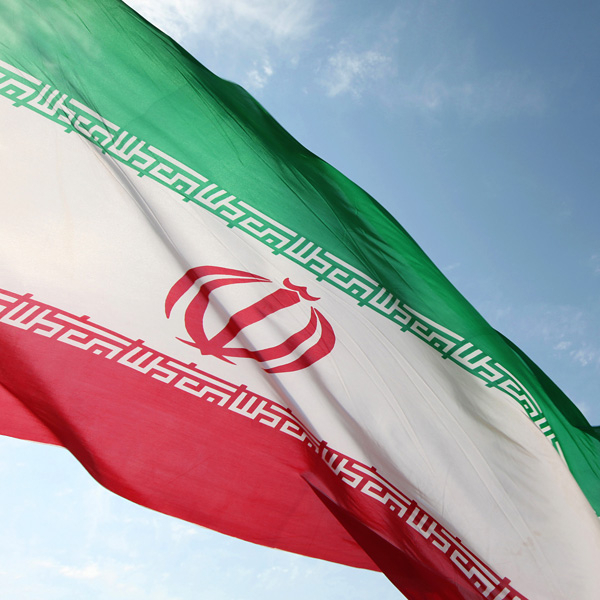
- Iran released an animated propaganda video depicting victory over the US, Israel
- Clip shows missile strikes, cyberattacks, and Hormuz disruption scenarios
- Video spread widely online, targeting younger social media audiences
- Analysts say content blends satire with strategic information warfare
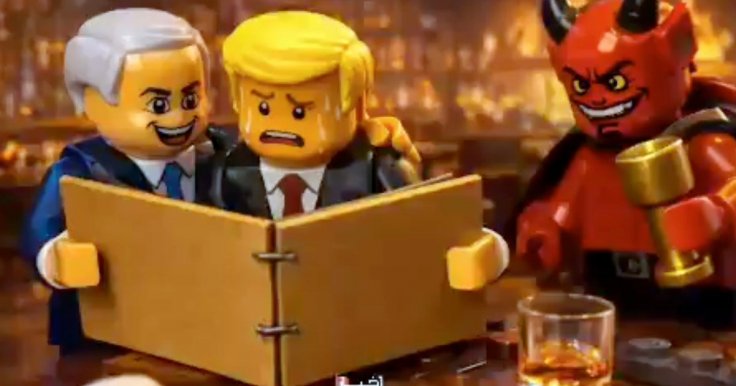
A stylized, animated video in the format inspired by Lego, issued by Iran, shows its troops overpowering the United States and Israel in a fictional offensive connected to the current crisis in the Middle East. The approximately three-minute video, called Victory Chronicles Part 2, went viral this week and is a part of a larger media policy that is associated with state-connected media hubs in Iran.
The video depicts the overpowering of the U.S. and Israeli military realms by Iranian forces and allied groups, such as the Houthi movement in Yemen and the claimants who are called Chinese hackers in various clashes. There are animated scenes depicting the strikes of missiles, cyberattacks, and the sealing of the Strait of Hormuz, which is an important route of global oil shipping situated between Iran and Oman.
The war itself started on Feb. 28, 2026, when U.S. and Israeli troops also had simultaneous attacks against Iranian nuclear plants and air defense equipment, as both governments stated in their claims. Iran reacted with missile attacks and threats to disrupt ships passing through the Strait of Hormuz, heaping tensions in the region as a whole.
The Lego-like video ends with falling blocks that are used to form the letters L-O-S-E-R, which is a direct insult to the enemies of Iran. It resembles the previous AI-generated and satirical video content created by the same core of state media, which has added more humor to its geopolitical content delivery over time.
The AI-created content makes the Iran digital propaganda strategy grow
The fact that Iran is utilizing animation and artificial intelligence resources is indicative of a change in the communication of governments in the context of conflict. As some analysts observe, this kind of material is meant to be easily viral on social media and easily attractive to younger viewers who are accustomed to meme culture.
The video is of a high level of production, which has attracted attention online, as some of the viewers have praised the visual design and satire presented in the video. One of the most popular and shared Reddit posts with a large engagement level characterized the clip as incredibly imaginative propaganda resembling a video game cutscene, pointing to the entertainment aspects even to disapprovers as such.
The officials of Iran have not made sworn statements concerning the content of the particular video, but outlets controlled by the state have positioned content analogous to it as a component of a soft war to address Western discourse. The messages are also often made to attack U.S. President Donald Trump and Israeli Prime Minister Benjamin Netanyahu, often being exaggerated or satirized.
Such a strategy is in line with Iran's long-term focus on information warfare, in which the state media and other related organizations attempt to influence the perception of people either at home or abroad. Digital is faster, and it can be disseminated without using the conventional mediums of broadcasting.
Simulation of Battlefield Environment Compares to Video Assurances
Although the results were sweeping, as the animation suggests, no free verification is given that was used to prove the results that are presented in the clip. U.S. and Israeli statements of the coalition reveal extensive destruction of Iranian military facilities after the initial attacks.
Damage to nuclear-linked facilities and air defense systems has been noted by military briefings, but there have not been complete evaluations. On their part, Iranian officials have been stressing resiliency and retaliation capacity in their official statements.
The Strait of Hormuz has continued to be a cause of concern. Although threatening to close and taking actions to intercept the shipping, international surveillance efforts have shown that maritime trade has not been completely paralyzed, as is suggested in the video.
According to experts, these discrepancies point to the inconsistencies between narrative-based content and verifiable battlefield conditions. The animation format enables the creators to provide conclusive results without the evidentiary limit applied to the traditional reporting.
Emerges: Information Warfare Becomes Front Runner in Contest
The fact that it released Victory Chronicles: Part 2 further stresses the realization of how contemporary battles are being fought both online and at actual crusade areas. The governments and other related players are spending on the content that appeals to the eye with the aim of manipulating opinion and conducting.
The fact that Iran resorts to humor, satire, and games-like visuals is a break with more traditional forms of propaganda, which is one way of indicating its adjustment to the international online culture. Those are similar tactics that have been noted in other fights, and memes and short videos are framing and instruments of persuasion.
Meanwhile, authorities and experts also warn that this material can confuse the boundaries between facts and fake news. Until it is verified independently, the evidence in viral media can gain broad acceptance before it is looked into.
This can be seen in the fast nature of the virality of this video because it resonates in a media environment where media attention is being divided and speed frequently beats accuracy. It also depicts how official, even humorous messaging can be supported by an informal, even childlike tone but make serious geopolitical statements.


