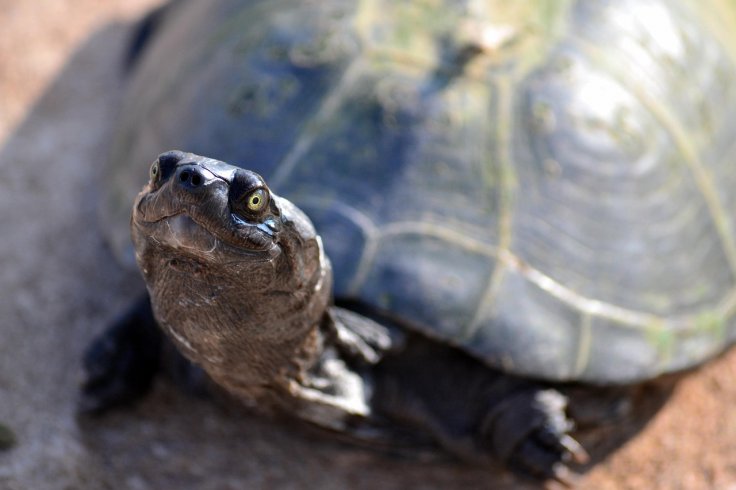
What began as a routine beach clean-up turned into an unexpected wildlife discovery when a group of children found a turtle on the shores of Changi Beach on January 22.
The reptile, however, was not a marine turtle but a pig-nosed turtle — a freshwater species believed to have been illegally kept as a pet and later abandoned.
The find was made by primary school pupils who were collecting trash along the beach. Their teaching assistant, Iman Friday, said he was alerted by the children's excitement but initially assumed the turtle's presence was natural.
He left the animal undisturbed while the clean-up continued, only realising later, after sharing photographs with The Straits Times, that the turtle was far from its natural habitat.
According to turtle expert Rushan Abdul Rahman, the pig-nosed turtle is a non-native species that originates from freshwater environments in northern Australia and Papua New Guinea.
Its presence on a Singapore beach suggests it may have been brought into the country through the illegal wildlife trade before being released. Both the National Parks Board (NParks) and the Animal Concerns Research and Education Society (ACRES) said they were not alerted to the incident, and the turtle's whereabouts remain unknown.
Rushan noted that while the species' flipper-like limbs resemble those of sea turtles, pig-nosed turtles cannot survive in marine environments. As freshwater reptiles, they are prone to dehydration when exposed to saltwater for prolonged periods. He explained that salt draws moisture out of their bodies, likening the effect to the process of drying meat.
Listed as endangered by the International Union for Conservation of Nature, the pig-nosed turtle is also protected under Appendix II of the Convention on International Trade in Endangered Species of Wild Fauna and Flora (CITES), which strictly regulates its trade.
Despite this, the species remains popular in the exotic pet trade due to its distinctive appearance, even though it can grow up to 70cm in shell length and display territorial and aggressive behaviour.
Since 2009, ACRES has rescued at least 30 pig-nosed turtles across Singapore, including several found along other beaches such as East Coast Park. Rushan said many owners abandon the turtles after underestimating how large they can grow. Reptiles continue growing throughout their lives, and inadequate tank space often leads to poor shell development.
Examining photographs of the turtle found at Changi Beach, Rushan observed a concave deformation in its shell, suggesting it may have been kept in a container that was too small. Such deformities occur when turtles are unable to expand their shells normally due to prolonged confinement.
Under Singapore's Wildlife Act, releasing animals into the wild is an offence punishable by a fine of up to S$5,000.
It is also illegal to keep wildlife without approval, with penalties of up to S$20,000 in fines, a jail term of up to 12 months, or both.
Members of the public who encounter wildlife in distress are urged to contact the ACRES Wildlife Rescue Hotline at 9783-7782 or NParks' Animal Response Centre at 1800-476-1600.