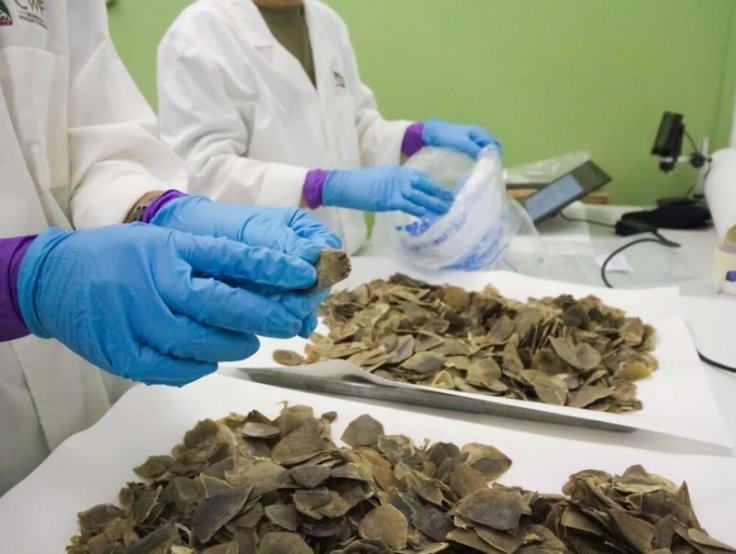
Singapore authorities have seized more than 830kg of Asian pangolin scales in what is the country's largest haul of its kind, with the shipment estimated to have come from over 2,200 animals.
The illegal cargo was intercepted on December 29, 2025, by officers from the Immigration and Checkpoints Authority (ICA) in Jurong. According to reports, the smugglers had attempted to conceal the scales by labelling the shipment as dried fish skin on a lorry travelling from Indonesia to Cambodia.
The suspicious cargo was flagged after anomalies were detected through screening systems and further analysed by officers. Subsequent genetic testing by the National Parks Board (NParks) confirmed that the scales belonged to the Sunda pangolin, a critically endangered species native to Southeast Asia, including Singapore.
An update on the case was shared by Alvin Tan at the World Wildlife Day Regional Youth Symposium held at the BCA Academy on Saturday, March 28. He said that investigations are ongoing and described the seizure as a reflection of Singapore's coordinated, whole-of-government approach to tackling wildlife trafficking.
Tan added that enforcement alone is not enough to combat the illegal wildlife trade, given the complexity of global shipping networks. With about 90% of global trade transported by sea, illicit goods can be easily hidden among legitimate cargo.
To strengthen detection efforts, authorities have introduced a new compendium aimed at the maritime shipping sector. Developed in collaboration with NParks, Traffic International South-east Asia, the World Wide Fund for Nature and the World Shipping Council, the guide outlines key warning signs such as inconsistencies in documentation, cargo value, weight and appearance.
It also includes tools to help identify species protected under the Convention on International Trade in Endangered Species of Wild Fauna and Flora (CITES).
Tan emphasised that collaboration between public agencies and private industry is crucial to closing gaps that traffickers may exploit. He added that Singapore maintains a strict zero-tolerance stance towards wildlife trafficking.
Under the Endangered Species (Import and Export) Act, offenders caught importing protected species without permits can face fines of up to S$200,000 per specimen, imprisonment of up to eight years, or both. Penalties and enforcement measures have also been strengthened since 2022.


