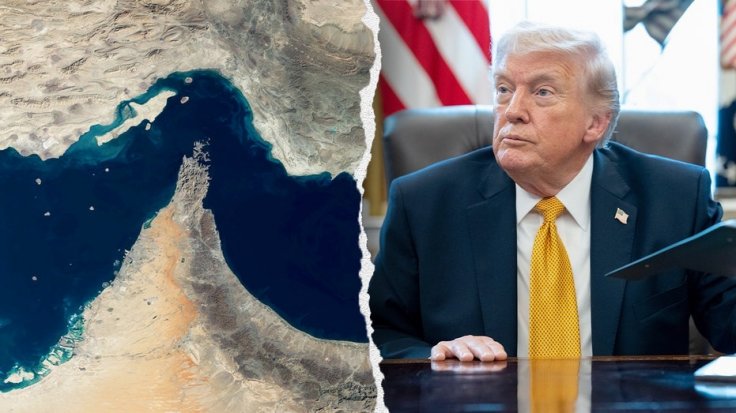
Iran's military and Foreign Ministry have issued a blunt rejection of White House assertions that the two sides are making diplomatic progress, with an Iranian military spokesperson declaring that the United States is "negotiating with itself."
The dismissal came on day 26 of an ongoing U.S.-Israeli military campaign against Iran, as Washington pressed a sweeping 15-point ceasefire proposal and President Donald Trump extended a strike deadline by five days.
The gap between the two governments' accounts of the diplomatic situation could not be wider, and both sides are now publicly disputing whether any contact has taken place at all. What's actually happening. Let's decode point by point.
Iran Says No Contact Has Occurred
Iran's Foreign Ministry denied that any direct or indirect communication with the United States had occurred, contradicting Trump administration claims of productive talks. Iranian parliamentary leadership went further, characterizing Trump's negotiation announcements as "fake news" deliberately crafted to move global financial markets.
The Iranian military's position was equally pointed. A military spokesperson mocked U.S. ceasefire attempts, saying Americans were "negotiating with themselves", a characterization that framed Washington's diplomatic claims as a unilateral performance rather than a genuine exchange.
Trump, for his part, claimed Iran was eager to reach an agreement and had signaled willingness to halt uranium enrichment and abandon nuclear weapons development. He also extended by five days his stated deadline for striking Iranian power plants. Iranian officials expressed deep skepticism about those characterizations, with Trump's assertion that Tehran had agreed to "never have a nuclear weapon" drawing no confirmation from Iranian government sources.
The 15-point U.S. proposal, delivered to Tehran through Pakistani intermediaries, demands the complete dismantling of Iran's nuclear infrastructure and the abandonment of support for regional proxy forces.
Iran rejected the plan.
Pakistan's Mediation Role and the Intelligence Dispute
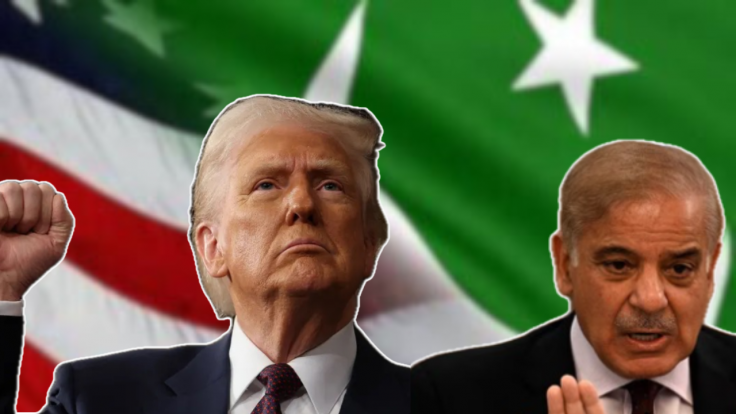
One of the less-examined dimensions of the crisis is the role Pakistan is playing as a back-channel broker. Pakistani Prime Minister Shehbaz Sharif offered to host negotiations to end the conflict and separately briefed Saudi Crown Prince Mohammed bin Salman on those mediation efforts. Islamabad's willingness to serve as an intermediary reflects both its geographic proximity to the region and its historically complex relationships with Tehran and Washington.
Sharif's outreach to Riyadh signals an attempt to build a broader diplomatic coalition around a negotiated settlement, though Iran's categorical denial of any contact raises questions about whether Pakistani channels are being acknowledged by Tehran at all.
Separately, the evidentiary basis for the military campaign itself is under scrutiny. U.S. Special Envoy Steve Witkoff's pre-war intelligence claims about Iran's nuclear program are being challenged by weapons experts and Iranian officials, who say the justifications offered for the strikes were false. The Trump administration cited Iran's Tehran Research Reactor as a specific justification for military action but has not publicly provided evidence that the reactor was being used for weapons development. Witkoff was expected to meet with U.S. senators amid mounting congressional questions about the pre-war intelligence.
Middle East analysts assessed that the conditions for a genuine U.S.-Iran dialogue are not yet in place, citing incompatible negotiating terms and active opposition from Israel to any diplomatic settlement. Israeli opposition to a negotiated outcome has added a structural obstacle to any potential breakthrough, with analysts noting that Washington and Jerusalem do not appear to hold identical positions on acceptable end-states.
WHO Nuclear Warning and the Human Cost on the Ground
On the ground, U.S.-Israeli strikes in Tehran on day 26 of the conflict killed at least 12 people and wounded 28 others, destroying a school and residential buildings in the Iranian capital, according to Al Jazeera.
The World Health Organization (WHO) issued a warning about the worst-case trajectory of the conflict, flagging a catastrophic nuclear incident as a credible risk scenario. The WHO warning adds an international public health dimension to a conflict that has, to this point, been framed primarily in geopolitical and military terms.
Iran's closure of the Strait of Hormuz, a narrow waterway between the Persian Gulf and the Gulf of Oman that typically carries roughly 20% of the world's oil supply, has compounded the crisis's global economic impact, according to The JC. Energy markets have been disrupted since the closure, with no timeline for reopening publicly indicated by either side.
Writing on Reddit in a thread tracking the diplomatic standoff, a user wrote: "Both sides are talking past each other in public while Pakistan is quietly trying to build a bridge neither government wants to admit exists."
The divergence between Washington's stated optimism and Tehran's flat denials has left the diplomatic track in an ambiguous state, with no neutral party confirming that substantive talks have taken place, and no verified channel publicly acknowledged by both governments as active.


