
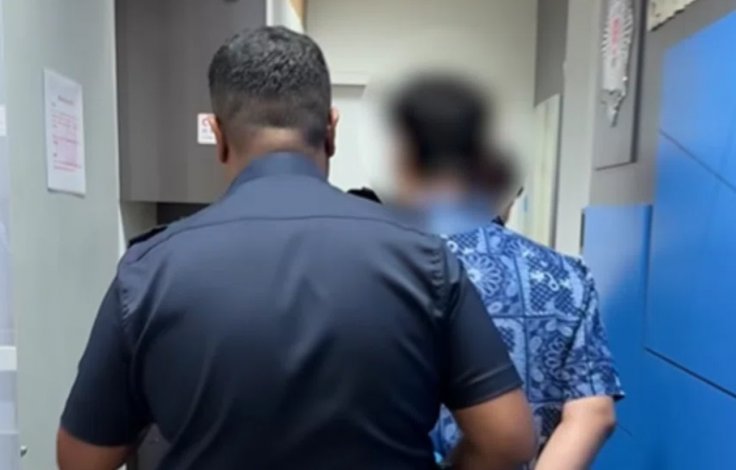
A Washington state man was taken into custody for what authorities say is his 98th arrest, following a multi-county retail theft spree, drug possession charges, and a high-speed vehicle pursuit that stretched across multiple jurisdictions.
The case has drawn renewed attention to a pattern that criminal justice researchers and law enforcement officials have documented for years: a small subset of chronic offenders cycling through arrest, court, release, and re-offense at a pace that strains local budgets, clogs court dockets, and leaves victims in its wake.
The Recidivism Numbers Behind the Headlines
The Washington case is not isolated. In Springfield, Missouri, a four-time convicted felon identified as Jason Holloway was arrested after a high-speed chase following a retail theft spree valued at more than $2,000.
In Las Vegas, Nevada, Clark County Sheriff Kevin McMahill refused a judge's order to release a man with 35 prior arrests, a decision that triggered a legal challenge now before the Nevada Supreme Court.
The sheriff's office did not release a public statement on the merits of the underlying case, but McMahill's refusal signals a widening friction between judicial discretion and law enforcement concerns about chronic reoffending.
South Dakota recorded its highest prison recidivism rate in eight years, with approximately half of all released inmates returning to custody within three years, according to newsfromthestates.com. That figure has not been independently confirmed by a second state agency. Nationally, the U.S. Department of Justice's Bureau of Justice Statistics has previously reported five-year recidivism rates above 80% for certain offense categories, though state-level figures vary considerably by methodology and sentencing structure.
The cost of this cycle reaches far beyond the headline arrest counts. Each re-arrest triggers expenses across multiple systems: patrol response, booking, public defense, prosecution, adjudication, and, where applicable, incarceration. A 2022 analysis by the Vera Institute of Justice, a criminal justice reform research organization based in New York, estimated the average annual cost of incarcerating one person in the United States at more than $35,000, a figure that compounds sharply across repeated short-term incarcerations for the same individual.
Repeat offender justice system
Jurisdictional fragmentation compounds the problem. When an offender operates across county or state lines, as the Washington suspect allegedly did during his most recent theft spree, no single court or probation office holds a complete picture of the individual's record at the time of a bail or release decision. Prosecutors in one county may be unaware of a pending case in an adjacent jurisdiction. Defense counsel and bail commissioners often work from incomplete criminal histories pulled from databases that are not uniformly updated across agencies.
One Reddit user writing in r/PublicFreakout, commenting on a viral clip related to a separate repeat-offender arrest, put the frustration plainly: "At some point, 90-something arrests stops being a justice system and starts being a scheduling system," the user wrote in a post that drew more than 14,000 upvotes.
The Las Vegas standoff between Sheriff McMahill and the judiciary offers a rare public window into how that frustration surfaces at the institutional level. McMahill's refusal to comply with a release order for a man with 35 prior arrests frames a direct question about where judicial authority ends and executive discretion in law enforcement begins. The Nevada Supreme Court's eventual ruling in that case could set a statewide precedent for how sheriffs respond to release orders involving chronic offenders.
Post-jail support system inadequate?
Critics of punitive approaches argue that longer detention without adequate treatment and reentry support does not reduce recidivism. Advocates for bail reform point to studies showing that pretrial detention itself can destabilize housing, employment, and family ties, factors that correlate with higher re-offense rates after release. Neither position resolves the immediate public safety calculus when an individual accumulates arrest records in the double digits, let alone near triple figures.
The Washington suspect, whose name had not been publicly confirmed across multiple verified outlets at the time of reporting, now faces charges that include retail theft and drug possession, according to wfin.com.
Whether the 98th arrest produces a different legal outcome than the previous 97 will depend on prosecutorial discretion, sentencing guidelines, and the availability of long-term incarceration or supervision resources in the relevant jurisdiction. No response from the suspect's legal counsel was available at the time of publication.


