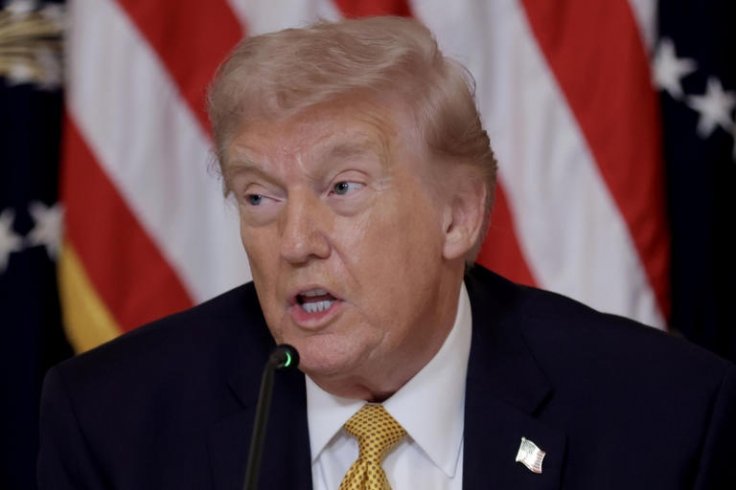
- Polls show Trump economic approval between 33% and 39%
- Disapproval ranges from 54% to 64% across surveys
- Multiple pollsters report approval consistently below 40%
- Economic concerns like inflation drive negative public sentiment
The popularity of how Donald Trump has managed the economy of the U.S. is under permanent scrutiny as several national polls indicate negativity every time by far surpasses the approval of his leadership.
According to recent data provided by American Research Group (ARG), between 33% and 39% of Americans have a positive rating of the economic performance by Trump, with 54% to 64% negatively rating him. This puts his net approval rating well into negative territory, usually below -25 points, indicating a lasting disequilibrium in the sense of the people.
The results help to support a larger-scale pattern across polling organizations, as economic issues remain largely colored by voter perceptions. By the aggregate polling comparisons of the Reuters style, the latest readings are not much better than in the last survey cycle, where approval numbers were slightly higher yet still at very low disapproval rates.
Nonetheless, these numbers have not stopped Trump, as he has solid support among Republican voters, pointing to a sharp partisan divide in economic evaluations.
A Homogenous Trend among Pollsters
The data of ARG is compatible with the results of other significant polling organizations, which indicates a long-lasting pattern and not a single finding. Polls of Reuters/Ipsos have also pegged economic approval numbers in the mid-to-high 30 percent range, with over half of the respondents indicating their dissatisfaction.
A similar trend has been indicated by research conducted by Navigator Research, with approval constantly being close to 40 percent and never surpassing disapproval. A gap between political messages and the opinion of the people is also cited in an analysis quoted by PBS NewsHour, which means that voters are not convinced of the overall economic improvement.
The consistency is significant across datasets. Although there are slight differences among polls, the general trend is the same, with only a few ever reaching the 40 percent mark approval and an average of over 50 percent disapproval.
ARG data compared to previous readings in February indicates that there are minor changes, as approval decreases slightly, and disapproval is high. Such a lack of fluctuation in the negative sentiment weakening emphasizes the fact that voters are so ingrained in their opinion.
Voter Sentiment is driven by Economic Concerns
The low approval ratings remain strong because the American voters have economic concerns. The trend of inflation, cost-of-living pressures, and financial insecurity are still defining the public opinion, despite the fact that the bigger economic elements are giving a mixed picture.
According to the polling failures, the independent voters are the most demanding, as the approval ratings are markedly lower than the Republican ones. This population is one of the most prominent battlefields during national elections, and this makes the economic perceptions that much more important in politics.
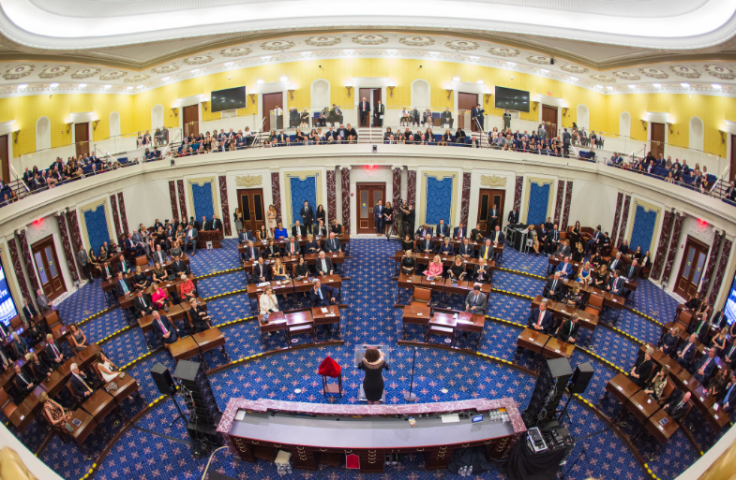
"Approval of Trump's economic performance ranges between 33% and 39%, while 54% to 64% disapprove," according to data from American Research Group (ARG).
The information also underlines the level of partisan polarization. Although Republican voters are mostly satisfied with the economic policies of Trump, Democrats and unidentified voters display an enormous discontentment, which puts a significant gap in overall ratings.
Analysts observe that this polarization may be concealing any change in sentiment; however, the fact that the approval-disapproval gap has been persistent indicates that economic issues are slicing through the historic political messages.
Reading Polling Trends With Caution
Although the methodology of ARG, which is more or less based on telephone polling, has been questioned, its results are widely reflected by those of other major pollsters, analysts say. This overlap gives the total trend credibility even though specific numbers may be slightly different.
In several surveys, there is an evident trend that has been developed in the past few months. The ratio between economic approval and disapproval does not fall out of line with economic approval being under 40% and disapproval always being over 50 percent, giving us the same negative margin. Reuters-style comparative data indicate that this gap has narrowed a bit compared to the last period of reporting, which contributes to the permanence of existing perceptions.
The pollsters warn that approval ratings may vary based on the economic developments or political events. But the fact that there is no significant change in various survey cycles makes it possible that the voter sentiment is comparatively stuck in the short term.
This uniformity of the polling sources suggests that the problem is not specific to any particular dataset but it is a general national sentiment at the economic state.
Prospects of Political Environment
The fact that the economic approval ratings are still weak makes the issue central to the political scene especially in light of the fact that economic performance continues to be one of the most important determinants of voter turnout.
Economic approval ratings remain "below 40%, while disapproval consistently exceeds 50%," based on Reuters-style comparative polling data cited in the analysis.
Even though political communications are still focused on economic resilience, the polls indicate that a significant number of Americans are not convinced. This gap between the official accounts and the social conception is bound to influence future campaign politics and policy discussions in the next few months.
As economic issues are likely to continue being high, the changes in inflation, employment, and household financial status may have a determining factor in changing the mood of the population.
So far, recent polling statistics are indicative of a steady trend: economic approval is still low, disapproval is squarely in the majority, and it is indicative of a difficult environment in which the policymakers operate and a serious concern to the voters as they move to the next stage in the political cycle.


