The U.S. Department of State issued a global security alert on Sunday, urging Americans worldwide to be wary of threats from groups linked to Iran. "The Department of State advises Americans worldwide, and especially in the Middle East, to exercise increased caution. Americans abroad should follow the guidance in security alerts issued by the nearest U.S. embassy or consulate," the Department of State said in a statement.
"Periodic airspace closures may cause travel disruptions. U.S. diplomatic facilities, including outside the Middle East, have been targeted," the warning continued. "Groups supportive of Iran may target other U.S. interests overseas or locations associated with the United States and/or Americans throughout the world."
Major Threat to Americans
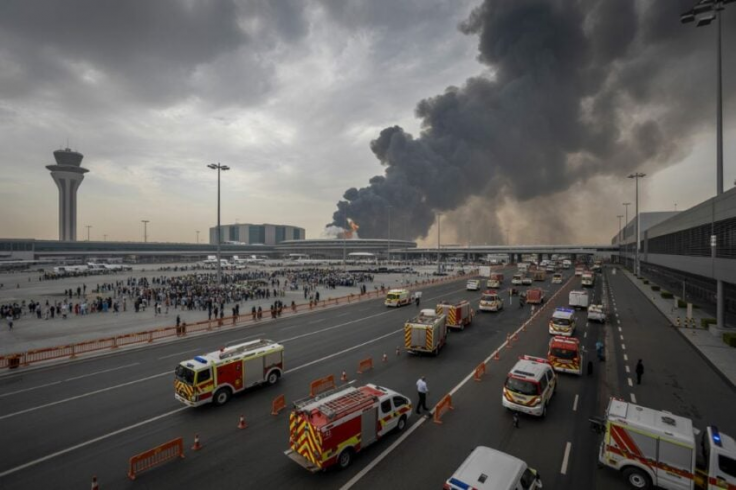
The warning followed a stark statement from Iranian military spokesman Gen. Abolfazl Shekarchi, who on Friday issued a chilling message suggesting that popular tourist destinations could become targets, as tensions continue to rise amid ongoing U.S. and Israeli strikes on Iran.
Tensions across the Middle East have sharply intensified after the U.S. and Israel carried out strikes on Iran on February 28, which reportedly killed Supreme Leader Ali Khamenei.
Iran responded quickly, launching retaliatory rocket attacks aimed at American interests in the region, with missiles reportedly hitting tourist areas in Dubai and Israel.
Last Friday night, a projectile also struck the U.S. Embassy compound in Baghdad, hitting a helipad within the large complex—an area that has been repeatedly targeted by Iran-backed militant groups since the conflict escalated.
No Signs of Tensions Easing

Iran signaled on Sunday that it would adopt a policy of "zero restraint," warning it could target energy facilities across the Persian Gulf, as well as banks doing business with the U.S., if President Trump follows through on his threat to "obliterate" Tehran's power plants.
Trump's ultimatum called for Iran to halt its actions in the Strait of Hormuz—a crucial global trade route responsible for about 20% of the world's oil flow. He set a 48-hour deadline for compliance, which is expected to expire around 8 p.m. ET on Monday.
However, Iran's Parliament Speaker Mohammad Baqher Qalibaf made it clear that Tehran would not back down. He warned that any such strike by the U.S. would trigger retaliation, potentially driving already high global energy prices even higher.


