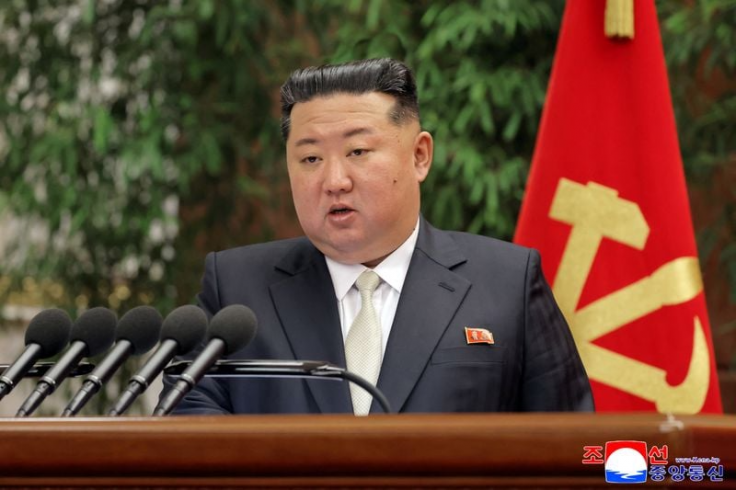
- Kim Jong Un's daughter drives tank during Pyongyang military drill
- Photos released March 20 by North Korea's KCNA state media
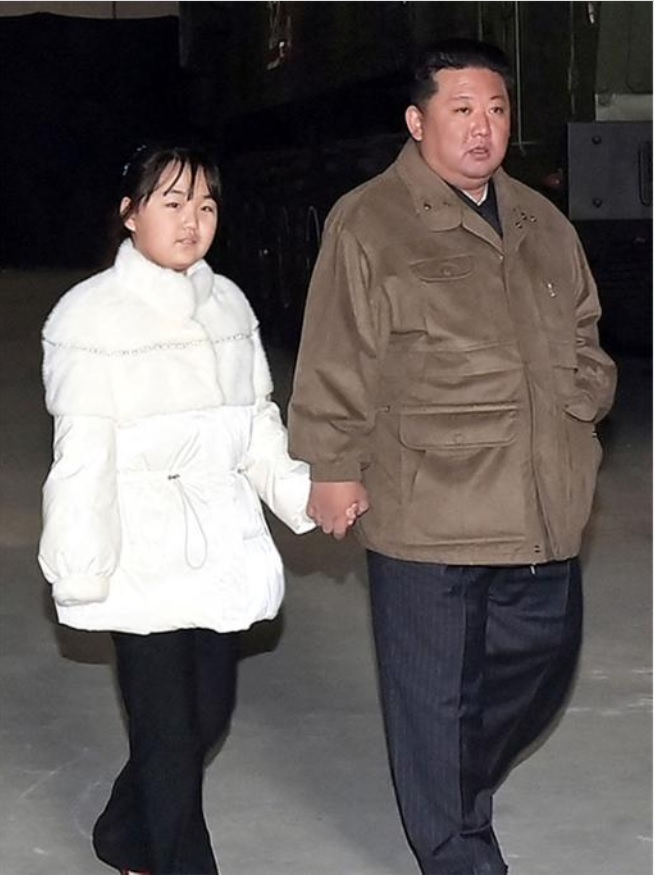
- Ju Ae has appeared publicly with Kim increasingly in recent months
- Kim supervises new tank drill highlighting anti-drone, missile capabilities
The teenage daughter of North Korean leader Kim Jong Un was photographed in a military exercise driving a tank, the most recent high-profile outing with her father, which was released by the state media on Friday.
The girl who was estimated to be about 13 and commonly referred to as Ju Ae was photographed by the Korean Central News Agency (KCNA); this time sitting in the driving seat of a tank in what the report described as an offensive tactical drill in Pyongyang. Kim was observed in the background standing on the turret and uniformed officers in the vehicle with them.
The photos are a subset of a larger trend of more and more frequent attendance at military and state events by the leader's daughter. In previous parts of this month, she was captured on camera pointing a rifle at a fireplace at a shooting range and in another occasion, holding a handgun, which was reported by state media outlets and quoted by Reuters.
Military Exposition And Weapons Modernization
The drill itself was marked by a novel kind of tank capable of improving the performance in the battle field, especially against drones and anti-tank missile settings. It was a controlled exercise under simulated combat conditions that Kim supervised, but the state media reported that the exercise showed offensive and defensive capabilities.
Over the last few years, North Korea has been putting more effort into the modernization of conventional military capabilities to supplement its strategic weapons efforts. These cover the advancement of the tactical missile systems as well as its extended-range ballistic missile armory and nuclear weapons.
The recent demonstration is based on the fact that Pyongyang is also working on modernizing the army forces in addition to demonstrating military preparedness, which is based on highly choreographed mass spectacles (Reuters). The leadership usually uses such drills to indicate its power within the country and outside regions as well as to strengthen internal communications on national defense.
North Korea is laying more emphasis on modernizing its conventional forces and not only its nuclear deterrent, according to Hong Min, a senior researcher at the Korea Institute of National Unification. These drills emphasize survivability and combat effectiveness in dynamic battlefield environments.
Signals Of Success: Public Messaging
The increasing prominence of the daughter of Kim has attracted the interest of the analysts who evaluate the leadership relations in the isolated state. Although the identity and status of this person have not been officially proven by Pyongyang, her frequent attendance of high-profile events has created the speculation of her possible future appointment.
She no longer appears symbolically but systematically and deliberately, as stated by Rachel Minyoung Lee, an expert on North Korea at the Stimson Center. This implies that she is being made known to the masses and the elite in a manner that is likely to reinforce the succession stories.
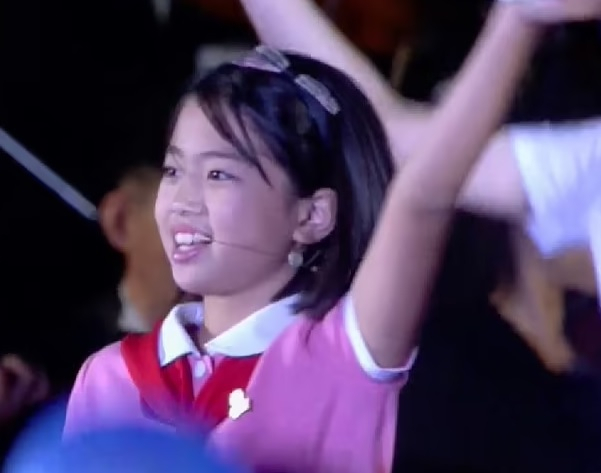
Such speculation has not been directly dealt with by state media, which has continued to emphasize on military accomplishments and leadership action. There is, however, a significant change in the representation of the leadership family with the eminence provided to the teenager in the official imagery.
Reuters covered that her placement during recent occurrences such as her being close to military equipment and taking part in drills is a contrast to past procedures where family members, in most cases, never showed as much face in an operational situation.
The fact that the daughter of Kim is to be included in the coverage of state media again highlights the fact that the leadership of North Korea has been attempting to put an altered communication policy in place, as it weighs between internal signaling about the greater military and political goals.


