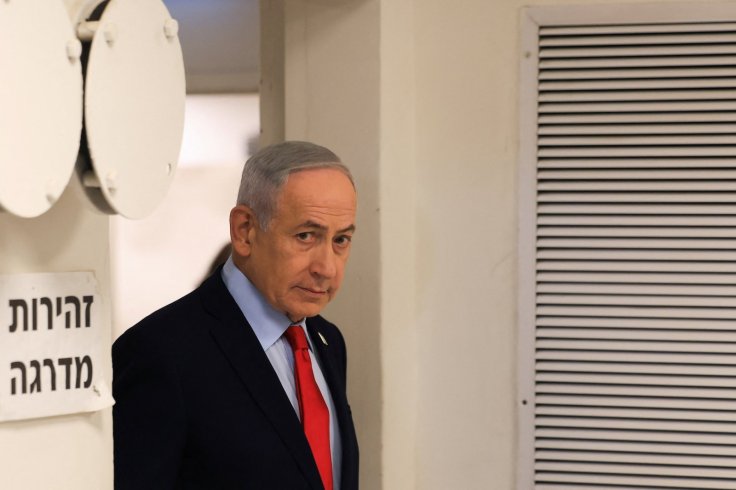
- Netanyahu claims Iran lost uranium enrichment and missile capabilities.
- Reuters reports no evidence provided supporting Israeli claims.
- Israel confirms unilateral strike on South Pars gas field.
- Iran continues missile attacks, rejects Israeli assessment of damage.
Israeli Prime Minister Benjamin Netanyahu declared at a press conference in Jerusalem on Thursday that Iran has been stripped of its ability to enrich uranium and manufacture ballistic missiles, marking Day 20 of the US-Israeli air campaign with claims that, if accurate, would represent a fundamental transformation of the Middle East's nuclear balance.
Reuters, which reported his comments, noted explicitly that Netanyahu provided no evidence for his central claim that Iran no longer had the capacity to enrich uranium.
"We are winning, and Iran is being decimated. What we're destroying now are the factories that produce the components to make these missiles and to make the nuclear weapons that they're trying to produce."- Benjamin Netanyahu, Prime Minister of Israel, Jerusalem press conference, March 19, 2026
Netanyahu said that the joint campaign had two of its three stated goals within reach destroying Iran's nuclear enrichment capacity and eliminating its ballistic missile production infrastructure.
He said the third goal, the fall of the clerical regime, was now a matter for the Iranian people themselves. He was direct about the limits of air power in achieving that objective.
No Evidence Provided for Nuclear Claim
The claim that Iran has lost all uranium enrichment capacity is the most significant claim Netanyahu has made since the war began and one that independent experts say cannot be verified from open-source information.
Iran had been enriching uranium to 60 percent purity before the campaign began, a critical threshold that placed it a short technical step from weapons-grade 90 percent enrichment.
Natanz, Fordow and Isfahan were all struck in the campaign's opening days. Satellite imagery published by the Institute for Science and International Security had previously shown evidence of damage at Natanz, though a new roof had been photographed over a previously destroyed building there as recently as January 30.
The IAEA has not yet been able to conduct an inspection. Iran has maintained throughout the conflict that its nuclear program was intended for peaceful civilian purposes, a characterization the US and Israel rejected as the stated justification for the February 28 strikes.
US Secretary of State Marco Rubio earlier this week confirmed that the operation's timing was driven partly by the assessment that an independent Israeli strike was imminent and that Iran would retaliate against US forces regardless, making coordinated participation preferable to being drawn in later.
South Pars: Israel Acted Without Telling Washington
Netanyahu used the press conference to address one of the week's most consequential developments: Israel's strike on the South Pars gas field shared between Iran and Qatar, which triggered an Iranian retaliatory attack on Qatar's Ras Laffan LNG facility and a furious public reaction from Trump, who claimed on Truth Social he had known nothing about the attack.
Netanyahu confirmed that Israel had not informed the United States before striking South Pars.
"President Trump asked us to hold off on future attacks, and we're holding it."- Benjamin Netanyahu, Prime Minister of Israel, Jerusalem press conference, March 19, 2026
The confirmation that Israel acted unilaterally on the South Pars strike and the subsequent Iranian retaliation against Qatar's LNG infrastructure has sharpened tensions within the US-Israeli relationship and drawn pointed criticism from Arab states, who warned that the strike endangered the energy security of non-combatant nations.
France's President Macron called for an immediate moratorium on strikes targeting civilian energy infrastructure. The UAE's foreign minister described Iran's retaliation against Emirati facilities as a terrorist act.
Denying He Dragged the US into War
Netanyahu also addressed directly what he called "fake news" about his role in drawing the United States into the conflict, a narrative that gained significant traction after former NCTC director Joe Kent resigned Tuesday, accusing Israel and its American lobby of manufacturing the war.
Netanyahu said he had been warning about the Iranian nuclear threat for 40 years and that Trump had been making the same warning for decades. He said many world leaders privately agreed with his assessment of Iran but were unwilling to say so publicly.
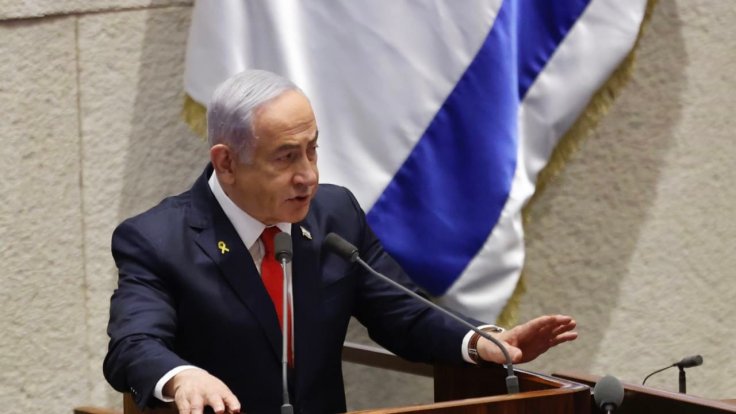
"They say that privately, but I say it publicly. The world owes a debt of deep indebtedness to President Trump for leading this effort to safeguard our future," he said. He added: "Does anyone really think that someone can tell President Trump what to do? Come on."
Iran continued to fire missiles at Israeli and Gulf targets on Thursday, and Iranian officials rejected Netanyahu's characterisation of the campaign's achievements.
Iran's parliament speaker Mohammad Bagher Ghalibaf said earlier in the week that Tehran retained sufficient missile and drone reserves and the domestic production capacity to sustain operations at a much higher rate and at a much lower cost than the enemy's interceptor missiles.
The gap between Netanyahu's claims of total capability destruction and the ongoing missile exchanges will be scrutinised intensely in the days ahead.


