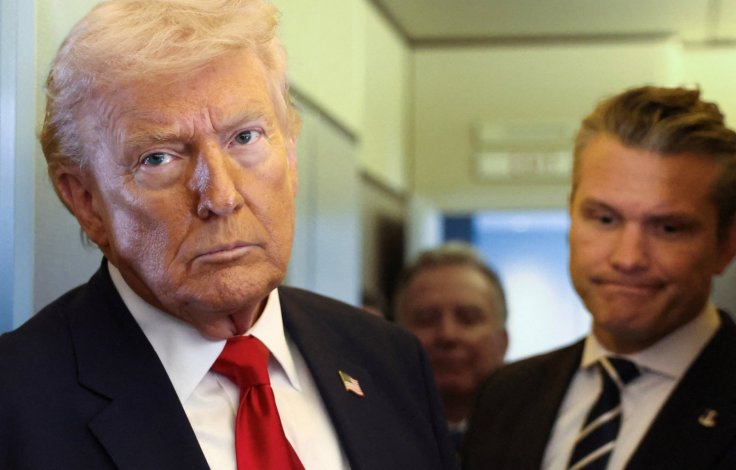
U.S. President Donald Trump's description of the Iran conflict as a "big chess game at a very high level," involving "very high-IQ people," marks a notable shift in tone and intent, one that reflects both strategic signaling and an attempt to describe the ongoing war as a contest of intellect rather than brute force with ill-equipped opponents.
Trump's language is not new and consistent with his long-standing rhetorical style, where intelligence, particularly "high IQ", is used as a marker of powerful people. He has repeatedly invoked the term in the past, to portray himself. In a 2013 tweet, Trump wrote, "my I.Q. is one of the highest," while in later remarks he described himself as a "very compassionate person (with a very high IQ)."
Trump's fixation on intelligence has also extended to adversaries and counterparts, whenever he seeks to emphasize the seriousness of a geopolitical contest.
Currently, calling Iranian leaders "very smart chess players" serves dual purpose: First, it elevates the stakes, portraying the conflict not as a one-sided military campaign but as a complex strategic duel. Second, it implicitly justifies caution: if the opponent is highly capable, missteps become costlier.
Curtain Raiser on Next Move in Iran War
In fact, the framing aligns with how analysts are interpreting the unfolding war. The U.S.-Israel campaign against Iran, described by Trump as "massive and ongoing," has already triggered tactful retaliation across the Middle-East. Experts at the Atlantic Council describe it as a "high-risk, high-reward" operation with no clear endgame, warning that Iran is long prepared with arsenal and missiles for long-drawn war, while responding selectively now.
From a chess-player's perspective, the conflict resembles a multi-layered positional game rather than a direct clash. Iran's doctrine of "maximum resistance," developed in response to Trump-era's "maximum pressure," that has historically focused on distributed deterrence and incremental escalation instead of decisive confrontation.
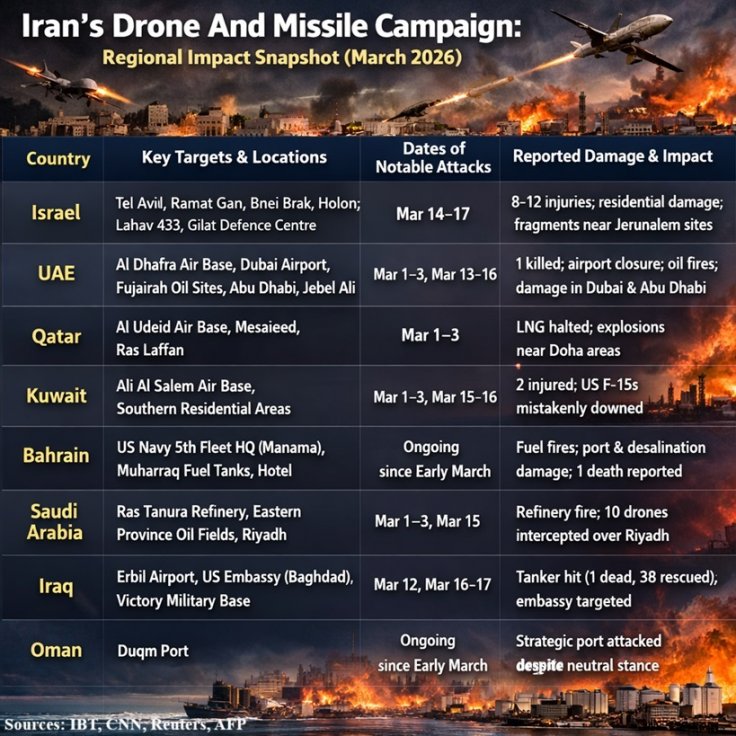
In chess terms, this is less about checkmate and more about controlling the board, stretching the opponent across multiple fronts while avoiding a fatal exchange.
The U.S. and Israel, by contrast, appear to be pursuing a strategy akin to forcing moves, targeted strikes designed to degrade capabilities and compel a reaction. Yet even here, restraint on the part of both players is visible. The absence of full-scale invasion or regime-decapitating strikes suggests both sides are operating within implicit limits, aware that escalation could go beyond control.
How Game Theory Applies Here?
This is where game theory in political science becomes particularly relevant. The current standoff closely resembles a "repeated game" or "strategic deterrence model," where actors make calculated moves based on expected responses rather than immediate gains. Each strike, interception, or pause becomes part of a signaling mechanism, testing each other's thresholds without triggering total war.
It also carries elements of the "prisoner's dilemma" -- where both sides could theoretically benefit from de-escalation, but mutual distrust triggers continued aggression. Meanwhile, the risk of miscalculation introduces what theorists call "brinkmanship" or pushing the opponent to the edge to extract maximum concessions without crossing into catastrophe.
Trump's "chess game" analogy, therefore, is not merely rhetorical reference but reflects a real strategic perception by Pentagon where timing, and signaling are as critical as firepower. His emphasis on "high-IQ players" underscores the belief that the present war is a contest between rational actors, each calculating moves several steps ahead.
The danger, however, lies in the limits. History shows that even highly rational systems can break down under pressure, especially when multiple actors, proxies, and misunderstood signals enter and disrupt the equation.
For now, the war appears to be unfolding exactly as Trump describes it: not a decisive battle, but a slow, high-stakes game, where every move is deliberate, and the endgame remains uncertain.


