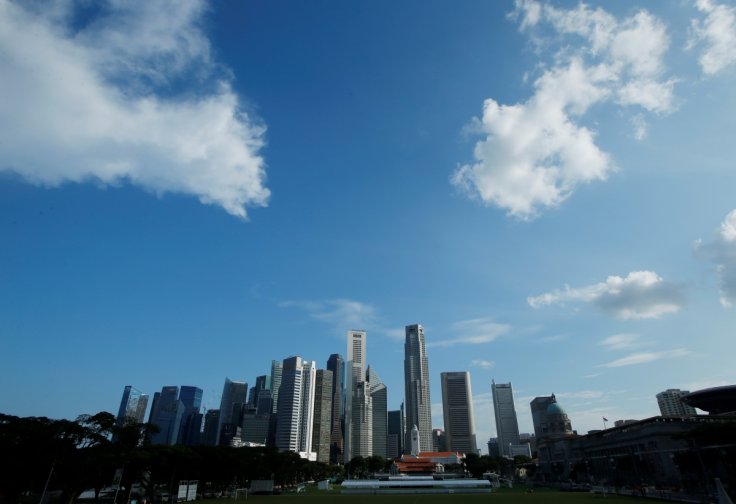
Singapore could experience hotter and drier weather later in 2026, as forecasters say the climate phenomenon known as El Nino may return in the coming months.
The Meteorological Service Singapore (MSS) has said that climate models suggest El Nino conditions could develop around July, potentially bringing reduced rainfall, longer dry spells and higher temperatures to the region.
El Nino is part of the El Nino–Southern Oscillation, a natural climate cycle driven by changes in wind patterns and sea surface temperatures across the Pacific Ocean. When El Nino occurs, waters in the central and eastern Pacific become warmer than usual, which can alter global weather patterns and lead to hotter and drier conditions in parts of South-east Asia.
Singapore has been experiencing La Nina conditions since late 2025. This phase, which is the opposite of El Nino, typically brings cooler temperatures and heavier rainfall to the region.
However, meteorologists say forecasts at this time of the year remain uncertain. Climate models currently suggest the possibility of El Nino emerging between May and July, though its eventual strength is difficult to predict.
Meteorologist Koh Tieh Yong, who is also part of the Working Group for Asian-Australian Monsoons under the World Climate Research Programme, said that predictions made during the Northern Hemisphere's spring are often less reliable. He said updated forecasts in the next few months could provide a clearer picture of how strong the event may become.
Some international climate monitoring centres in countries such as South Korea, Japan and the United States are currently projecting a moderate El Nino beginning around mid-2026. There is also about a 30% chance that the event could intensify further.
If El Nino does develop, it typically affects Singapore's rainfall most strongly between June and October, MSS said. Past moderate-to-strong events have resulted in months where rainfall dropped by 40% to 80% in parts of Singapore.
Scientists measure the intensity of El Nino using the Nino3.4 index, which tracks how much sea surface temperatures in the central Pacific Ocean rise above long-term averages. When this index exceeds 1.5 degrees Celsius, the event is considered strong.
A particularly intense version sometimes referred to as a "super El Niño" can occur when ocean temperatures rise by more than 2 degrees Celsius above average. Such events are rare, appearing roughly every 15 to 20 years, according to Adam Switzer, a principal investigator at the Earth Observatory of Singapore.
The last major El Nino event between 2015 and 2016 brought prolonged heat and dryness across the region, contributing to severe forest fires and one of the worst haze crises South-east Asia has experienced.
Experts warn that strong El Nino events can have widespread impacts. Drier conditions may reduce reservoir levels, affect crop production and increase the risk of forest fires and transboundary haze, particularly in Indonesia. They can also disrupt fisheries, ecosystems and hydropower generation while increasing heat stress for people living in cities.
Researchers have also pointed out that climate change is making it more challenging to predict the strength of El Nino and La Nina events. As global sea surface temperatures gradually warm, climate indices may appear stronger even when the underlying phenomenon is moderate.
Despite the uncertainty, Singapore has been working to prepare for more extreme heat. The country introduced a national heatwave response plan in 2025 through the inter-agency Mercury Taskforce, which includes public advisories and the opening of cooling centres when extreme heat is forecast.
MSS is expected to release its next update on the El Nino-Southern Oscillation outlook for the coming three to six months on March 20, which could provide further clarity on whether the region should brace for hotter conditions later this year.


