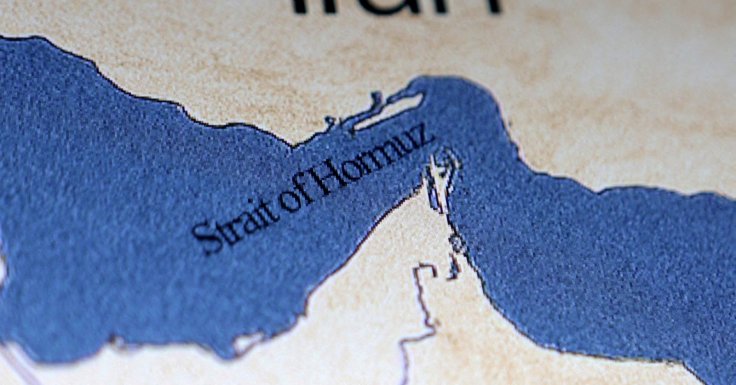
- Strait of Hormuz handles about 20 million barrels of oil daily.
- Asian economies receive over 80% of oil passing through strait.
- China holds about 1.2 billion barrels in strategic reserves.
- Global oil demand remains above 100 million barrels per day.
The most recent outbreak of the conflict in the Gulf region has shown once again a major weakness within the global energy system, the fact that the world continues to rely so much on a few oil-producing areas and a few maritime chokes. When tensions shook shipping routes and sent oil prices soaring, governments and analysts around the globe were reminded of an old strategic issue, how to find energy security in an increasingly unstable geopolitical environment.
The focus of the issue is the Strait of Hormuz which is one of the most significant oil passage canals in the globe. It is a small path into the Persian Gulf which serves as a linkage between the international markets and almost 20 percent of global oil consumption.
Approximately 20 million barrels of crude oil and petroleum products are passing through the strait daily connecting the largest Gulf exporters of Saudi Arabia, Iraq, the United Arab Emirates, Kuwait and Iran with energy-intensive economies in Asia, Europe and other regions.
Due to the small capacity nature of most of the alternative pipelines or shipping routes, interference in the region can cause ripples in the world markets. The experts in energy analysis believe that the crisis at hand has showed how vulnerable the international system of energy is regardless of decades of diversification efforts.
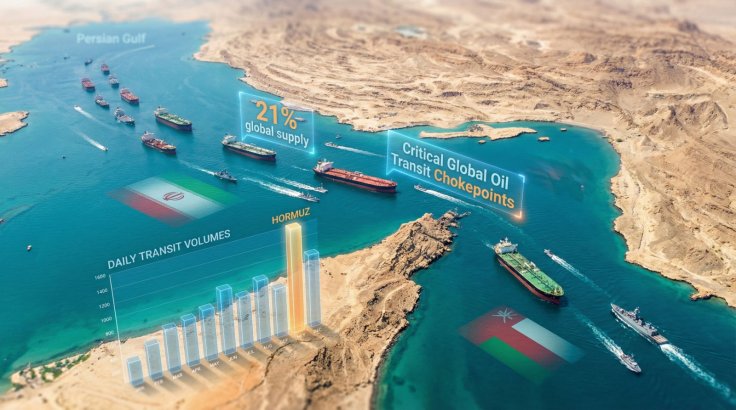
"The conflict in the Middle East is having significant impacts on global oil and gas markets, with major implications for energy security, energy affordability and the global economy for oil." - Fatih Birol, Executive Director, International Energy Agency
According to a recent article by Fatih Birol, the Executive Director of the International Energy Agency, the geopolitical tensions were a key threat to international energy security.
Asia's Deep Dependence
The Asian countries are most affected by disruptions in the Gulf. Over 80 percent of the crude oil flowing through the Strait of Hormuz is its destination to the Asian markets especially to China, India, Japan and South Korea.
China is the top most suez oil importer in the world and the second among the top oil consumers after the United States. Each day, the country is consuming approximately 16 million barrels per day and that is approximately 16 percent of world consumption. Much of such imports is of Middle Eastern origin.
The Chinese policymakers have years tried to curb that dependence to diversify their supply points and construct enormous strategic petroleum reserves. It has been estimated that China currently has approximately 1.2 billion barrels of crude oil in government and commercial storage systems-that is sufficient to hold over three months of imports.
Nonetheless, interruptions in the agape supplies are likely to have a rapid impact on the Chinese refiners. In the recent supply squeeze, some refiners have also cut down the processing rates due to decreasing deliveries of cargo by the Middle East.
India's Growing Exposure
India is also experiencing an even greater challenge. The nation is also highly import dependent with almost 88percent of the crude oil it consumes being imported as one of the major economies in the world.
Almost sixty percent of the Indian crude imports are of the Gulf region. India continues to have other major suppliers such as countries adjacent to the Strait of Hormuz such as Iraq, Saudi Arabia, Kuwait and the UAE.
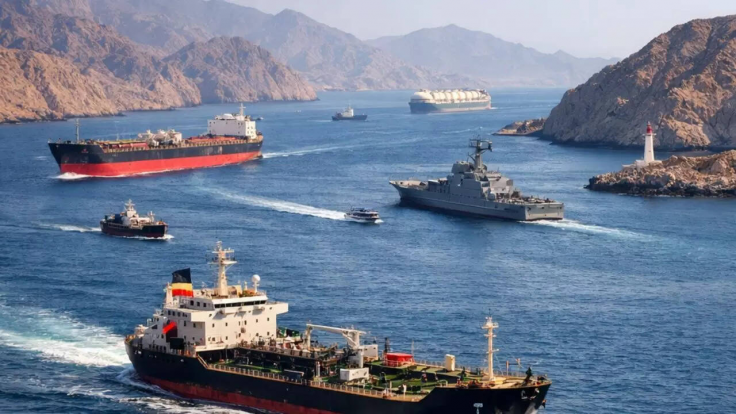
Since the recent crisis has interrupted the operations of the traffic of tankers, Indian refiners hurried to find alternative sources. The discounted Russian crude imports have shot up in the last couple of years and now a high percentage of the India purchases is purchased at low prices.
But a long term problem of India is structural. The economy of the country is growing at a high rate and the energy demand is also increasing. It is projected that India shall contribute about a quarter of the world energy oil demand within the next decade according to international energy projections.
That is why diversification is not only a strategic problem but an economic necessity as well.
United States: More Resilient
America is always the largest oil-consuming country in the world with the daily amount of oil consumption standing at about 19 million barrels. Nonetheless, the susceptibility to the disruption of supply by the Middle East to the country has reduced significantly in the last ten years.
The United States was turned into one of the biggest oil producers in the world due to the shale revolution. The domestic production currently stands over 13 million barrels per day, which has had a tremendous effect on the dependence of the country on the imported crude.
Moreover, the United States holds the one of the largest emergency reserves across the globe with the help of Strategic Petroleum Reserve. In the recent cases of market shocks, Washington organized with allies to issue hundreds of millions of barrels of crude to stabilise the prices.
"The oil market challenges we are facing are unprecedented in scale, therefore I am very glad that IEA Member countries have responded with an emergency collective action of unprecedented size. Oil markets are global so the response to major disruptions needs to be global too. Energy security is the founding mandate of the IEA, and I am pleased that IEA Members are showing strong solidarity in taking decisive action together." - Fatih Birol, Executive Director, International Energy
Although this was relatively resilient, American policymakers concede that the global oil markets are still linked. It is not because in cases when the United States produces the majority of its oil, it is clear that the international supply shock can push the prices up domestically.
Europe Since The Ukraine shock
The weaknesses in the energy situation in Europe were experiencing a bitter taste when Russia invaded Ukraine in 2022 because the continent faced critical conflicts in gas supply. Subsequently, the European Union has picked up the pace to diversify energy sources.
Although Europe is not receiving much Gulf oil as compared to Asian economies, it is still affected by the volatility of the prices during the eruption of conflicts in the Middle East.
The European policymakers have reacted by increasing faster investment in renewable energy, adding more imports of LNG by other suppliers, and doing more to electrify their transport and industry.
Renewables And Nuclear Clinchground
The shock of the global oil supply in terms of the oil embargo in the 1970s, the Gulf War, the confrontation between Russia and Ukraine and again in the recent Gulf tensions, there has always been an urgency to reconsider an energy strategy by countries.
One of the current trends is the move towards renewable energy across the globe. China has the largest solar and wind power capacity in the world, and the European Union is on the way of developing clean energy with the help of the Green Deal. India has started one of the biggest solar development programmes in the world and United States has also brought major incentives in clean energy investment.
However the change will be slow. The oil demand in the world is still above 100 million barrels per day, and still, the sectors like the aviation, shipping and heavy industry are still very much bound on petroleum.
A Persistent Strategic Risk
To date, the Gulf continues to be an element of the world energy structure. A significant portion of all oil exports in the world is produced by Saudi Arabia, Iraq, Iran, Kuwait and the United Arab Emirates.
"We are looking at what is by far the biggest disruption in world history in terms of daily oil production. If it goes on for weeks, it will reverberate across the global economy." - Daniel Yergin, Vice Chairman, S&P Global
The conflicts in the region will always have reverberations on the world economy as long as such reliance is there.
The recent war in the Gulf seems to be the reinforcement of that lesson. Among the largest energy consumers of the planet, Beijing and New Delhi to Washington and Brussels, the lesson is growing louder: they cannot possibly be economically stable reliant on a specific region or source of fuel.


