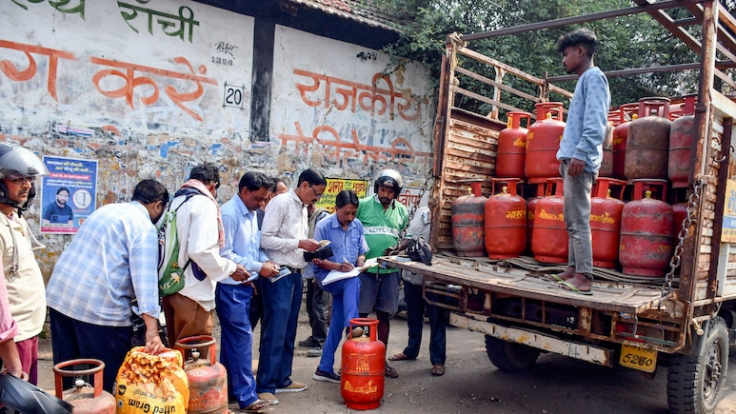
- India faces LPG shortages as geopolitical tensions disrupt imports.
- Restaurants report difficulty obtaining commercial LPG cylinders in cities.
- Government invokes Essential Commodities Act to prioritize household supply.
- Limited LPG storage capacity highlights vulnerabilities in energy supply chain.
Increasing dependence on the imported liquefied petroleum gas (LPG) and the lack of sufficient importation storage units have predisposed the energy supply chain in India where geopolitical unrestes are already starting to impact on the supply of cooking gases.
Dining establishments, hotels and commercial kitchens in urban centers such as Delhi, Mumbai and Bengaluru have been complaining of not getting commercial LPG cylinders thus compelling some of the enterprises to either reduce their operations or close down.
The government has reacted through the application of the Essential Commodities Act which authorises the government to interfere with the supply and distribution of cooking gas so that the demands of a household can be given a top priority.
India has a high consumption rate of about 3 million tonnes of LPG per month thus emerging as the second highest consumer of LPG in the world. Energy data shows that imports constitute approximately 60 percent of the demand in the country.
Over 85 percent of such imports traverse the Strait of Hormuz which is among the most important shipping avenues in the world making the country susceptible to such interference whenever a geopolitical war against other countries occurs.
Reduced Stocks Space Discovers Supply risks
Contrary to the crude oil reserves, whereby India has kept reserves of the same quantity to be used within an estimated period of two months of consumption, LPG system is primarily designed to flow with operations with no consideration given to ownership of the reserves.
Today, there are just two underground storage caverns of LPG in India, in Visakhapatnam and Mangaluru and with an aggregate capacity of approximately 1.4 lakh tonnes. It is less than 2 days of national consumption.
In India, the daily LPG consumption is approximately 80,000 tonnes, of which households constitute the vast majority of the consumption.
The fact that the industry does not have strategic LPG storage has been raised as a weakness on several occasions.
"Invoking the Essential Commodities Act to redirect propane and butane toward LPG suggests that India's gas system remains structurally vulnerable during geopolitical shocks. This is because LPG supply relies heavily on imports. The step helps protect household consumption and cooking fuel demand that directly affects inflation." - Manoranjan Sharma, Chief Economist, Infomerics Ratings
This is due to the fact that the supply of LPG is very dependent on imports. The step assists in safeguarding household consumption as well as cooking fuel demand that has a direct impact on inflation.
India is also known to have low LPG storage capacity as one of the gaps in infrastructure.
Rapid Growth in LPG Demand
The LPG imports in India have increased three-fold in the last decade to about 20 million tonnes in 2024-25 as compared to 7 million tonnes in 2011-12.
This has been spurred mostly by government Pradhan Mantri Ujjwala Yojana (PMUY) that increased the availability of clean cooking fuel to the low-income earners.
Under the scheme, over 10 crore LPG connections have been added since 2017 and the total domestic LPG connections have gone to approximately 33 crore.
Although the program has contributed towards lessening the use of firewood and kerosene stoves, it has contributed largely to the reliance of the country to imported cooking gas.
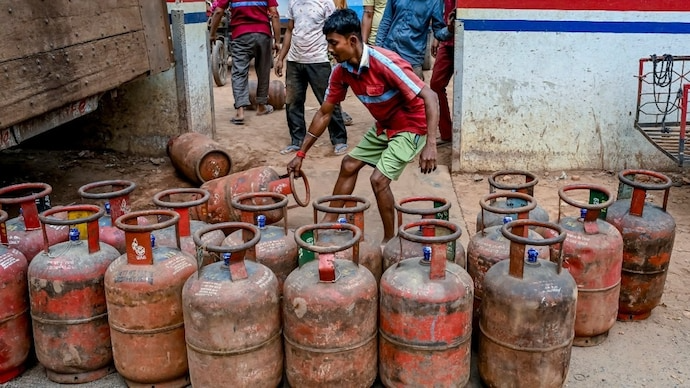
Another thing that India has signed is a deal with the United States to import approximately 2.2 million tonnes of LPG every year. Nonetheless, cargo transported out of U.S. port normally takes approximately 45 days to reach Indian ports as compared to much lower transit durations between the Persian Gulf.
Essential Commodities Act Applied to stabilize the supply
To deal with the existing deficit, the government has instructed the refineries and petrochemical plants to use propane and butane, which would otherwise be used in industrial processes, to produce LPG.
The directive also stipulates that these supplies are to be channeled to the three oil marketing corporations owned by the state of India and they include Indian oil corporation, Bharat petroleum corporation and Hindustan petroleum corporation. These two firms combine to control the major part of LPG distribution in India.
"It exposes limited buffer capacity in the broader gas value chain. Diverting these streams will constrain feedstock availability for petrochemical, refinery and industrial users dependent on propane and butane. This could raise input costs or force companies to shift to more expensive alternatives." - Manoranjan Sharma, Chief Economist, Infomerics Ratings
Concerns on Energy Security intensify
The experts in the energy field argue that this supply pressure underlines the larger weakness in the fuel security policy in India.
An alternative that is under consideration is the construction of underground storage caverns in the salt formations in the Bikaner-Barmer area of Rajasthan which the experts indicate could offer quicker and cheaper means of underground storage.
The alternative storage facilities will be depleted offshore gas reservoirs like Krishna-Godavari and Mumbai.
By contrast, Europe has been estimated to be capable of storing approximately one quarter of its yearly gas use in storage capacity; in addition to 25% by energy research organization Rystad Energy.
In 2022, the European Union also added storage-filling objectives to make sure that the reserves are high before the winter season. India does not presently have an equivalent requirement on LPG storage.
While the demand on cooking gas is increasing on a daily basis due to rising population and economic growth, the experts in the field of energy assert that increased storage facilities and diversification in the routes to imports will be necessary in order to enhance resilient supply.
In the meantime, the intervention by the government focuses on the domestic supply of the cooking gas to households, and policymakers consider the longer-term interventions to protect the LPG supply of India.