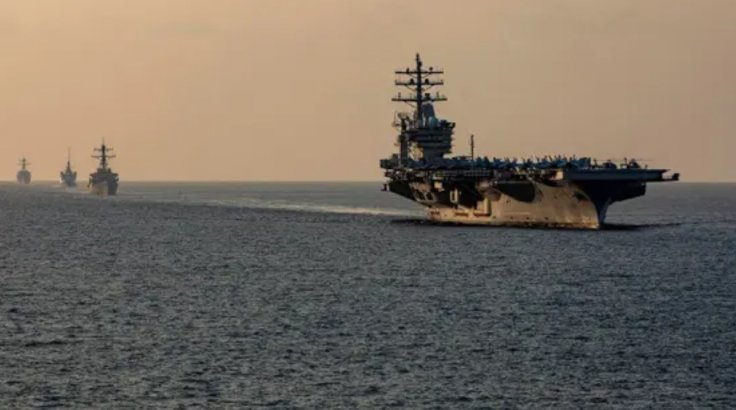
- Strait of Hormuz effectively closed after U.S.–Israeli war on Iran
- Oil shipments halted, Brent crude briefly rises to $119 per barrel
- Gulf producers cut output as tankers stranded, storage facilities near capacity
- Asian economies implement emergency measures amid energy supply disruptions
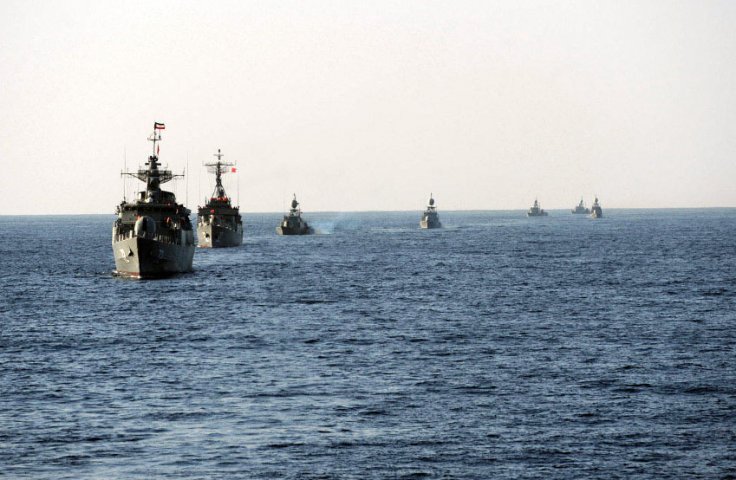
The successful closure of the Strait of Hormuz in the aftermath of the U.S. war on Iran supported by forces of Israel has caused one of the most significant shocks to the world energy supply in decades, shutting off an important shipping channel, which plays a role in exporting about a fifth of the daily global energy output of oil and liquefied natural gas.
Energy markets also responded by soaring dramatically as transit via the narrow waterway connecting Iran and Oman froze and the tankers were stuck as well as the producers in the Gulf were compelled to reduce their production. Brent crude had earlier this week jumped to a high of approximately 119 per barrel, the highest since 2022, before slighting going down near the end of trading.
The trading yardstick had slimmed down to close the last session grocery prices forming approximately $108 a barrel, and this illustrates the intensity of market volatility. Manufacturing had been reduced throughout the Gulf with the largest exporters such as Saudi Arabia, Iraq and Kuwait cutting output to ensure their storage capacity is not stretched.
Though International Energy Agency's 32 member countries have unanimously agreed to release 400 million barrels of oil from emergency reserves, the largest such action in the history, after the US-Israel war on Iran choked Strait of Hormuz flows to less than 10% of pre-conflict levels. The US will contribute 172 million barrels from its Strategic Petroleum Reserve, though the full release will take roughly 120 days to complete. Despite the announcement, oil prices climbed back above $90 a barrel, with analysts warning the reserves offer no structural fix unless safe passage through the Strait of Hormuz is restored.
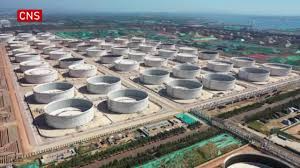
Oil companies without the capacity to load crude onto tankers have been shifting the output to storage tanks that are already approaching the full capacity through over a week period of interrupted shipping. This shutdown has shook the energy markets since the Strait of Hormuz is still considered to be one of the most significant oil and LNG trade chokepoints in the world.
"The Strait of Hormuz is the single most important oil transit chokepoint in the world," according to the U.S. Energy Information Administration, noting that about one-fifth of global petroleum liquids consumption moves through the waterway.
Spare production capacity available in the world today is believed to be too low to be able to withstand the immediate loss of the exports of the Middle East and it is feared that soon the refiners all over the globe would be faced with a tightening in supplies unless there are any exports that appear.
Energy Prices Soar in the World Markets
It has affected industrial markets most of all and this is because the oil markets saw the crude prices take off as traders evaluated the prospect of long-term supply shortages. The leaping of Brent crude to 119 a barrel was a drastic increase as compared to the prices witnessed in the previous season of the year and the U.S. benchmark crude also rose sharply before a practice before a last-minute trading.
The same turbulence has been witnessed in gas markets. The benchmark Dutch natural gas futures increased to move approximately to over 45 per megawatt hour, and the spot prices in Asia increased to approximately 16 per million British thermal units of liquefied natural gas. Both the indicators increased markedly compared to the last trading day as the buyers were scrambling to get alternative supplies.
To consumers and business, the price spike is already exacerbating general inflation. Crude has increased fuel costs as the prices of transport and power generation have increased pushing the prices of gasoline, diesel and jet up. There has also been an increase in the cost of petrochemicals and fertilizers because of the rise in prices of feedstock. "This is because the Strait of Hormuz is the only most vital oil transit route globally" says Amrita Sen, co-founder of Energy Aspects.
When the flows are blocked in any lingering duration of time, market will experience a shortage in the market such that cannot be filled purely by inventories. The International Energy Agency is working out the emergency response which may involve launching approximately 400 million barrels of oil out of strategic reserves.
The move would be the biggest coordinated release of the stockpile in the history of the agency meant to buffer the oil market shock to the world economies. The disruption has also constrained availability of tankers and hundreds of vessels are anchored on both sides of the strait awaiting improvement of security situations. The cost of insuring ships that are trying to sail through the area has gone high and this has further increased the cost of shipping.
Asia Is where Supply Shock hits the most
Asian economies are especially susceptible to the disruption since they rely on the imports of the energy in the Middle East. China, India, Japan and South Korea are countries depending on a large portion of their crude oil and LNG imports on the Gulf. The energy security issues have already caused the governments in Asia to take up emergency actions to stabilise the domestic markets.
China has allegedly added to refiners to halt fuel exports so that it can have enough domestic supply. South Korea has set provisional limits on fuel prices in thirty years since first. In other areas of the region, India has rationed LPG gas supplies, Bangladesh has gone extra miles to save energy by closing down universities and cutting the usage of energy. Strategic fuel stockpiles are also the consideration of governments to cushion the immediate effects of the disruption.
The bigger the economic loss is to the energy importing economies, as the longer the strait is closed, as was stated by founder of the energy consultancy Vanda Insights Vandana Hari. Asia will be affected initially since it is the region that will most be affected due to reliance on Middle Eastern supply.
"Asia is the most exposed region to any disruption in Middle Eastern oil supply because it relies heavily on imports from the Gulf," said Vandana Hari, founder of energy consultancy Vanda Insights.
Though, not all the Gulf producers have adequate infrastructure to avoid using the strait, the alternatives could only substitute a small proportion of the export losing capacity. Saudi Arabia is now pumping crude oil on its East-West Pipeline that transfers oil in her eastern fields to Red Sea port of Yanbu. The pipeline holds approximately 5 million barrels a day but the Red Sea port has in the past been significantly lower.
The Strait of Hormuz normally carries 6 million barrels per day which are exported by Saudi Arabia; hence, it is impossible to offset the disruption with the alternative route. The United Arab Emirates is also running the Habshan-Fujairah pipeline that has a potential of carrying approximately 1.5 Million barrels per day of oil in the oil fields of Abu Dhabi to the Gulf of Oman. Although the route avoids the strait, it has a small capacity as compared to the overall amount of oil that is usually transported via the waterway.
Physical Infrastructure Destruction Enhances Supply Risk
The shipping crunch has been accompanied by destruction of various power plants in the region which has increased the fears of shortages of supplies. Drones and tankers have been used to carry out the refinery and maritime infrastructure attacks along the Gulf.
The Sitra refinery in Bahrain which processes approximately 380,000 barrels per day has declared force majeure after an attack took place earlier this week. Meanwhile, Saudi Arabia closed its Ras Tanura refinery following a Ras Tanura infrastructure drone attack.
Fuel markets are also now experiencing refining disruptions. The huge Al Zour refinery in Kuwait, which can process about 615,000 barrels per day, has failed to export refined products including jet fuel due to inability by the tankers to sail through the strait safely. It might take weeks to restart damaged facilities even in the event that hostilities are quickly ended.