
- Australia to deploy E-7A surveillance aircraft to Middle East.
- Canberra will supply air-to-air missiles to United Arab Emirates.
- Prime Minister Albanese says role defensive, no ground troops.
- Strait of Hormuz disruptions push global oil prices higher.
The conflict with Iran keeps growing, and the Prime Minister of Australia, Anthony Albanese, announced on Tuesday that it would deploy a military reconnaissance aircraft to the Middle East and provided the United Arab Emirates with missiles, though this would be a defensive operation in a limited scope.
The relocation is one of the major moves ever that Canberra has made since two weeks ago when the war between Iran, Israel and the United States came under the horizon of the entire region. Albanese explained that Australia would not send ground troops within Iran and it would not take part in offensive actions.
"We are only there on the defensive", Albanese said to journalists in Sydney. And it is in defence of both the Australians in the region and the defence of our friends in the United Arab Emirates.
The Australian government announced that it will deploy to the region one of its planes which is Boeing manufactured E-7A Wedgetail airborne early warning and control planes in initial four weeks deployment. The aircraft would be used to track the airspace and organise defence operations through the detection of incoming missiles, drones and aircraft.
In conjunction with the deployment of the aircraft, Australia will sell to the United Arab Emirates the advanced medium-range, air-to-air missiles. This ruling came as a result of a phone conversation between Albanese and the UAE President, Sheikh Mohammed bin Zayed Al Nahyan, according to a report by Reuters.
The move comes at the height of escalating tensions in the Gulf region as countries have been reporting missile and drone attacks connected with Iran.
Increased Regional Tensions and Energy Shocks.
The expanding conflict has upset military, diplomatic and economic activity in the Middle East. Among the most direct consequences has been the tightening, to near closure, of the Strait of Hormuz, a text-thin waterway connecting Iran and Oman, where approximately one-fifth of the world's oil shipments coupled with liquefied natural gas are generally aimed.
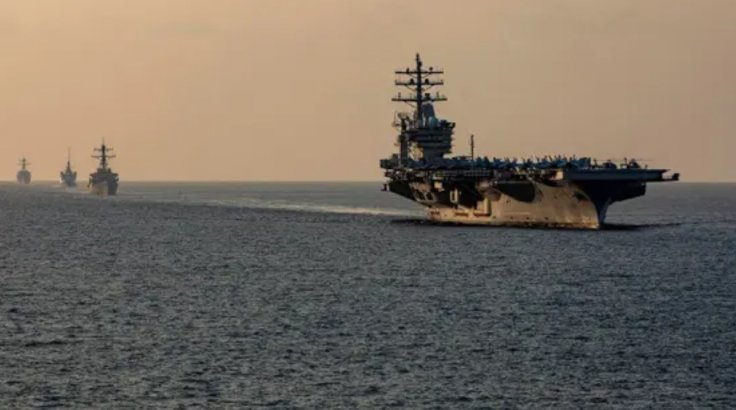
The disruption of shipping via the strait has added to the worry regarding world energy provision, and forced oil prices to soar.
As per the market data published by Reuters, Brent Crude temporarily rose up to nearly $120 per barrel at the start of the week before it depreciated to approximately $103 as market players evaluated the prospects of the squeeze created in the market. The U.S. benchmark West Texas Intermediate has also increased drastically as compared to the trading point of last week.
Energy markets are not clear since traders are trying to understand how long the conflict will last, and how dangerous it will be to Gulf shipping routes.
Civilians have also suffered evacuations and travelling disruptions in the region due to the crisis. Albanese said there were approximately 115, 000 Australians in the Middle East when the war broke out and it was approximately 11 days ago.
Since that time, around 2,600 Australian citizens have flown home on commercial flights also as several cities in the Gulf were subject to attacks by Iranian missile and drone bomb attacks.
The deployment of the surveillance aircraft in Australia aims at assisting the partners by the Gulf in identifying the threats coming their way and coordinate the air defence systems and safeguard the airspace of the civilians.
The officials indicated that "the E-7A Wedgetail plane will be used as an early-warning system that will be able to survey a large size of air space and deliver information to allied troops".
Australia has used the aircraft before in the coalition operations with United States and other allies.
The Long History of Middle East Operations in Australia
The move by Australia to offer defence services to the Gulf countries demonstrates that the country has had a history of military integration with the western powers in the Middle East, especially the United States.
Over the last thirty years, Canberra has been involved in many operations in the region; many of them have been under international coalitions.
Australia has participated in U.S.-led forces in both the 1991 Gulf War and the invasion of Iraq in 2003. An Australian presence in Afghanistan had also been observed over many years since the U.S. lead intervention in 2001.
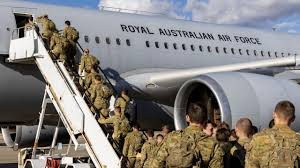
In more recent times, Australian aircraft and special forces have been involved in the international effort of fighting the Islamic State militant group in Iraq and Syria starting in 2014.
The nation has often used spy aircrafts, naval forces and special troops to assist the coalition forces and guard international shipping lanes.
Albanese however, pointed out that "the operation presently deployed is small scale and it was geared towards providing security to civilians and allied infrastructure and not to build on the Australian military foot print in an area".
The government of Australia has been under pressure within the country not to engage in the conflict further yet to accommodate the partners and protect the Australian citizen in a foreign land.
Gulf states targeted by the Iranian drones and missiles since the conflict escalated into several states, including the United Arab Emirates that will receive the missiles supplied by Australia.
The attack outside of Iran and Israel has seen regional governments build stronger air defence systems around major infrastructure like airports, energy facilities and military bases.
According to analysts, surveillance systems like the E-7A Wedgetail may prove to be indispensable in organising defensive systems to provide real-time tracking of the airspace and the possibility of a missile being fired.
International Reaction To the Growing War
Europe and Asia have been keeping a keen eye on the conflict which is spilling to cross several fronts such as in Israel and Lebanon and even in the Gulf.
Governments have expressed fears that long term combat may disrupt international energy markets, as well as, international shipping routes.
The Strait of Hormuz is an especially delicate situation when it comes to the overall geopolitical scenario involving major oil producers within the Gulf and the international markets as well. Any prolonged interference with the transit of tankers in the waterway would have serious implications on global energy prices.
Diplomatic activity has also been triggered by the military tensions such that efforts are being made to curb the spread of the conflict further.
Various western governments have called on restraint and redoubled defensive efforts to secure allied nations and commercial shipping routes.
The use of the surveillance planes and defence missiles in Australia is part of a wider policy of U.S. allies to enhance the air defences in the region without necessarily involving ground troops.
Canberra officials claimed the mission will take at least four weeks, but the government may assess the deployment as the conflict develops.
At present, Australian participation is narrowed down to the bilateral efforts at defending the Australians in the area and helping the Gulf allies to defend the airspace with the ongoing war between Iran and the Middle East transforming the security environment.