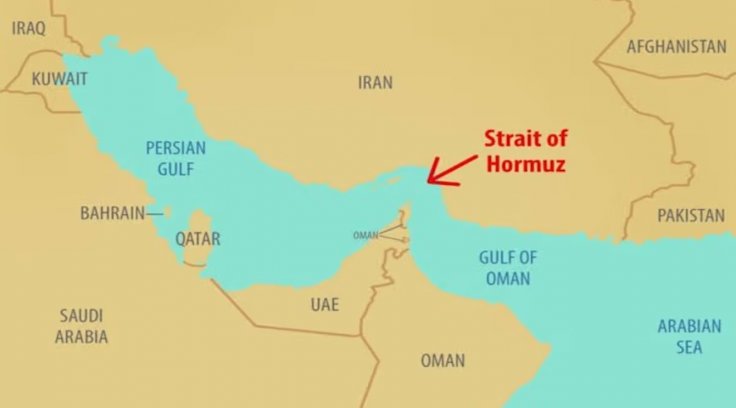
Iranian Islamic Revolutionary Guard Corps (IRGC) announced on Saturday its forces had fired a drone on an oil tanker called Prima in the Strait of Hormuz. The IRGC called the ship "violator of transit provisions," ignoring the numerous warnings of their naval forces concerning prohibition of transit of ships affiliated to hostile countries.
Iranian state-owned news sources such as Mehr News claimed that the attack took place in the early morning on the day of Saturday. The IRGC Public Relations Office announced that the tanker was attacked by a suicide, explosive drone after ignoring the multiple warnings against passing through the strategic waterway.
Sources such as the IranWire and Shafaq News reported that the tanker is Malta flagged, but no independent information on ownership, cargo, extent of damage or crew status was verified.
The most recent IRGC action is a continuation of a set of alleged tanker incidents dating back to the end of February, with Iranian authorities indicating that at least eight or nine ships have been the targets of attacks. The measures are in retaliation to U.S. and Israeli military attacks on Iran since February 28 that killed Supreme Leader Ayatollah Ali Khamenei, some of the best commanders, and many civilians. Iran has since undertaken a series of attacks on Israeli and U.S. targets in the region using missiles and drones.
Strait of Hormuz Accounts For 20% of Global Oil Supply
The Strait of Hormuz, a small passageway that moves about 20 percent of global seaborne oil trade and much of the liquefied natural gas, has had serious disruption. Vessels traffic has fallen to dismal levels with regular tanker traffic every day declining to about 37 tankers immediately before the war and as maritime tracking systems show over 200 vessels stranded in the Persian Gulf currently.
Stoppage of production has further worsened the crisis: Iraq has closed an estimated 1.5 million barrels per day of crude production, Qatar has also cut LNG export and the same has been imposed on Kuwait and the UAE due to insufficient storage capacity.
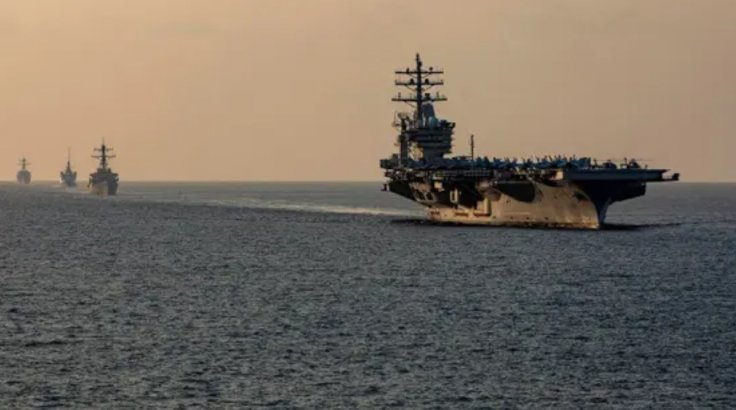
The Iranian officials have always disputed that they had blocked the strait completely. On Friday, a senior IRGC official said on state television that Iran had not closed this waterway and that it would control shipping as per international standards. Deputy Foreign Minister Saeed Khatibzadeh appearing at a conference in New Delhi made it clear that any move to shut the strait would be announced and that it would be through the official announcement. However, military sources have cautioned that ships of the United States, Israel or the allies in Europe would be treated as military targets in case of war, and only in normal circumstances would disguised warships be inspected.
To counter any U.S. escorts to commercial shipping, IRGC spokesperson Ali Mohammad Naini said Saturday that the Iranian forces were on standby awaiting their arrival with a warning of escalation.
The attacks have necessitated steep surges among the energy markets. The price of an average of the 7-13% of the pre-conflict prices of the state of the Brent crude have increased to approximately 82-83 per barrel whereas the prices of European natural gas have escalated by an average of 20%. Supertanker charter rates have also increased by more than 94 percent and marine insurers have also pulled out war-risk cover in the region, which is further discouraging transit.
On social media platform X, opinion is divided between alarm at the economic impact and polarized views on whether there is responsibility or not. Pro-Iran opinions present the strikes as rightful implementation of security policies in the time of war, whereas opponents point to potential dangers to global supply networks and escalation of provocation to wider conflict.
There are reports by some users of de facto paralysis of the Strait of Hormuz as evidence of a newly emerging energy war and that continued upheaval is likely to push the price of gas upwards and the burden of the whole world economy.
The situation is quite unstable, and no evident signs of de-escalation are predicted yet, and the threats of additional military retaliation by concerned parties are still present.


