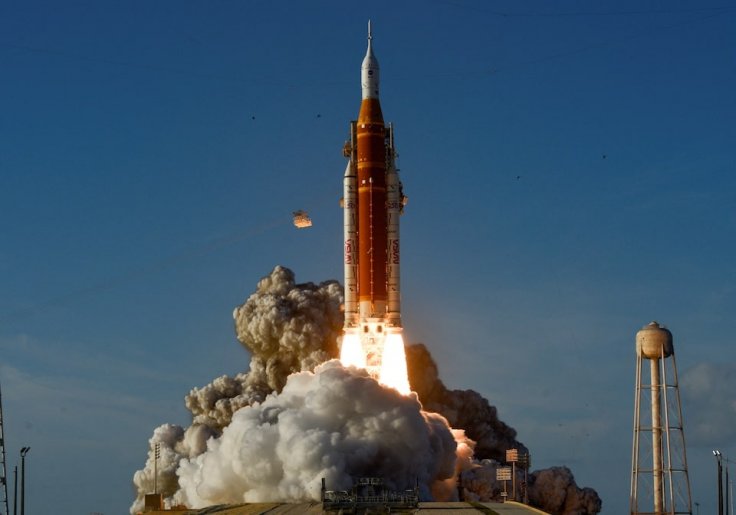
For the first time since 1972, humans are traveling to the vicinity of the Moon. NASA's Artemis II mission lifted off from Kennedy Space Center on Wednesday evening, sending four astronauts aboard the Orion spacecraft on a ten-day journey around the Moon and back, a milestone that closes a 54-year gap in crewed lunar exploration.
The Space Launch System rocket lifted off from Launch Pad 39B at 6:35 p.m. EDT, carrying the four-person crew on a planned test flight around the Moon and back. The mission carries NASA astronauts Reid Wiseman, Victor Glover, and Christina Koch, along with Canadian Space Agency astronaut Jeremy Hansen, on a free-return trajectory around the Moon.
The launch had originally been targeted for early February but was pushed back after a series of technical setbacks. The first delay was caused by hydrogen fuel leaks during a dress-rehearsal countdown, followed by problems with the upper-stage propellant pressurization system, both of which NASA said were ultimately resolved.
The mission carries layered historic significance. Glover became the first person of color, Koch the first woman, and Hansen the first non-U.S. citizen to travel beyond low Earth orbit. It is the first crewed mission beyond low Earth orbit since Apollo 17 in 1972.
A Test Flight, Not a Landing
The mission will not include a lunar landing. Instead, it will carry the four astronauts on a roughly ten-day journey around the Moon before returning to Earth, marking NASA's first crewed mission beyond low Earth orbit since the Apollo era ended. The flight is primarily a systems evaluation exercise, designed to stress-test the Orion spacecraft under real mission conditions with crew aboard for the first time.
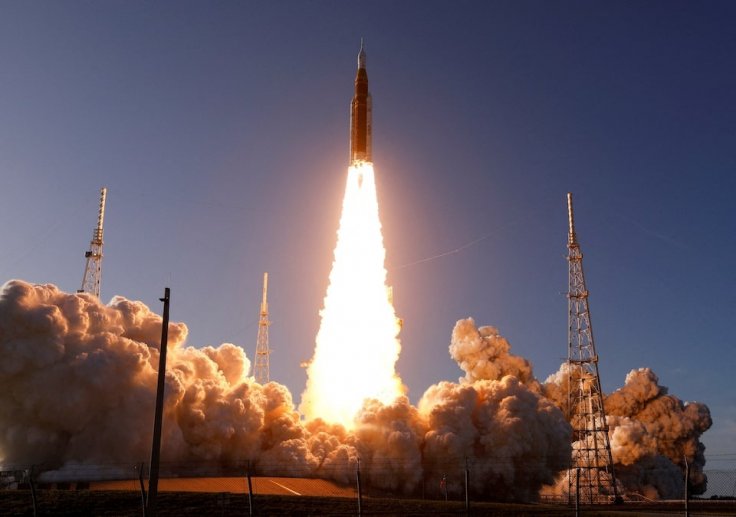
The mission's objectives include testing critical systems aboard Orion, with crew observations and human health investigations such as the AVATAR organ-on-a-chip study informing science during future Moon missions. Once the spacecraft completes its initial elliptical orbit around Earth, a crucial engine firing called the trans-lunar injection will boost the ship's velocity by about 900 mph, just enough to push it out of Earth orbit and begin a four-day coast toward the Moon.
Also Read: J&J's Cell Therapy Factory Bet Positions Manufacturing Scale as Its Next Competitive Moat
The spacecraft will follow a free-return trajectory, using lunar gravity to bend its path back toward Earth, with splashdown planned in the Pacific Ocean on April 10. During a planned lunar flyby on Monday, April 6, the astronauts will photograph and observe portions of the Moon's far side areas; some of them will be the first humans to see them up close.
Shortly after liftoff, Artemis II commander Reid Wiseman described the ascent as "an amazing ride," adding that the crew had already seen two moonrises during the early phase of the trip.
The Road Back to the Moon
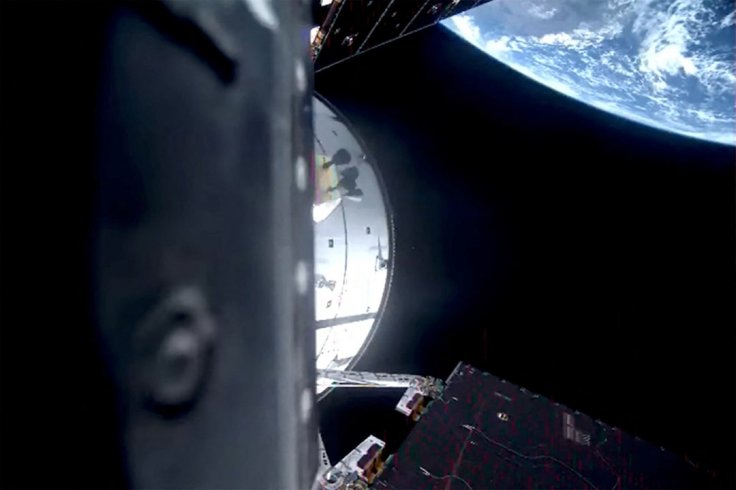
NASA Associate Administrator Amit Kshatriya said the team that built, repaired, and prepared Orion had given the crew the machine they needed. "Over the next 10 days, Reid, Victor, Christina, and Jeremy will put Orion through its paces so the crews who follow them can go to the Moon's surface with confidence. We are one mission into a long campaign, and the work ahead of us is greater than the work behind us," he said.
President Donald Trump acknowledged the launch during a separate White House address, congratulating the NASA team and crew and touting the scale of the mission, noting the spacecraft will travel farther into space than any crewed mission in decades.
Looking ahead, NASA expects its next crewed mission, Artemis III, to launch in mid-2027, with objectives focused on low Earth orbit tests of commercially developed lunar landers. Artemis IV, currently the first potential crewed lunar landing, is planned for early 2028.
Also Read: Trump Iran War Speech: Peace Talks, Bombing Threats, and NATO Pushback Explained
As Orion continues its outward journey, the mission stands as both a technical proving ground and a symbolic return to ambitions that once defined an era. Whether it ultimately paves the way to a lunar landing and eventually Mars will depend on the data, systems performance, and lessons gathered over the ten days ahead.


